Tree Pruning in North York by ISA-Certified Arborists
Need a tree pruned or trimmed in North York? Bosco Tree serves North York from Toronto. Call 416-206-1460 or request a free quote.
Key facts: ISA-certified arborists; 30+ years of experience; fully insured with $2 million liability coverage; 24/7 emergency service; free quotes. Tree pruning and trimming, removal, stump grinding, arborist reports, TPZ installation and lot clearing.
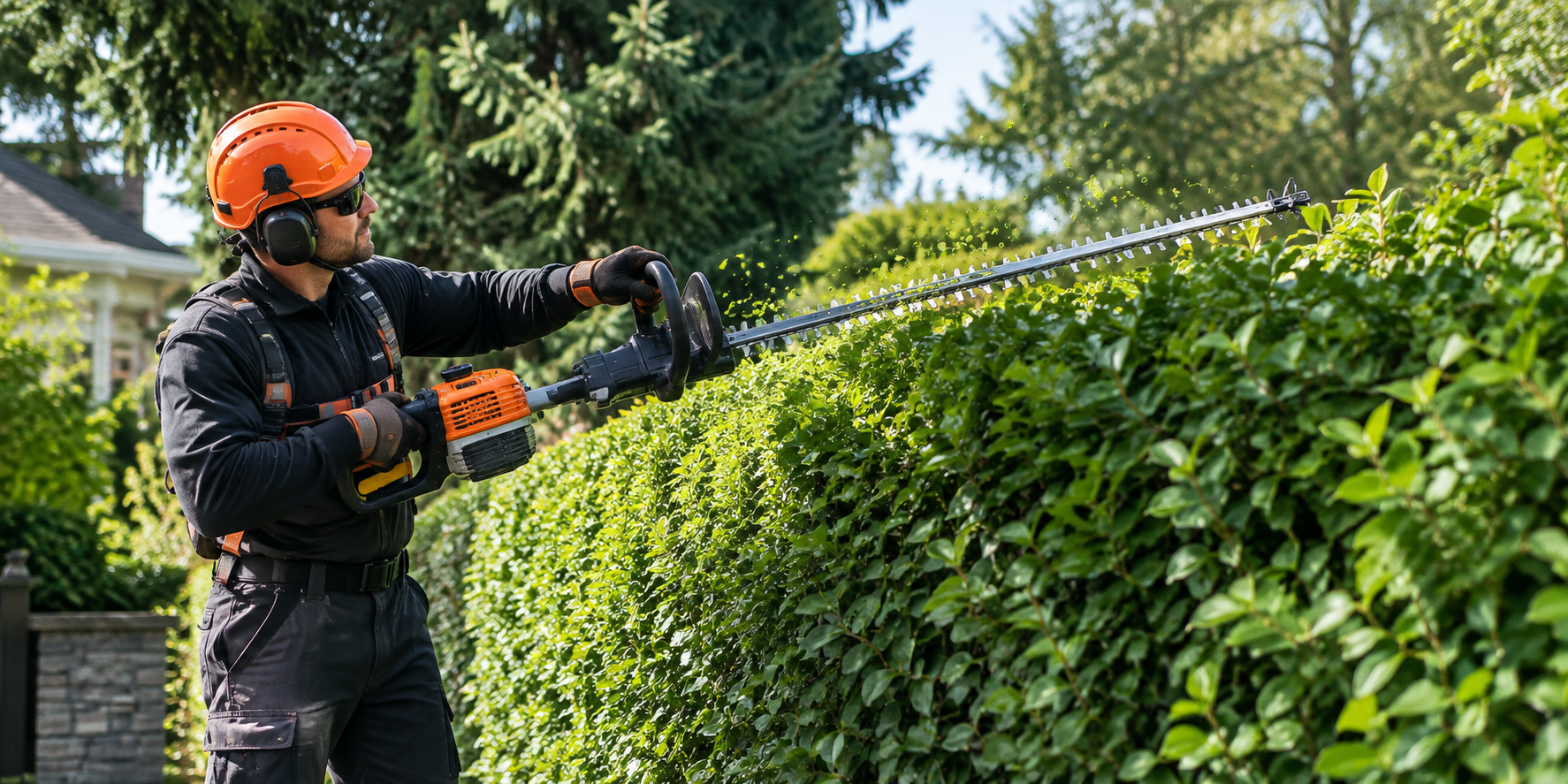
Thoughtful tree pruning North York residents arrange with Bosco Tree starts with a specific purpose: improve clearance, remove a dead limb, reduce a defined conflict or support the structure of a tree. Pruning is not simply cutting back every branch that reaches beyond a preferred outline. The arborist considers the species, branch attachments, crown structure, condition and surroundings, then explains which cuts are appropriate and what should remain. Bosco Tree is based in Toronto and serves North York from Toronto; we do not claim a North York office. Searches for “tree pruning North York” often begin with a clear concern—such as roof clearance or deadwood—and the assessment should connect the proposed cuts to that goal.
North York is part of the City of Toronto, and the neighbourhood’s residential streets, ravine corridors, mature yards, apartment landscapes and commercial properties create varied tree-care needs. In a compact Willowdale lot, a branch may extend above a roof, walkway or neighbour’s yard. Around Bayview Village and Don Mills, established trees can share a property with driveways, patios and gardens. On a ravine-adjacent parcel, tree work may need to be considered under additional protection rules. An assessment that accounts for the whole setting is more useful than a generic trimming list.
Tree pruning can address a deadwood concern, improve separation from a building, raise selected lower branches or remove competing growth. It can also be part of routine care when the goal is to maintain a tree’s form and function. Each tree is different, and a balanced crown is not necessarily a symmetrical one. The right work respects the tree’s natural habit, avoids unnecessary canopy loss and focuses on a clear objective that the owner and arborist can discuss. For tree pruning North York homeowners can plan around, the first step is defining which branches matter and what healthy structure should remain.
Tree pruning North York property owners can plan with confidence
Pruning is a series of selective cuts made for a reason. A strong plan identifies what is to be removed and why, rather than promising a dramatic reduction without reference to the tree’s health. Bosco Tree’s ISA-certified arborists can assess branches, unions and canopy shape, then explain whether the requested result is practical. If removal would be safer or more appropriate than pruning, we can discuss that distinction instead of treating pruning as the answer to every concern.
Common requests include clearing branches from a roof or access route, removing deadwood above a yard, reducing crossing limbs, improving clearance for pedestrians or addressing storm-damaged branches. A tree may also need structural attention while it is young, when selective correction can support a strong framework. Where the work is intended to protect a tree during nearby construction, the conversation is different: preserving roots, limiting soil compaction and installing an appropriate Tree Protection Zone can matter more than shaping the canopy.
A careful assessment distinguishes a branch that is dead from one that is alive but poorly positioned. It also considers where a branch joins the trunk, whether it carries significant load, what would be left after the cut and whether the tree has enough healthy foliage to tolerate the requested work. Cutting a branch close to the trunk without regard to the branch collar can impair the tree’s ability to close over a wound. Topping or indiscriminate shearing can create large wounds and poor regrowth, so it is not a substitute for purposeful pruning.
Before work, tell us what you want to change and what you want to retain. Is the goal to clear a roofline, open a path, remove a dead branch, improve light in one area or reduce a particular conflict? The answer helps the arborist make the scope precise. If you want a tree to be smaller, discuss what reduction is realistic for that species and structure. A responsible recommendation may preserve more of the crown than an owner initially expects, because retaining healthy structure is part of the result.
North York tree pruning process, step by step
- Describe the concern. Call or use our contact form to explain the tree, location and desired outcome. Mention branches over a structure, dead limbs, recent storm damage, nearby wires or ravine proximity.
- Assess the tree and site. The arborist reviews tree condition, branch attachments, targets, property access and nearby trees or built features. Photos can help start the conversation, but a site assessment may be needed to define the work.
- Agree on a pruning objective. We identify the type of work being considered—such as deadwooding, crown raising or selective reduction—and discuss what should remain. The aim is not to remove more canopy than needed.
- Check municipal requirements. North York is within Toronto. Confirm whether Chapter 813 or Chapter 658 requirements apply to the location and proposed work, particularly for larger private trees or ravine-protected land.
- Review the free quote. The quote describes the proposed scope and factors affecting access, equipment and cleanup. Clarify what is included before accepting.
- Prepare the work area. Move items from the agreed work zone where possible and keep people and pets away during active work. Follow the crew’s safety directions.
- Complete and review the work. The crew performs the agreed pruning, communicates any material site changes and reviews the result and cleanup with you.
This process is meant to make pruning understandable before the saw is used. It is not a fixed promise about how long an individual job takes. Weather, access, tree condition, municipal review and the need to coordinate around utilities can affect planning. If new conditions appear during assessment or work, we discuss them rather than silently changing the scope.
Choosing pruning rather than tree removal
Pruning is often appropriate when a limited set of branches creates a specific concern and the tree can remain in a sound, maintainable condition. Deadwood can be removed; clearance can be improved; a structural issue may be addressed selectively. Removal may be considered when a tree is dead, severely compromised or conflicts with a site need that cannot reasonably be addressed by pruning. That decision should reflect condition, target exposure and the owner’s goals, not a single visible defect alone.
A request to “cut it back” deserves a more detailed conversation. If the objective is to prevent all future leaf or seed drop, pruning cannot promise that result. If branches are close to a roof, a targeted clearance plan can be discussed without assuming that the entire crown needs reduction. If you are concerned about safety, ask the arborist to explain the observed defects, the likelihood and consequences of failure, and options for managing the concern.
Where removal is chosen, learn more about Bosco Tree’s tree removal service. If your North York tree needs urgent attention after a storm, our 24/7 emergency tree service can address urgent hazards. An arborist’s assessment provides a more grounded basis for choosing between these services than a one-size-fits-all promise.
Types of pruning and trimming we may recommend
Pruning terms describe objectives, not a guarantee that every named treatment is right for every tree. An arborist can explain which cuts support the intended outcome and what limits apply. Here are common categories homeowners may hear during a North York assessment:
Crown thinning
Crown thinning selectively removes certain branches to reduce density while retaining the tree’s natural outline and main structure. It is not indiscriminate interior stripping, and it should not be used to make a tree look sparse. A thoughtful plan considers how branch removal is distributed through the crown and avoids excessive loss of foliage. The objective may be to improve spacing and manage selected branch conflicts, while preserving healthy limbs that contribute to the tree’s structure.
Crown raising
Crown raising removes or shortens selected lower branches to improve clearance above a walkway, driveway, entrance or sightline. It should be planned with the tree’s species, maturity and branch arrangement in mind. Removing too many lower limbs at once can alter the tree’s structure and appearance. Where the request involves access, tell the arborist what needs to pass beneath the canopy and whether the clearance is for people, vehicles or another specific use.
Deadwooding
Deadwooding removes dead, broken or dying branches where doing so is appropriate and safe. Dead branches can be difficult to see in a full canopy, particularly from the ground. An assessment can distinguish deadwood from live branches that are naturally bare or seasonally dormant. The size and position of the dead limb, as well as the targets below, influence the work method.
Structural pruning
Structural pruning focuses on the branch framework, often on younger trees or trees with competing leaders and poorly positioned growth. The aim is to support a stable, well-spaced structure as the tree develops, not to force an artificial shape. Small, well-considered cuts may avoid larger corrections later, but the recommended work depends on the species and stage of growth. If the tree is mature, the assessment considers what can be changed without compromising established form.
Hazard pruning
Hazard pruning addresses a branch or structural condition that may pose a risk to people or property. The arborist considers the branch’s condition, size, attachment, movement and the target beneath it. A hazard concern does not always mean the whole tree must be removed. A dead limb above a frequently used path may be handled differently from a limb over an area that people rarely enter, but site use and potential consequences are part of the discussion.
Selective clearance and reduction
Selective clearance pruning may improve separation from a roof, siding, window, walkway or other feature while retaining as much suitable canopy as possible. A reduction may shorten selected branches back to appropriate lateral branches. The aim is not simply to cut every branch to a uniform distance or create a flat-topped tree. Explain your clearance need clearly so the arborist can consider the tree’s likely response and the limits of the desired outcome.
Seasonal timing: general guidance, not a rigid calendar
There is no single pruning date that fits every tree, objective and site condition. The appropriate timing may depend on species, tree health, the type and amount of pruning, active pest or disease concerns, weather and whether a branch creates an immediate hazard. Some work can be planned during a dormant period; other work may be best scheduled based on a specific assessment. Ask an arborist to explain why a recommended time makes sense for your tree.
Urgent safety concerns should not be ignored solely because a preferred maintenance season has not arrived. A broken or unstable limb over a target may require prompt attention, while non-urgent shaping can often be planned after considering the tree’s condition. If you suspect an active infestation or disease, do not assume that routine pruning timing is the only consideration; species-specific practices and proper handling may matter. Bosco Tree avoids giving a universal seasonal rule where the tree and the objective have not been assessed.
Before booking, mention when the tree was last pruned if you know, whether there has been recent construction or soil disturbance, and whether the tree has experienced damage. Tree pruning North York homeowners arrange after construction should account for any changes to access or soil around the roots. These details help frame the assessment. Timing can also be affected by access and conditions on the day. We will discuss practical options rather than promise a date that has not been confirmed.
Equipment and safety for pruning around North York properties
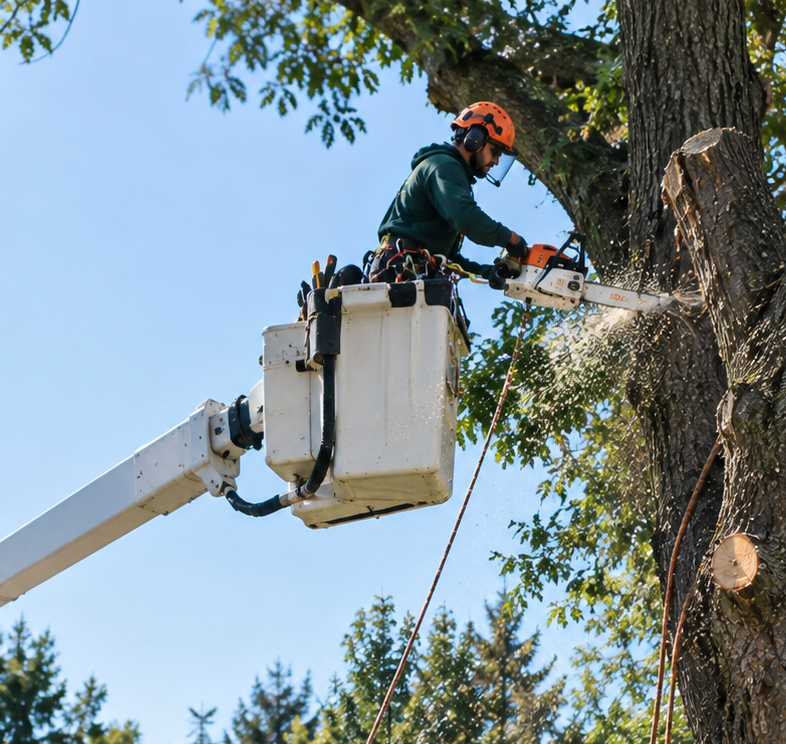
Pruning equipment is selected according to tree structure, height, access and the specific cuts required. Tree pruning North York projects near homes or shared driveways need equipment and branch-handling plans suited to those constraints. A crew may use climbing equipment, ropes, rigging, saws, aerial equipment or ground-based tools as the site allows. Equipment is not selected because it is convenient in isolation; it must enable the work to be performed safely and with appropriate control over branches. A narrow lot or shared driveway may change the plan from a yard with clear equipment access.
North York settings can place trees near homes, garages, fences, decks, gardens, sidewalks, parking areas and overhead utilities. The assessment should identify the targets and potential obstacles before work begins. Let us know about access restrictions, locked gates, shared areas and sensitive landscaping. During active pruning, keep people and pets outside the work zone, and do not stand beneath the tree to watch. Branches can swing, roll, rebound or change direction as they are cut.
Never prune a tree touching or close to electrical wires yourself. Do not use a pole saw, ladder or tool near conductors, and do not move a branch that may be energized. Keep clear and contact the utility or emergency services as appropriate. Work near electrical equipment needs to be handled by qualified personnel following applicable safety procedures. Inform us about lines during the first call so the right response can be discussed.
Pruning produces branches and debris, and the cleanup scope should be clear in advance. Ask whether cut material will be chipped, left in a designated area or hauled away. If you want the site left in a particular condition, mention that when requesting the quote. A tree-pruning quote should describe the intended pruning and handling of debris, not leave you to guess what “cleanup” means.
What affects a North York pruning quote?
A free quote reflects the actual tree and the work requested. We do not state a price or timeline without reviewing the conditions. Several factors can affect the scope and approach:
- Tree species, size and architecture: Crown shape, height, limb size, branching pattern and tree condition influence the pruning plan.
- Purpose of the work: Deadwood removal, clearance, crown raising, structural work and a specified reduction are different objectives.
- Branch position and targets: A limb over a house, fence, sidewalk or neighbouring yard may require controlled lowering and careful access.
- Access and setup: Gate width, slope, parking, surface conditions, overhead clearance and nearby structures affect equipment choices.
- Work near utilities: Electrical or communication lines may require additional coordination, qualified personnel or a different scope.
- Tree health and recent damage: Decay indicators, storm damage, pests, prior cuts or construction effects can change what is suitable.
- Municipal or ravine constraints: The tree’s size, location, ownership and proposed work may affect permit requirements and documentation.
- Debris handling: Chipping, moving, leaving or hauling branches should be discussed as part of the requested result.
These factors help the quote reflect the job rather than a generic per-tree assumption. If you are seeking a particular clearance or appearance, say so. The arborist can then explain what is achievable and what the tree may look like after a careful, limited treatment. Ask whether the proposed scope includes only specific branches or broader crown work, and confirm any exclusions before accepting. People searching for tree pruning North York usually have a particular clearance or branch concern in mind, so the quote should tie recommendations to a defined goal.
Ready to discuss your pruning goals? Call Bosco Tree at 416-206-1460 or request your free North York quote.
Toronto tree by-law guidance for North York pruning
North York is part of the City of Toronto, so City-wide tree rules apply. Before arranging tree pruning North York property owners should confirm whether the tree and proposed work are regulated under the current rules. Toronto Municipal Code Chapter 813, Trees, includes private-tree protections. The City’s current public guidance says that a permit is generally required before injuring or removing a privately owned tree that measures 30 centimetres or more in diameter, measured at breast height (1.4 metres above ground). Chapter 813 also addresses protected City-owned street trees. Do not interpret the private-tree threshold as permission to damage a smaller tree in every circumstance: other protections, including ravine rules, may apply.
The City has discussed a future change to the private-tree threshold, but its current public by-law guidance continues to identify 30 centimetres as the applicable threshold at the time reviewed. Because rules and implementation can change, check the City’s current tree-permit page and Municipal Code before work. A proposed or endorsed change should not be treated as an effective rule unless the City confirms it has taken effect. We do not provide a fee or promise a permit outcome.
Pruning itself should be considered carefully. Chapter 813 regulates injury as well as removal, and an activity that damages a protected tree may require authorization. The City’s tree-permit guidance should be consulted for the specific proposed work and tree. Ask before extensive pruning or construction activity close to a protected tree, particularly where the planned cuts remove substantial living canopy or involve equipment inside the root zone. A contractor’s quote does not serve as City approval.
Ravine-adjacent properties may also be subject to Toronto Municipal Code Chapter 658, Ravine and Natural Feature Protection. The City describes protected areas that include ravines and other natural features, and indicates that trees and work within a protected area can require a ravine permit. Unlike the ordinary private-tree threshold, the ravine rules may protect trees regardless of trunk size in a designated area. The parcel’s location must be checked; being near a ravine does not, by itself, establish that a particular lot is inside a protected area.
Use the City’s current mapping and permit guidance to check the property boundary and proposed work. If the City indicates that the property is protected, ask what approvals apply to pruning, access, grade changes or construction activity. Do not assume that a tree permit under one chapter replaces review under another. For a project involving multiple trees or construction, the City may require arborist documentation or tree-protection measures. Confirm the required documents directly with the City before beginning.
These notes summarize public City guidance and are not legal advice or a determination for a specific address. The City decides whether a permit is needed and whether an application is approved. If you are uncertain about an exemption, ownership, threshold or ravine boundary, check the current City guidance before cutting. Bosco Tree can discuss the site’s tree-care needs and relevant considerations, but we cannot substitute for a municipal decision.
For the primary sources, review Toronto’s Municipal Code Chapter 813, Trees, Municipal Code Chapter 658, Ravine and Natural Feature Protection and the City’s guidance on when to apply for a tree or ravine permit. Check the latest City information for your property rather than relying only on a general page summary.
Neighbourhood tree pruning across North York
Bosco Tree serves Willowdale, Don Mills, Bayview Village, Lawrence Park (north), York Mills, Newtonbrook, Downsview, Bathurst Manor, Armour Heights and Flemingdon Park from Toronto. Tree pruning North York customers request varies by canopy, access and the target below each branch. We do not claim a local North York office. Service planning is based on the address, access and tree conditions, not simply the neighbourhood label.
In Willowdale and Newtonbrook, mature residential trees may sit close to homes, driveways and neighbouring boundaries. A request to prune back from a roof needs to distinguish between branches that are contacting the structure and branches that only appear close from one angle. A measured clearance plan can avoid unnecessary canopy removal while addressing the owner’s actual concern.
Don Mills and Bayview Village properties may feature established canopy alongside gardens, paved areas, parking and common spaces. For a mature tree with a broad spread, selective crown thinning or deadwooding may address a defined need without turning the whole canopy into a uniform outline. If a property includes shared ownership or managed landscape areas, make sure the appropriate owner or manager has approved the work before arranging service.
Lawrence Park (north), York Mills and Armour Heights can include larger trees, established yards and sites where branches extend over a roof, pool, walkway or neighbouring lot. The assessment should look at the whole canopy and identify where branches can be lowered safely. A driveway clearance request may call for crown raising; a dead branch above a frequently used space may call for hazard pruning; a weak developing structure may call for a different approach.
Downsview and Bathurst Manor settings can include varied lot layouts, narrow access routes and trees near fences or overhead services. Flemingdon Park may involve shared or multi-unit grounds where a property manager or condominium corporation needs to coordinate approval and access. These are examples of site considerations, not assumptions about every property in a neighbourhood. Tell us what makes your location different so the quote can account for it.
Other Bosco Tree services available in North York
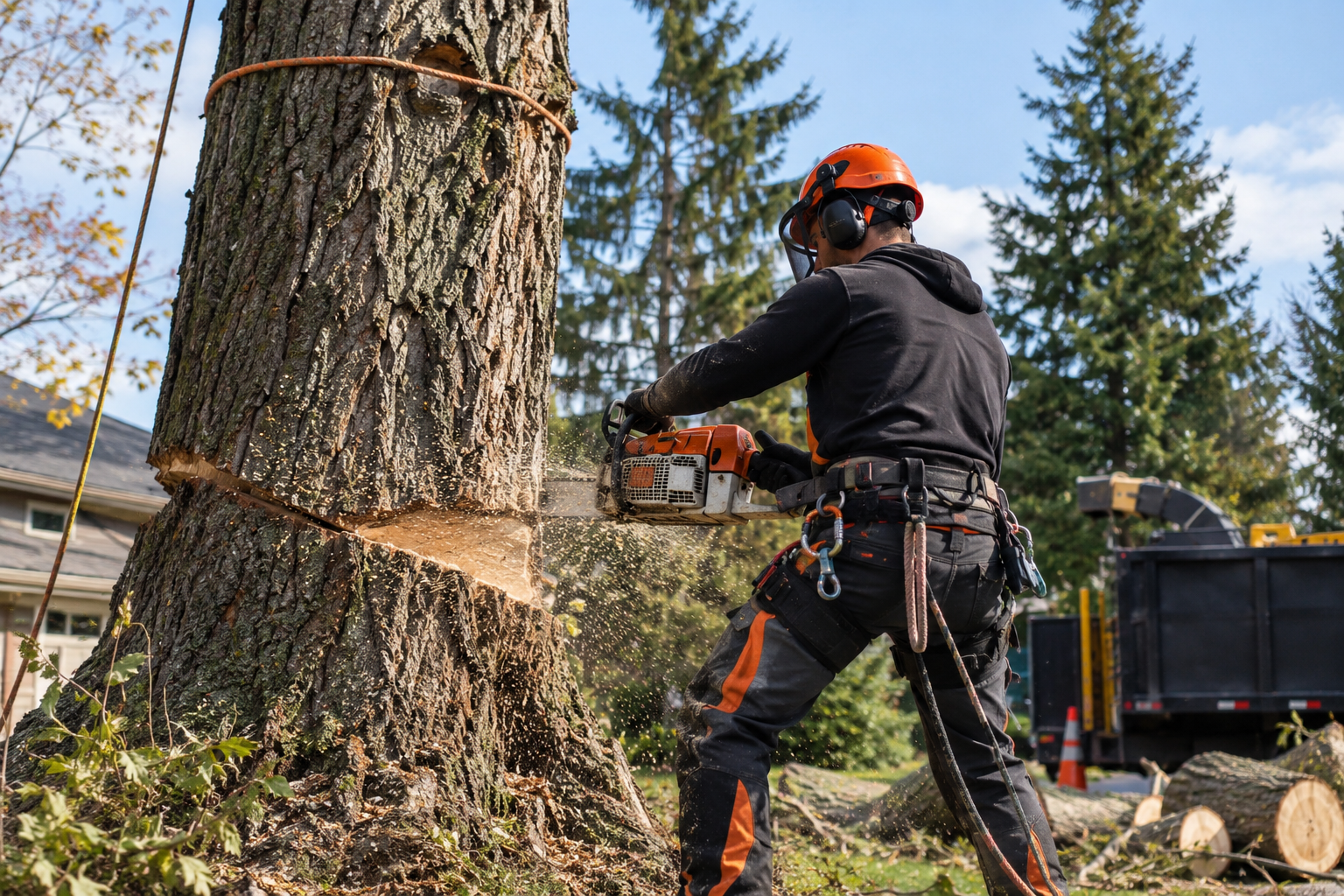
Pruning can be part of a wider plan for a property. Bosco Tree offers tree removal where an assessment supports removal, stump grinding and removal after a tree is cut, and 24/7 emergency tree service for urgent storm-related hazards. For documentation needs, see arborist reports. Where construction is planned, lot clearing and other tree services should be discussed alongside permits and tree-protection requirements.
Explore service coverage beyond North York through tree trimming in Toronto, tree removal in Richmond Hill, tree removal in Mississauga, tree removal in Brampton, tree removal in Vaughan and tree removal in Markham. Visit the Bosco Tree home page or learn about our company. Bosco Tree is based in Toronto and serves the GTA.
Why choose Bosco Tree for North York tree pruning?
Good pruning begins with a defensible purpose and ends with a clear explanation of the work performed. A tree pruning North York quote should make the requested objective and the work limits clear before scheduling. Bosco Tree’s ISA-certified arborists bring more than 30 years of experience to tree care. The company is fully insured with $2 million liability coverage. A professional credential does not mean every tree can be made risk-free, and pruning is not a guarantee against future branch failure. It does mean the work is approached with arboricultural knowledge and attention to the condition and structure of the tree.
We discuss the goal before proposing cuts. If the objective is roof clearance, we focus on the branches involved. If the issue is deadwood or storm damage, we consider the affected parts and targets below. If the tree is in a ravine-protected area, the municipal review comes first. If the requested shape would require excessive removal, we explain the limits and talk through a more appropriate option. This straightforward conversation helps owners understand what the job can and cannot accomplish.
Our service base is Toronto, and we serve North York from Toronto. We do not suggest that we have a North York storefront or local office. You can ask questions, describe the tree and receive a free quote without committing to a job. For urgent situations, 24/7 emergency service is available. For routine pruning, the quote helps you understand the scope and make an informed decision.
Get a free North York tree pruning quote
Tell us which tree needs attention, what you want to achieve and whether the site is near overhead wires, construction or a ravine. Call 416-206-1460 or use the contact form to request a free quote.
What to expect from your free pruning quote
When you call, describe the tree, the property area and the concern in your own words. Mention whether you want deadwood removed, clearance improved, lower branches raised or a structural concern assessed. If a storm has changed the tree, explain when and how. A photo may help us understand what you mean, but do not climb or stand under a tree to take one. If wires are involved, stay clear and report them when you contact us.
During the assessment, the arborist reviews the tree’s structure, the branches under discussion, access, targets and nearby constraints. We can explain the type of pruning being proposed and what the tree may look like afterward. If the tree is covered by City rules or appears to be within a ravine-protected area, the scope must be reviewed in light of applicable approvals. The quote is not a permit and should not be treated as authorization from the City.
Your quote will describe the agreed work and any cleanup that is included. Ask whether the plan covers selected branches or a broader crown objective, how debris will be handled and what is outside the scope. If you have a property manager or shared ownership arrangement, confirm permission before scheduling. A clear quote lets you make a decision with the service and limits understood.
Frequently asked questions about tree pruning in North York
1. Is North York covered by Toronto’s tree by-laws?
Yes. North York is part of the City of Toronto, so City-wide rules, including Municipal Code Chapters 813 and 658, may apply depending on the tree, property and work.
2. When does Toronto require a permit for a private tree?
The City’s current guidance generally requires a permit before injuring or removing a private tree measuring 30 centimetres or more in diameter at breast height. Check current City guidance for your tree and proposed work.
3. Do ravine rules apply to trees of every size?
Chapter 658 may protect trees of any size within a designated ravine or natural feature protection area. Check the City’s map and permit guidance for the specific property; proximity alone does not determine coverage.
4. What is crown thinning?
Crown thinning selectively removes branches to reduce density while maintaining the tree’s natural outline and main structure. An arborist determines whether it fits the tree and the goal.
5. What is crown raising?
Crown raising removes selected lower branches to improve clearance over a walkway, driveway or other area. The work should retain suitable structure and avoid removing more lower canopy than necessary.
6. When is the best time to prune a tree?
Timing depends on species, health, pruning objective, weather and any pest or disease concerns. An arborist can recommend timing for the particular tree; an urgent hazard should not be ignored solely to wait for a general season.
7. Does pruning guarantee a tree will not lose branches?
No. Pruning can address identified conditions but cannot eliminate every future risk or predict every failure. The assessment should explain observed concerns and reasonable management options.
8. Does Bosco Tree serve North York from a local office?
No. Bosco Tree is based in Toronto and serves North York from Toronto. The company does not claim a North York office.
9. How do I get a quote for tree pruning in North York?
Call Bosco Tree at 416-206-1460 or submit a request through the contact form. Describe the tree, your objective, access conditions and any known wires or ravine location to request a free quote.
10. What if a tree limb is touching an electrical wire?
Do not touch or cut the limb or wire. Keep people clear and contact the utility or emergency services as appropriate. Mention the hazard when contacting Bosco Tree.