
Tree Removal Richmond Hill: Insured, ISA-Certified Arborists
Need a tree assessed or removed in Richmond Hill? Bosco Tree serves Richmond Hill from Toronto. Call 416-206-1460 or request your free quote.
Key facts: ISA-certified arborists; 30+ years of experience; fully insured with $2 million liability coverage; 24/7 emergency service; free quotes. Services include tree removal, pruning and trimming, stump grinding, arborist reports, TPZ installation and lot clearing.
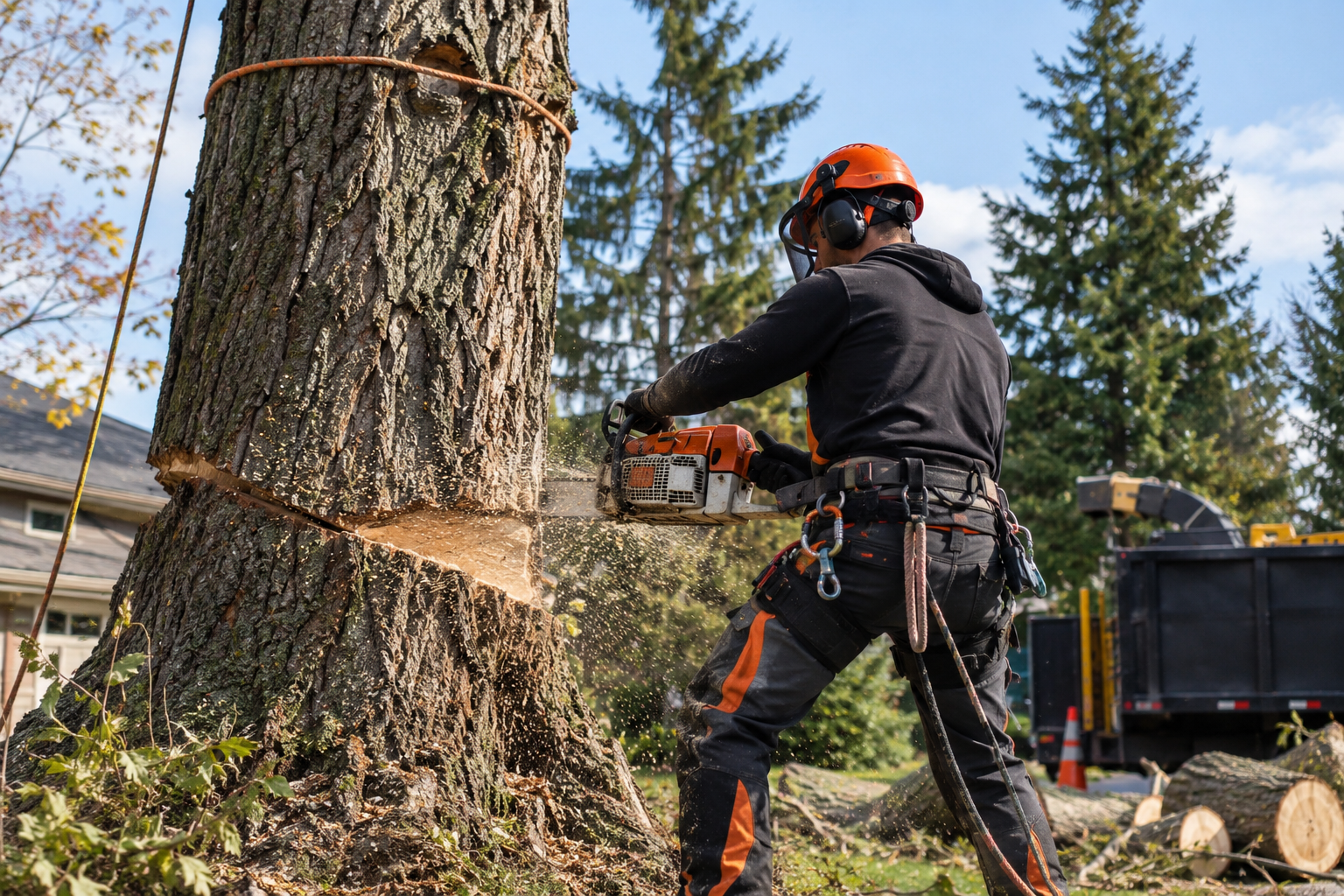
When a declining tree, storm-damaged limb or planned property project makes removal necessary, tree removal Richmond Hill homeowners can arrange through Bosco Tree begins with a careful look at the tree and its setting. Our Toronto-based crew serves Richmond Hill without claiming a local office. We assess the tree, explain practical options, identify concerns that may affect the work and provide a free quote before you decide. If removal is appropriate, our team plans the work around nearby homes, gardens, fences, driveways and retained trees. Searches for “tree removal Richmond Hill” often begin with concern about a damaged limb or uncertainty about a tree’s condition; an assessment should address the tree and the property owner’s priorities.
Richmond Hill properties include established residential streets, newer homes, mature trees, changing lot layouts and properties near natural features. Those surroundings matter. A tree overhanging a roof calls for a different work plan than a tree with open access, while a tree near a ravine or the Oak Ridges Moraine may call for additional care and municipal review. We make the site itself part of the decision rather than treating every removal as the same job.
Tree removal is not always the first or only answer. An arborist may identify a manageable dead limb, recommend pruning to address a specific concern, or explain why removal is the sensible option. A clear assessment helps you distinguish between a tree that needs immediate attention, one that can be maintained and one that should be monitored. We can discuss those alternatives in plain language and match the recommended service to the condition you describe.
Tree removal Richmond Hill: a careful, property-specific service
Homeowners contact an arborist for many reasons: a tree has died, a trunk or major limb has been damaged, roots are affecting a planned project, a tree is crowded against a structure, or a storm has changed the way the canopy hangs. Some callers are dealing with a tree that has declined over time; others need urgent help after a sudden break. The appropriate response depends on what is present, how stable the tree is, what lies beneath it and whether municipal rules apply.
Our first priority is to understand the request. Tell us what changed, whether any part of the tree is touching a building or access route, and whether there is a new hazard such as a hanging limb. Photographs can help describe the situation, but a photograph is not a substitute for an on-site assessment when the condition or access is uncertain. For an immediate threat, keep people away from the area and call for emergency tree service rather than attempting to move or cut a suspended limb yourself.
For a planned removal, we look at the whole work zone. That means considering the tree’s height and form, the likely direction and sequence of controlled cuts, access for equipment, overhead obstructions, nearby property and the safest place to handle branches and wood. Where there is not enough room for a simple ground-based approach, the crew can plan a controlled dismantling sequence. The objective is to remove the tree in manageable sections while protecting the surrounding property as far as the site allows. For tree removal Richmond Hill homeowners can plan around, the practical questions include tree condition, nearby targets, safe access and any approval requirements—not simply how quickly the trunk can be cut.
We can also discuss what happens after the tree is down. Some owners want the wood left in an agreed location; others ask about hauling, or whether the stump should be ground. The quote should state the work being proposed so that there is no confusion about which portions are included. Stump grinding is a separate service choice and may be useful when you want to reuse the area, improve access or remove a tripping obstacle. A stump does not disappear simply because the trunk has been removed.
How our Richmond Hill tree removal process works
- Tell us what is happening. Call or use the contact form to describe the tree, the property area, access and any urgency. For a storm concern, say whether branches are hanging, the trunk has shifted or a structure is affected.
- Arrange an assessment. We review the situation, inspect the relevant features and ask about your goal. The assessment helps distinguish removal from pruning, emergency make-safe work or a report request.
- Review local requirements. Before work begins, confirm whether permits or other approvals are needed for this particular tree and parcel. We explain the issue and can identify when an arborist report or tree-protection measures may be relevant, but municipal decisions remain with the Town.
- Receive and consider the free quote. The quote reflects the observed scope, access, risk and requested cleanup. Ask us to clarify any item that is unclear before accepting.
- Plan the work area. We confirm access, identify items that should be moved or kept clear, agree on handling of material and discuss practical safety boundaries.
- Complete the agreed work. The crew follows the planned approach, adjusts if site conditions require a safe change, and communicates if the observed work differs from the original scope.
- Review cleanup and next steps. Confirm the condition of the work area, discuss any agreed stump service and keep any permit or replacement obligations in your own project records.
This sequence is intended to make a significant property decision easier to understand. It is not a promise that every tree can be removed on the same schedule or with the same equipment. Tree condition, weather, access, municipal requirements and the presence of nearby utilities can change the plan. We will explain what is known and what needs further confirmation before proceeding.
When removal may be appropriate—and when another service may fit
A tree may merit removal when it is dead, has substantial structural defects, has sustained severe damage, or conflicts with a property need that cannot reasonably be addressed another way. The word “may” matters: an individual branch failure or visible cavity does not by itself establish that the entire tree must come down. Assessment considers the tree’s condition and targets around it, not just one symptom.
In other cases, targeted pruning can remove dead or interfering branches while retaining the tree. A tree with a canopy extending over a roof or walkway may benefit from a carefully scoped pruning job rather than removal. If you are uncertain, ask for an assessment that addresses both options. Bosco Tree also provides tree care and arborist services, including tree trimming and pruning and arborist reports for situations where documented professional input is useful.
Tree removal is a substantial intervention. We do not recommend it merely because a tree drops leaves, shades a portion of a yard or has a surface root. A discussion of condition, placement and the owner’s objective can help find a proportionate response. Where removal is necessary, a planned approach helps avoid turning a difficult job into an avoidable property risk.
Equipment, access and safety for tree removal
Equipment choice follows the tree and the site. A crew may use climbing systems, rigging, ropes, saws, lowering devices and ground equipment to dismantle a tree in controlled sections. Depending on access and the work plan, specialized lifting equipment may be appropriate. No single machine is right for every Richmond Hill property. Narrow side yards, garden beds, fences, outbuildings, overhead lines and limited vehicle access can all affect how material is moved and where equipment can be positioned.
Before cutting, the work area is considered from the perspective of the crew and people nearby. Keep children, pets and visitors away from the active zone, and follow any barriers or instructions given by the crew. If a vehicle, garden furniture or movable item is in the intended access or drop area, move it in advance when practical. Do not enter the work zone to retrieve a possession while cutting or rigging is underway. A branch that looks small from the ground can move unpredictably when tension changes. Tree removal Richmond Hill work beside a house, fence or garden therefore needs a deliberate sequence, clear boundaries and an agreed plan for handling cut material.
Trees near electrical conductors need special caution. Do not touch a tree or limb that is in contact with a wire, and do not attempt to cut, pull or reposition it. Stay clear and contact the appropriate utility or emergency service if there is an immediate danger. A tree contractor must work within applicable safety requirements and must not treat a live electrical hazard like an ordinary branch. Let us know about visible wires before the assessment so the situation can be approached appropriately.
Stability can also change after a storm. Wind, saturated soil, a split union or a partly detached limb may create a hazard that is not obvious from a street view. In urgent circumstances, Bosco Tree offers 24/7 emergency tree service. Emergency work prioritizes immediate hazards and safe access; it does not mean that every follow-on removal, stump service or municipal requirement is automatically included. A full scope can be discussed after the urgent condition is controlled.
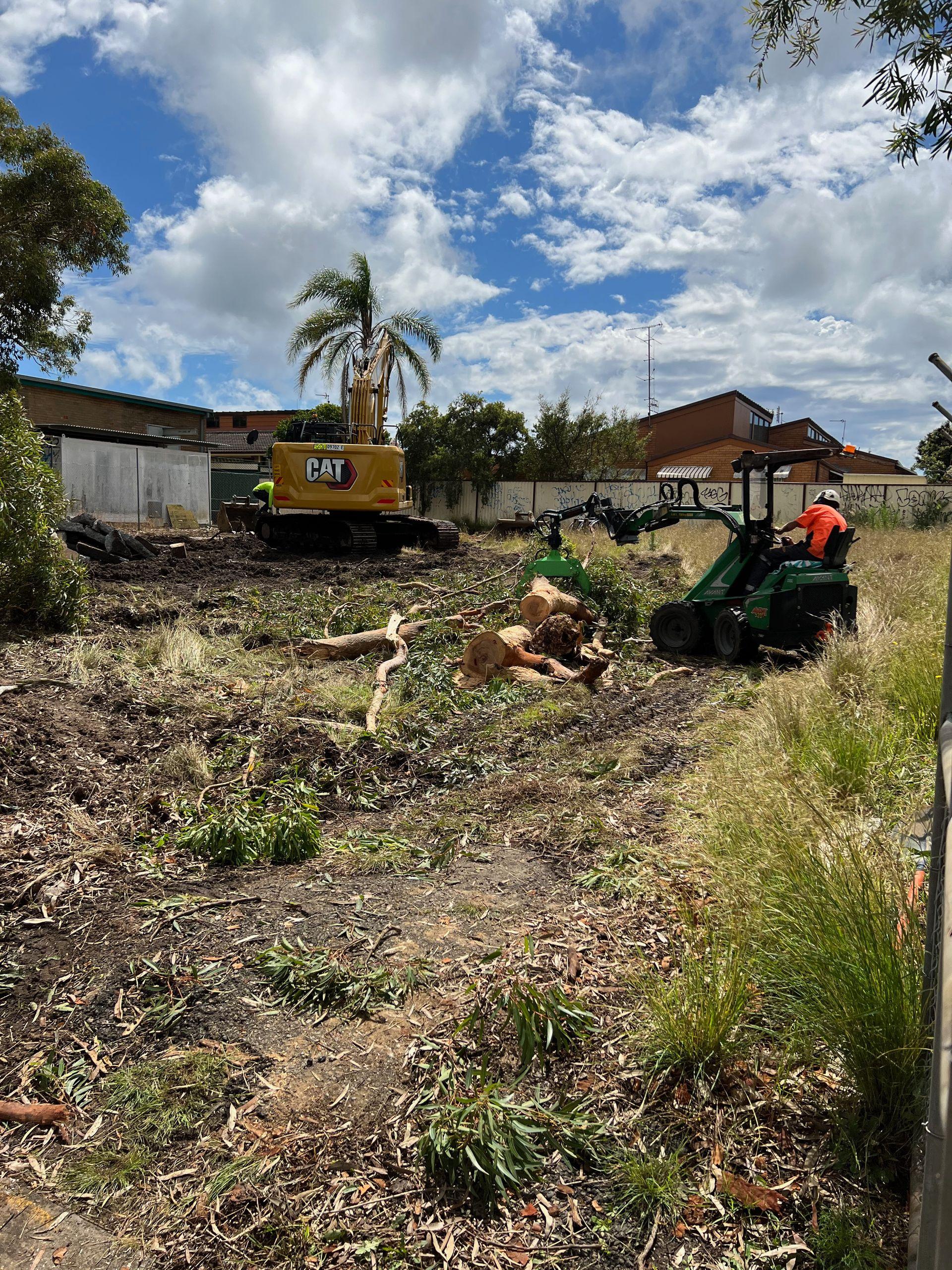
What affects a tree removal quote in Richmond Hill?
Every free quote is based on the actual work requested and the site conditions observed. It is more useful to understand the factors than to rely on a generic price estimate. We do not publish or promise a price without assessing the job, and no fee or completion timeline should be inferred from this page. Ask for a written description of the proposed scope so you can compare the work included with your needs.
- Tree size and structure: Height, trunk diameter, branching pattern, lean, decay indicators and the condition of major unions can affect the sequence and complexity of removal.
- Location and targets: A tree close to a home, garage, fence, driveway, neighbouring property or retained landscaping may need carefully controlled sectional work.
- Access: Gate width, slope, surface conditions, overhead clearance and the ability to bring equipment to the work zone can influence the approach.
- Nearby utilities: Overhead conductors and underground services can constrain work and require additional precautions or coordination.
- Tree health and urgency: A stable planned removal differs from storm damage, a hanging limb or a tree that has shifted. Emergency response is assessed according to the active hazard.
- Material handling: Chipping, moving, leaving or hauling branches and wood are different scope choices. State your preference before accepting the quote.
- Stump and roots: Stump grinding is not the same as trunk removal. Ground access, stump size and the intended use of the area affect whether it is suitable.
- Permits and documentation: A Town permit, arborist report, tree inventory or protection plan may be relevant. These are separate considerations; municipal fees and decisions are not set by Bosco Tree.
These factors are not a checklist of add-on charges. They explain why two trees that look similar in a photograph can require different plans. Share the intended outcome—such as removing the tree, preserving nearby trees, clearing a defined area or preparing a site—and the quote can address the work that actually matters to you.
Richmond Hill tree by-law and permit guidance
The Town of Richmond Hill’s current public guidance identifies its Tree Preservation By-law, By-law 19-25, Municipal Code Chapter 1015. The Town says a permit is required before removing or injuring a private-property tree with a diameter at breast height (DBH) of 15 centimetres or more. DBH is measured 1.4 metres above ground. The Town also defines injury broadly, including damage to a tree and removal of more than 20 per cent of live tissue within a 12-month period. These are useful starting points, not a substitute for checking the current requirements for the specific property and proposed work.
Richmond Hill’s guidance also describes a Tree Protection Zone (TPZ) based on trunk size and identifies encroachment into that zone as a potential injury concern. This is important when a removal or construction plan is close to trees that will remain. A crew should not treat the area under a canopy as automatically available for parking, equipment placement, excavation or material storage. If a project involves grading, construction or multiple trees, ask whether the Town expects a tree inventory, preservation plan, arborist report or a separate site-related review.
The Town notes that trees on sites with active Plan of Subdivision or Site Plan applications are handled through the application’s Tree Inventory and Preservation Plan process rather than a separate tree permit. That distinction is specific to the applicable planning process. Do not assume it applies to an ordinary residential request or to every development proposal. Confirm the route with the Town’s current planning information.
For lots in or near the Oak Ridges Moraine, ravines, woodlands or other natural features, the location and type of work can matter beyond a basic tree-cutting question. The Town’s public tree-permit page and by-law confirm the private-tree rules, but they do not, by themselves, settle all possible Moraine, natural-heritage, site-alteration or development approvals for a particular parcel. We therefore do not promise that a tree permit is the only approval needed. Check the current tree by-law and applicable planning and natural-heritage rules with Richmond Hill before authorizing work where the property’s designation or project status is uncertain.
Permit thresholds and exemptions can be subject to change and may depend on facts such as ownership, location, development status and the nature of proposed pruning. A Town permit is not guaranteed simply because a contractor recommends removal, and a contractor should not represent that a permit has been approved unless it has. If you have a permit already, share its conditions during the quote discussion so the work plan can respect them. Official guidance and decisions remain with the Town. Before booking tree removal Richmond Hill service for a tree that may be protected, confirm the current requirements for the address and scope; a contractor’s assessment does not replace municipal authorization.
For neutral background, the Town’s own tree-cutting permit information sets out the current private-tree threshold and application route. If the tree may be protected, ask the Town before cutting or undertaking work that could damage it. A professional assessment can help document tree condition, identify likely protection concerns and make a practical scope easier to discuss with municipal staff.
Arborist reports, TPZ installation and work near retained trees
Not every removal request needs an arborist report. When documentation is required for a municipal or construction process, an arborist report can record tree condition, describe proposed work and help inform a tree-protection approach. The precise contents depend on the application and the Town’s instructions. Ask the reviewing authority what it requires before commissioning a report; the required format, inventory and plan can vary with the project.
TPZ installation can help establish a visible protection area around trees that are meant to remain near construction or site work. The Town’s guidance gives TPZ dimensions based on DBH, so the correct zone should be identified for each relevant tree rather than estimated casually. A fence or barrier is only useful if its position and maintenance match the protection requirements. Keep machinery, soil, building materials and excavation away from protected roots and trunks unless the applicable plan and approvals specifically allow the activity.
Where a removal is requested because a project footprint conflicts with existing trees, consider the whole set of retained and proposed trees before work starts. A sequence that protects one tree while placing fill or traffic over another tree’s root area may not meet the project objective. Bosco Tree can discuss arborist report services and lot clearing as related work, while the owner and project team confirm Town requirements.
Have a tree removal or permit question? Call Bosco Tree at 416-206-1460 or request a free quote online.
Serving Richmond Hill neighbourhoods from Toronto
Bosco Tree serves Richmond Hill from Toronto, including Oak Ridges, Bayview Hill, Mill Pond, Jefferson, Observatory, Elgin Mills, Langstaff, Richvale and Westbrook. These neighbourhood names help orient the service area; they do not imply that Bosco Tree has a local office in Richmond Hill. For each address, travel access, tree location, neighbouring structures and municipal context still shape the work plan. Tree removal Richmond Hill requests in Oak Ridges may call for particular attention to natural-feature context, while established lots elsewhere can raise access and neighbouring-property questions.
In Oak Ridges and areas close to the Moraine, the property’s relationship to natural features may be especially important to establish before a tree is removed or a site is altered. On a property with mature trees and a ravine edge, protect the remaining canopy and ground area as carefully as the tree selected for removal. Bayview Hill, Mill Pond and Richvale homes can present mature residential settings where the space between a trunk, house, fence and neighbouring yard is limited. A removal plan must account for those real boundaries, not just the tree’s height.
Jefferson, Westbrook and Elgin Mills include different mixes of residential lots and newer or established landscapes. A young tree can be near a mature canopy; a yard may have a narrow side entrance or fixed hardscape that limits equipment access. In Observatory and Langstaff, trees may sit alongside busy property edges, driveways or shared boundaries. A site visit helps determine how to move branches and wood without assuming that a machine can reach every area.
Emerald ash borer-related decline is one possible reason a property owner requests an ash-tree assessment. We do not infer that any individual tree is affected from its species alone. Look for the actual condition and ask an arborist to assess it; if a tree has become structurally compromised, the response may be pruning, monitoring, removal or another appropriate measure. Storm damage likewise ranges from a broken small branch to a split trunk or a tree leaning toward a target. The safest response depends on the condition, and suspected electrical contact must be left to qualified utility or emergency personnel.
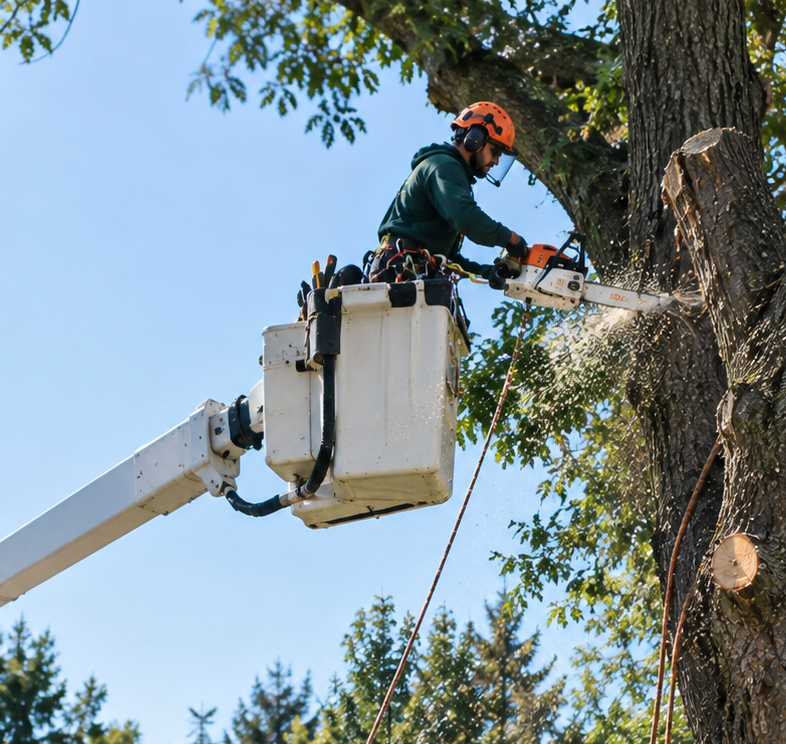
Other tree services available in Richmond Hill
Removal can be one part of a wider tree-care plan. Bosco Tree offers multiple services across its service area, including:
- Tree pruning and trimming to address specific dead, interfering or structurally concerning branches.
- Stump grinding and removal when you want to address the remaining stump after a tree is down.
- 24/7 emergency tree service for urgent storm damage and hazardous tree conditions.
- Arborist reports for documented professional input where a project or review calls for it.
- Lot clearing for a defined site scope, subject to applicable approvals and protection requirements.
For work elsewhere in the Greater Toronto Area, see tree removal in Toronto, tree removal in Mississauga, tree removal in Brampton, tree removal in Vaughan and tree removal in Markham. Property owners who also need pruning in another Toronto area can learn about tree pruning in North York. You can also visit the Bosco Tree home page, review all tree services or learn about Bosco Tree.
Why choose Bosco Tree for Richmond Hill tree removal?
Choosing a tree contractor means trusting a crew to work around people, homes and valued landscape features. Bosco Tree brings ISA-certified arborists and more than 30 years of experience to tree-care work. The company is fully insured with $2 million liability coverage. These are concrete credentials, not a promise that every site condition can be predicted in advance. We use assessment and communication to explain what work is proposed, what may affect access and what needs to be confirmed before the job proceeds. People researching tree removal Richmond Hill often want to understand the work scope, tree protections and cleanup before deciding; we discuss those points during the quote process.
Serving Richmond Hill from Toronto means we are transparent about where the business is based. We do not claim a Richmond Hill office. The free-quote process gives you a chance to describe your concerns, ask about a removal or pruning alternative, and discuss the scope before making a decision. If you have a municipal permit or plan, it can be considered alongside the site conditions, while the Town remains the source for approval decisions.
For urgent hazards, 24/7 emergency service can help address the immediate tree-related situation. For planned work, a measured assessment may support a better decision than rushing into removal. In either case, our aim is to make the options understandable, plan for safe work and leave you clear on what the quoted scope does and does not include.
Request a free Richmond Hill tree removal quote
Talk with Bosco Tree about the tree, its location, any recent damage and your preferred outcome. Call 416-206-1460 or send the details through our contact form. We serve Richmond Hill from Toronto.
What to expect from your free quote
When you contact us, explain whether you are seeking removal, pruning, emergency help or an arborist report. Share the neighbourhood, a short description of the tree and any known access limits. If it is safe to do so, a few clear photographs can help us understand what you are describing. Do not approach a leaning tree, hanging limb or damaged wire to take a closer picture.
During an assessment, we discuss the tree’s condition, the site features that affect work, and the result you want. We may ask whether a Town permit has been obtained or whether the property is part of a development application. If this is unknown, that does not prevent a conversation, but the applicable approval must be confirmed before regulated work begins. The free quote explains the recommended scope and any separately discussed work such as stump grinding or material handling. It is not a municipal permit and does not replace approvals.
Before accepting, check that the quote reflects your goals: whether the tree is to be removed, what cleanup is included, how the wood will be handled, whether stump work is included, and which conditions must be addressed by the owner or authority. Raise questions before scheduling. If the tree’s condition changes or a storm creates new damage after the quote, contact us so the plan can be reviewed rather than relying on an outdated assessment.
Frequently asked questions about tree removal in Richmond Hill
1. Do I need a permit to remove a tree on private property in Richmond Hill?
The Town’s public guidance says a permit is required before removing or injuring a private-property tree with a DBH of 15 centimetres or more, subject to the by-law’s requirements and any applicable exemptions. Confirm the current rules for your property with Richmond Hill before work starts.
2. How does Richmond Hill measure a tree’s diameter?
The Town describes DBH as the tree diameter measured 1.4 metres above the ground. If the measurement or the rule’s application is uncertain, ask the Town or a qualified arborist rather than estimating from the trunk base.
3. Does pruning require a permit in Richmond Hill?
The Town’s by-law guidance treats some damage to a tree as injury, including removal of more than 20 per cent of live tissue within 12 months. Whether a particular pruning plan is regulated depends on its details, so confirm before substantial pruning.
4. Is a tree permit the only approval needed near the Oak Ridges Moraine?
Not necessarily. The parcel’s location and project can affect other natural-heritage, site-alteration or planning reviews. Check the current requirements with Richmond Hill before work if a property is on or near a protected feature or development area.
5. Can an arborist recommend pruning instead of removal?
Yes. An assessment may identify a specific pruning or monitoring option, or it may find that removal is the more appropriate response. The recommendation depends on the tree’s condition, targets and your objectives.
6. Does Bosco Tree have an office in Richmond Hill?
No. Bosco Tree is based in Toronto and serves Richmond Hill from Toronto. The company does not claim a local Richmond Hill office.
7. Does the free quote include stump grinding?
Stump grinding is a separate service scope unless it is specifically included in the quote. Tell us whether you want the stump addressed so the proposed work is clear before you accept.
8. Does Bosco Tree provide emergency tree service at any time?
Bosco Tree offers 24/7 emergency tree service. If a tree or limb is near electrical wires, keep clear and contact the utility or emergency service as appropriate; do not touch or cut it.
9. What information should I have ready when requesting a quote?
Share the property area, the tree’s location, what has changed, access limitations and your desired result. Mention known permits, development plans, overhead wires or storm damage, and send photographs only when they can be taken safely.
10. How do I request tree removal service in Richmond Hill?
For tree removal Richmond Hill service, call Bosco Tree at 416-206-1460 or use the contact form to request a free quote. We serve Richmond Hill from Toronto and will discuss the scope and relevant site conditions.