Tree Removal Permit Toronto: Do You Need One?
If you are planning work, the question “Do I need a tree removal permit Toronto?” deserves an answer before anyone starts cutting. Toronto regulates certain trees on private property and separately protects ravines and natural features. The rules depend on where the tree stands, its size and whether the proposed work may injure it. Confirm current requirements with the City of Toronto before proceeding. If you searched “tree removal permit Toronto,” start by checking the property location and the tree’s circumstances rather than assuming one rule covers every site.
Key takeaways
- Toronto’s private-tree rules generally cover trees 30 cm in diameter or larger, measured at 1.4 m above ground.
- Ravine and Natural Feature Protection areas have separate requirements; tree size alone may not determine whether work is regulated.
- Do not assume a tree is exempt because it is on private land, damaged, or near a proposed project.
- Confirm current requirements with the City. Bosco Tree can help with arborist reporting and tree-related application support.
This guide summarizes the main Toronto by-law considerations in plain language; it is not a substitute for a current City determination or legal advice. If you are also planning the work itself, read about what affects tree removal quotes in Toronto and how to choose a tree service in Toronto. Bosco Tree is a Toronto-based tree removal and arborist company serving the GTA. Its services include ISA-certified arborists, arborist reports, tree removal, pruning, stump grinding, tree protection zone installation and lot clearing. Learn about Bosco Tree and its tree care services.
Tree removal permit Toronto: when Toronto rules may apply
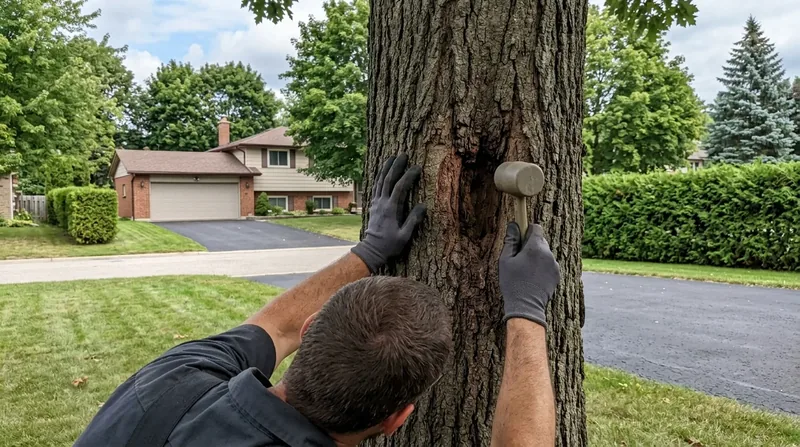
Toronto’s Municipal Code Chapter 813, Trees, includes rules for private trees. The City’s guidance says that a permit is required before injuring or removing a protected private tree. In general, a private tree with a diameter of 30 centimetres or greater measured at 1.4 metres above ground falls within the protected-tree threshold. The exact situation and applicable provisions matter, so check the City’s current guidance and confirm current requirements with the City. For an address-specific answer to “tree removal permit Toronto,” verify both tree size and whether the property falls under another protection regime.
The measurement is often called diameter at breast height, or DBH. It is not a measurement taken at the ground, and visual estimates can be misleading. If the trunk is angled, grows on a slope, forks or has multiple stems, the City’s definitions and measurement instructions may affect the assessment. Avoid treating a quick tape measurement by an unqualified observer as a final permit decision.
The City describes circumstances beyond a simple size check in its guidance on when to apply for a tree or ravine permit. It also distinguishes private trees from City-owned trees, which have their own process. If you are unsure whether a tree is privately owned, municipal, or near a property boundary, clarify ownership and jurisdiction before arranging work.
What counts as injuring a protected tree?
Removal is not the only action that can trigger tree-protection rules. Construction and other work can harm a tree without felling it. Excavation, grading, soil compaction, changes to drainage, cutting roots, storing materials near roots or damaging the trunk and crown may all raise tree-protection questions. Whether a specific activity requires a permit or other approval depends on the facts and the applicable by-law.
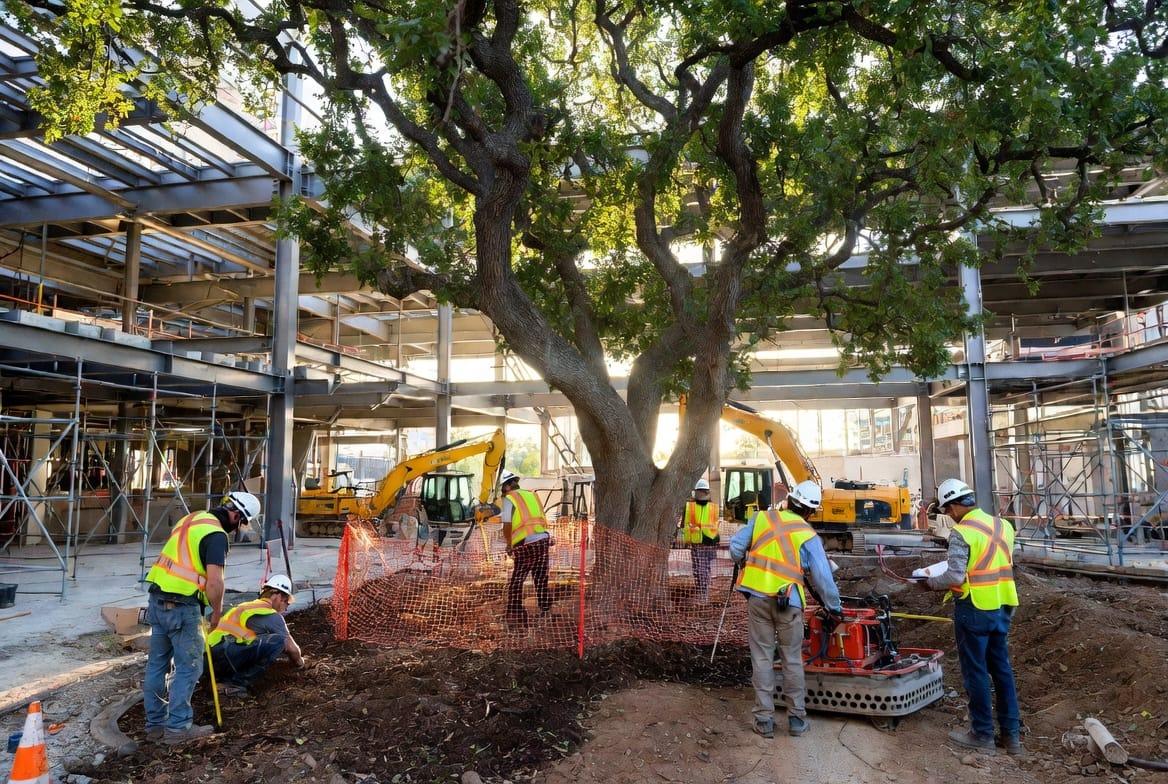
This is why a project should be reviewed as a whole. If work includes a new addition, driveway, utility trench, landscaping, demolition or construction access, identify all affected trees before work begins. A Toronto arborist report can help document the site’s trees and the proposed work. Where retained trees need safeguards, tree protection zone installation may form part of the project plan.
Toronto ravine and natural feature protection
Properties in a designated Ravine and Natural Feature Protection area may be subject to Chapter 658, the Ravine and Natural Feature Protection by-law. The City’s permit guidance explains that regulated activity in these areas can include work affecting trees regardless of size, as well as activities that alter the land. Location is therefore critical: a small tree may raise a permit question if it is inside a protected area. A search for “tree removal permit Toronto” cannot settle that location question without the City’s current property-specific confirmation.
Do not rely only on a neighbour’s experience or a property listing description to decide whether Chapter 658 applies. Check the City’s mapping and confirm the current status with the relevant City staff. If the property is near a ravine, natural feature or slope, let the arborist know at the start so the assessment can account for the setting.
When might an arborist report be needed?
An arborist report documents relevant tree conditions and professional observations for a defined purpose. It may be requested as part of a permit application, development review or tree-protection plan. The report can help the City understand which trees are present, their condition and how proposed work may affect them. The exact report contents depend on the application and current municipal instructions. If your “tree removal permit Toronto” question is tied to a planned project, ask early whether the City requires supporting arborist documentation.
The City of Toronto’s application guidance identifies an arborist report among the materials applicants may need for a tree or ravine permit. The City publishes separate guidelines for completing an arborist report. Review current instructions before preparing documents: the required information can vary with the type of application, number and location of trees, site conditions and proposed work.
An assessment may describe tree identification, size, health, condition, structure and the effect of proposed activity. If some trees are to remain, the project may also need details about how they will be protected. A report should correspond to the actual site and project, not be a generic letter re-used for different work. Share site plans, design drawings and project context with the arborist where applicable.
Construction near trees and a Tree Protection Zone
Construction can harm trees through root disturbance, compacted soil, grade changes or damage to the trunk and branches. A tree protection zone, or TPZ, is a clearly marked area intended to help prevent damaging activity around a tree selected for retention. The appropriate protection plan depends on the tree, the site and the project requirements. Fencing alone does not resolve every risk: placement, installation, maintenance and site compliance all matter.
If an application or project calls for TPZ installation, arrange the protection measures before site work could affect the tree. Keep machinery, materials, excavation and fill out of protected areas unless the applicable plan and authority allow otherwise. Bosco Tree offers TPZ installation and can discuss how tree-related protection fits into a project. Check with the City and the project’s qualified professionals to determine which requirements apply.
How Bosco Tree can help with a Toronto permit process
Bosco Tree’s arborist services include reports and support connected to tree applications. The first useful step is to share the property location, the reason for the proposed removal or injury, the tree’s visible condition, and whether construction or landscaping is planned. Photos may help start the conversation, but an on-site assessment and formal report may be needed for the specific application.
An arborist can assess the tree and help prepare the professional documentation relevant to the request. Depending on the job, the work may also involve identifying trees to retain, describing protection measures or clarifying how proposed work relates to nearby trees. For removal work itself, review Bosco Tree’s Toronto tree removal service. For professional evaluation and documentation, see arborist reports in Toronto.
Keep in mind that a private company cannot promise the City will approve an application or decide how the municipality will interpret a by-law. The City is the authority on its current requirements and decisions. Bosco Tree can provide tree-care expertise and application support; the property owner or authorized applicant remains responsible for confirming what must be submitted, when work may proceed, and any conditions imposed by the City.
For an initial discussion, contact Bosco Tree at 416-206-1460 or info@boscotree.ca. Quotes are free. Provide enough information to identify the property and planned work, but do not send sensitive personal documents through an unconfirmed channel.
Other GTA municipalities have their own tree rules
Toronto’s thresholds should not be carried over to a property in another municipality. Municipalities may define protected trees differently, set different measurement standards, distinguish public and private trees, and have separate requirements for development, ravines or natural areas. Even adjacent cities can have materially different rules. Confirm current requirements with the city that governs the property before proceeding.
- Mississauga tree permits and removal guidance
- Brampton tree services and private-tree information
- Vaughan tree removal permits and protection
- Markham tree information and permit guidance
- Richmond Hill private-tree permit information
These links are starting points, not a substitute for checking the current by-law, forms and municipal advice for your address. For work in a different GTA community, use that municipality’s official website and ask whether the tree is regulated, whether any work short of removal is covered, and what documents are required. If your property is in Mississauga, you can also learn about tree removal services in Mississauga; for other service areas, see Brampton, Vaughan, Markham and Richmond Hill.
Planning removal, pruning or a broader site project
A permit question is a good point to clarify the intended outcome. Is the tree dead, unsafe, interfering with planned construction, or being removed for another reason? Could pruning address the concern? Does the design allow the tree to remain with protection? A professional assessment can help explain the tree’s condition and the available work options. For pruning services in a nearby Toronto district, see tree pruning in North York. The final choice depends on the facts, the owner’s objectives and the City’s requirements.
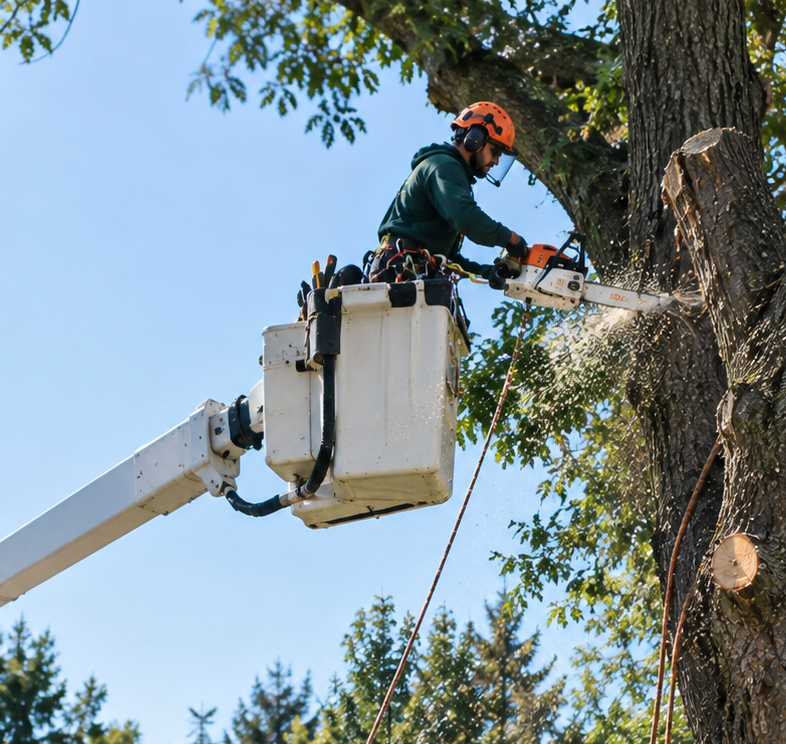
When removal is appropriate and authorized, arrange the physical work so that the crew knows the approved scope. If the proposal refers to specific trees, make sure they are clearly identified on site. Avoid relying on informal descriptions such as “the one near the garage” when multiple trees or adjacent properties are involved. Clear tagging, plans and communication reduce the chance that the wrong tree is affected.
Ask how the stump, limbs and logs will be handled and whether the work leaves the property ready for the next project phase. Bosco Tree offers stump grinding and removal, tree trimming and pruning and lot clearing across the GTA. If the work is urgent because of a hazard, contact the company’s 24/7 emergency tree service rather than waiting for a routine estimate.
Why early coordination can save confusion
Owners often contact an arborist after design decisions or work schedules have been set. When trees are involved, earlier coordination can surface constraints before they become costly changes to the project plan. The arborist can identify which trees should be assessed, discuss potential protection issues and clarify what information may be useful for a municipal submission. The City remains the source for its current review requirements and decisions.
For builders, property managers and commercial owners, make the tree assessment part of due diligence alongside site planning and contractor coordination. Share the same current drawings with the arborist, designer and relevant project team members. Confirm who is responsible for the application and who will ensure that approved protections remain in place while work is underway.
For homeowners, write down your questions before the site visit. Identify the tree you are concerned about, what you want to do and any known plans for the property. If a neighbour’s tree or shared boundary is involved, explain that too. An organized conversation helps the arborist focus the assessment and identify what needs verification.
A careful checklist before tree work begins
- Identify the municipality and confirm whether the tree is on private or public land.
- Check the current official tree and ravine rules for the property.
- Ask whether the tree is protected and how its diameter should be measured.
- Determine whether the location is within a ravine or natural feature protection area.
- Confirm whether a permit, arborist report, tree protection plan or additional documents are required.
- Wait for all necessary approvals and understand their conditions before regulated work begins.
- Tell the tree-care contractor which tree is approved for work and identify trees to retain.
- Confirm scope for removal, stump grinding, debris handling and protection of the site.
- Keep records of the application, approval and work instructions available during the project.
What the application process may involve
The City’s process can involve more than filling in a short form. Depending on the type of permit and the site, applicants may need to provide property and tree information, an arborist report, plans showing proposed work and protection for trees to remain, or other supporting documents. Ravine-related requests can have different documentation needs from a private-tree application. Use the City’s current application page as the controlling checklist, because forms and requirements can change. For “tree removal permit Toronto” decisions, current official instructions and the details of the property take precedence over generic advice.
Before submitting, make sure the plans and report describe the same proposal. Tree identifiers should correspond across the report, site plan and application. If the plans change after an arborist has assessed the site, ask whether the documents need to be revised. A complete, consistent description gives reviewers a clearer understanding of the request; it does not guarantee approval.
Owners should also decide who will communicate with the City, respond to follow-up questions and keep track of any conditions. If an arborist or contractor is assisting, agree on the boundaries of that support. Ask what documents the professional prepares, what the owner must submit and how the team will identify the approved tree and work area once a decision is made. Confirm current requirements with the City and do not assume a third party’s involvement transfers the owner’s responsibility.
When permission is granted, read the conditions carefully. Conditions may affect which tree can be worked on, what protections must remain in place, what replacement or site measures are required, or when the authorized work may occur. The approval is specific to its terms; a quote or verbal summary should not replace the written decision. If any condition is unclear, ask the City for clarification before work starts.
How to avoid common permit mistakes
The most avoidable problem is treating the tree question as something to resolve after the work has been scheduled. Start with the municipality and property context before setting a removal date. Toronto’s private-tree rules and ravine protections are not interchangeable, and a project can involve multiple trees or activities that affect trees not slated for removal.
Do not infer that a tree is exempt because it appears unhealthy, is partly hidden by a structure, has been pruned before, or is on a property where a previous owner removed a tree. Each situation needs current confirmation. If a tree is dead or presents an immediate hazard, document the condition safely and contact the City or a qualified arborist to understand what process applies. Avoid relying on online forum answers or a neighbour’s permit experience as a determination for your property.
Another frequent mistake is measuring the wrong part of the trunk. Toronto’s general private-tree threshold refers to diameter at 1.4 metres above ground, but stem form, slopes and multiple trunks can complicate the measurement. Check the City’s own measurement guidance, and have an arborist assess the tree when the result is uncertain. A diameter estimate should not be used to override a protected-area check.
Finally, distinguish a quote from authorization. A tree service may be able to assess the tree and prepare a report, but a contractor’s proposal does not grant permission to injure or remove a protected tree. Confirm the applicable approval and its conditions with the City before regulated work begins. Keep the approval and any tree identification plan available to the crew.
What to prepare before contacting an arborist
You can make the first discussion more focused by gathering basic information. Note the property address, the tree’s approximate location on the site, whether it is near the property line, and what work you are considering. If the project is part of construction, have a current site plan or drawings available. Record whether the property is near a ravine, valley, slope or other natural feature, while recognizing that the City must confirm any designation.
Describe what prompted the request. Is there a visible defect, storm damage, a conflict with a proposed building area, or a need to clear a lot? Mention when the condition changed and whether anyone has already inspected the tree. Photos can help identify what to discuss, but take them only from a safe location and do not approach a damaged tree or touch branches near overhead wires.
Ask the arborist what service fits the question: a visual assessment, a formal arborist report, a removal estimate, pruning advice or tree protection support. If a municipal application is involved, get the City’s current submission instructions and share them with the professional preparing the report. That allows the work to be directed toward the actual application rather than a generic document.
Bosco Tree serves Toronto and the GTA, providing arborist reports and tree services. You can contact the company by phone at 416-206-1460, by email or through the online contact page. Quotes are free. For context on the company and its services, visit Bosco Tree’s home page, read about the company, or review its service overview.
Need help understanding your tree project?
Ask Bosco Tree about an arborist report, tree removal, pruning or tree protection zone installation.
Frequently asked questions about Toronto tree removal permits
Does every tree removal in Toronto require a permit?
No. Requirements depend on factors such as tree size, location, ownership and the type of work. Confirm current requirements with the City before proceeding.
What is the general size threshold for a protected private tree?
Toronto’s general threshold is a private tree 30 centimetres or greater in diameter, measured at 1.4 metres above ground. Check the City’s current guidance for the specific tree and situation.
How is a tree measured for the Toronto threshold?
The general reference is diameter at 1.4 metres above ground, often called DBH. Trunk angle, slope or multiple stems may affect measurement; consult City guidance or an arborist.
Do ravine rules apply to small trees?
They may. In a Ravine and Natural Feature Protection area, City guidance describes controls affecting trees regardless of size. Confirm the property’s status and current requirements with the City.
Is a permit required to prune or injure a tree?
Some activities short of removal may injure a protected tree or affect a ravine or natural feature. Ask the City whether the proposed work needs authorization before it starts.
When might I need an arborist report?
The City may require an arborist report for a tree or ravine permit or related project review. Check the current application instructions for the documents required in your case.
Can Bosco Tree guarantee that my permit will be approved?
No. The City decides applications and sets any conditions. Bosco Tree can provide arborist services and support with tree-related documentation, but cannot promise an approval.
Do other GTA cities use Toronto’s tree by-law?
No. Municipalities have their own rules and processes. Check the official page for the city where the property is located and confirm its current requirements.
Can I remove a tree while waiting to confirm permit requirements?
Do not begin potentially regulated work until you have confirmed the applicable requirements and received any necessary authorization from the City.
How do I ask Bosco Tree about an arborist report or removal quote?
Call 416-206-1460, email info@boscotree.ca or use the contact page. Bosco Tree offers free quotes.
Confirm the rules first, then plan tree work around the approved scope.