
Tree Removal Cost Toronto: What Affects Your Quote?
Understanding tree removal cost Toronto homeowners and property managers may encounter starts with one important point: there is no responsible one-size-fits-all price for removing a tree. The quote depends on the tree, its setting, the work requested and how the crew can complete the job safely. A clear assessment gives you a useful comparison without relying on an online guess. If you searched for “tree removal cost Toronto,” use the site-specific factors below to request comparable proposals.
Key takeaways
- A tree’s size, species, condition, access and surroundings affect the work plan.
- Ask whether the quote includes stump grinding, cleanup, debris hauling and any permit-related support.
- Compare written scopes, safety planning, insurance and arborist qualifications—not only the bottom line.
- Bosco Tree provides free quotes for tree work in Toronto and the GTA. Call to arrange an assessment.
This guide explains what an on-site estimate should account for, how to compare proposals, and what questions can help you decide whether a tree service is prepared for the job. Bosco Tree is a Toronto-based tree removal and arborist company serving the GTA, with ISA-certified arborists, more than 30 years of experience, full insurance with $2 million liability coverage, and 24/7 emergency service. Visit the Bosco Tree home page, learn more about the company or explore the full range of tree care services.
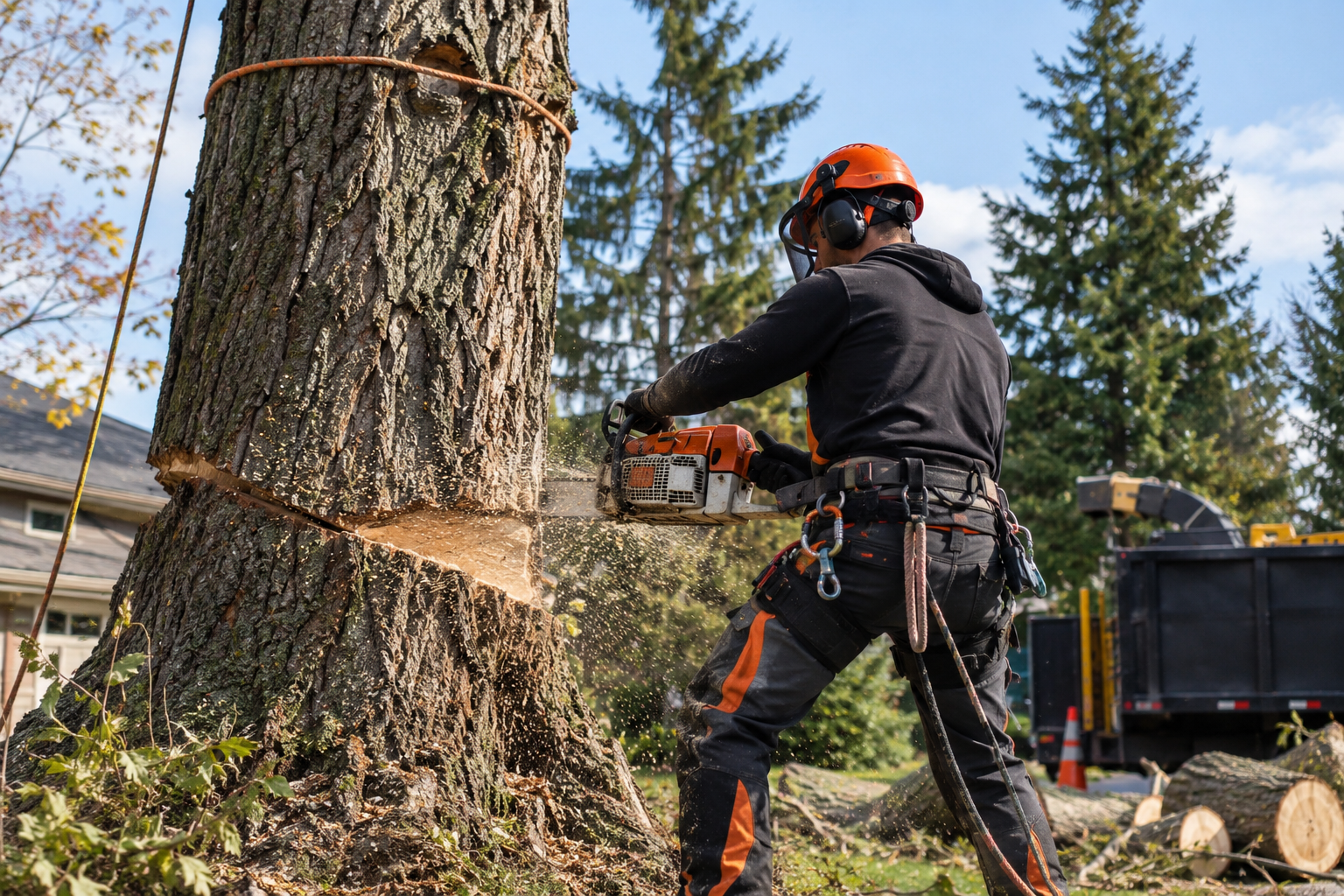
Tree Removal Cost Toronto: The Main Quote Factors
The phrase tree removal cost Toronto often suggests a simple calculation based on height or trunk width. Those measurements matter, but removal is not simply a matter of cutting a trunk into pieces. The estimator needs to understand how the tree can be dismantled, where each section can land, what must be protected and what happens to the wood and branches afterward.
Two trees that appear similar from the street may require different plans. One may stand in an open yard with direct equipment access; another may be over a garage, close to a fence, surrounded by gardens or positioned beneath utility lines. A sound estimate reflects those differences rather than promising a universal rate before the site is understood.
Tree height, trunk size and overall form
Larger trees generally involve more material to manage and may need more controlled work. The arborist considers height, trunk diameter, crown spread, number of stems, branch structure and the tree’s lean. A wide crown can extend over several areas even when the trunk is not especially large. Multiple leaders, heavy limbs or a pronounced lean can affect where cuts are made and how sections are lowered.
Measurements support the assessment, but they do not tell the whole story. A large tree in a clear area may allow a different work method than a smaller tree tightly confined between buildings. Ask the estimator to describe the important features they observed and how these shape the proposed approach.
Species and wood characteristics
Species can influence branching patterns, wood properties, crown shape and the practical handling of removed material. The estimator may use species identification to understand the tree’s form and how it responds to cutting. A dense, spreading crown or a tree with several substantial limbs may take a different sequence of cuts from a narrower, more upright specimen.
Species also matters when the request relates to disease, decline or a broader property project. If preserving nearby trees is important, discuss whether targeted tree trimming and pruning could address the concern instead of removal. For a tree that needs professional care rather than removal, ask about tree pruning in North York and the best time to trim trees in Toronto.
Tree condition, defects and urgency
The tree’s health and structural condition affect both urgency and work planning. Dead limbs, cracks, cavities, decay, root damage, storm impacts or instability can change how a crew approaches the tree. These signs should not be diagnosed solely from a photograph or brief phone description. An in-person assessment can help distinguish a routine removal request from a situation that needs prompt attention.
When damage follows severe weather or a limb threatens a building, tell the company what has happened and whether the area is currently accessible. Bosco Tree offers 24/7 emergency tree service. For a storm-related situation, see how storm-damaged tree removal is approached in Toronto. If the tree is an ash, the specific condition and project context still need assessment; read more about ash tree removal in Toronto.
Site access and the work area
Access is one of the practical details that can make a major difference to a removal plan. The estimator needs to see how people, tools and equipment can reach the tree and how removed material can leave the property. A broad driveway or open side yard may offer different options from a narrow passage, locked gate, steep grade or small urban lot with no direct access. Even when a crew can reach the tree on foot, the work may involve more staging and careful handling.
Tell the estimator about gates, shared lanes, parking limits, garden beds, retaining walls, underground concerns you know about and any access arrangements that must be coordinated. If the property is commercial, describe operating hours, pedestrian routes, loading areas and the need to keep particular areas open. The quote should explain what access assumptions it makes. If those conditions change on the scheduled workday, the work plan may need to be reviewed.
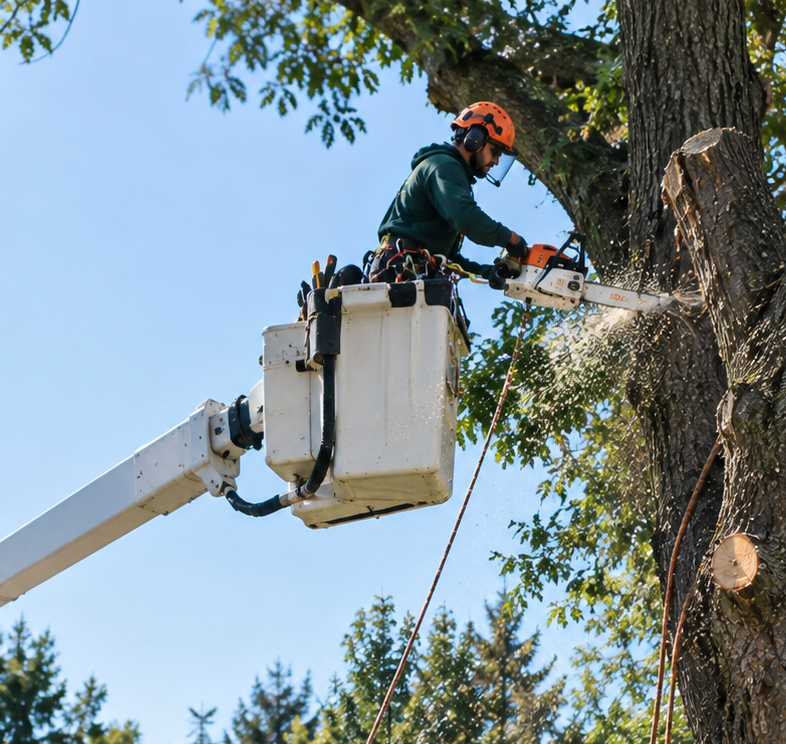
Equipment use is not automatic. A site assessment should determine whether equipment can be positioned safely and whether the ground and access route are suitable. Forcing equipment through a constrained property can create risk to the site and the tree. A qualified provider will explain the intended approach rather than treating equipment as an unexplained line item.
Nearby buildings, fences and overhead lines
A tree close to a home, garage, shed, fence, deck, road or neighbouring property requires a plan that accounts for those targets. Branches may extend across property lines, and the trunk may be close to structures. A crew may need to remove the tree in smaller sections and control how pieces are lowered. The plan should consider what needs protection, where workers can position themselves and how material will be moved without damaging the surrounding area.
Overhead electrical wires require particular caution. Do not attempt to cut, move or work near a tree contacting or entangled with power lines. Identify the lines during the quote and ask the company how the hazard will be managed, including whether coordination with the utility is necessary. A responsible contractor will not minimize a line hazard to make a proposal seem simpler.
When a tree straddles a boundary or limbs over a neighbour’s space, discuss ownership, permissions and communication before work begins. A written quote cannot itself settle a property dispute. If the request forms part of a larger development or landscape project, a lot-clearing plan for GTA properties can help identify multiple trees, access routes and protection requirements together.
Condition, risk and emergency work
A dead, declining, storm-damaged or visibly unstable tree may require a different sequence of work from a healthy tree. The arborist may need to evaluate hanging limbs, trunk defects, root plate movement, cracks, decay or damage to nearby trees. The visual symptoms are clues for assessment, not a guarantee that the cause or risk is known. Share what you have observed and when it changed; avoid approaching or touching a hazardous tree.
Urgency can affect scheduling and the operational plan. Emergency work outside ordinary hours may require a prompt response and different coordination than a planned removal. If the immediate priority is making a site safer, ask the company to clarify the emergency work scope separately from any follow-up removal, stump treatment or cleanup. Bosco Tree offers 24/7 emergency tree service in Toronto for urgent situations. When possible, send clear photos from a safe distance, but understand they do not replace an on-site evaluation.
Do not assume that an emergency eliminates permit or utility requirements. A damaged tree can still be within a regulated area or near public infrastructure. Ask the contractor what should be confirmed with the municipality or utility and who will make that contact. For an overview of responding to weather damage, read the storm-damaged tree removal guide.
Permits, reports and project documentation
Permit obligations are not included in a tree’s physical characteristics, but they can affect how the job is scoped and scheduled. Depending on the property, local rules may call for municipal review before a protected tree can be injured or removed. Some development projects also need an arborist report or tree-protection documentation. Ask early whether the estimator has identified any possible approvals and what the quote does or does not include.
Do not treat an informal verbal opinion as a permit approval. Confirm current requirements with the appropriate city, especially if the property is near a ravine, in a protected area, part of a construction project or in a municipality outside Toronto. Bosco Tree provides arborist reports and can discuss tree-related application support. For more on local compliance, read the Toronto tree removal permit guide. The correct process depends on the location and project facts; do not begin regulated work until the necessary requirements have been confirmed.
Stump grinding, removal and site finish
Tree removal and stump work are related but distinct. Ask whether the estimate covers cutting the trunk and branches only, or also grinding the stump. If stump grinding is included, establish the intended depth or finish and whether surface roots are part of the requested work. Grinding can produce wood chips and leave a below-grade area that may need to be filled or landscaped. The preferred result depends on whether you plan to plant, lay sod, install paving or leave the area natural.
Stump removal is not always identical to grinding. A full root-ball excavation may disturb more of the site than grinding, so make sure you are discussing the same method with each provider. If you intend to install a new feature or plant a replacement tree, tell the arborist; the finish and location can affect the plan. Bosco Tree offers stump grinding and removal in Toronto, which can be scoped with the tree work or considered separately.
Ask how the site will look after the crew leaves. The agreement should say whether the stump remains, whether chips stay on site, and how the work area will be tidied. If you want the chips removed or the site prepared for another use, make that expectation explicit rather than assuming it is part of every removal quote.
Debris handling and cleanup
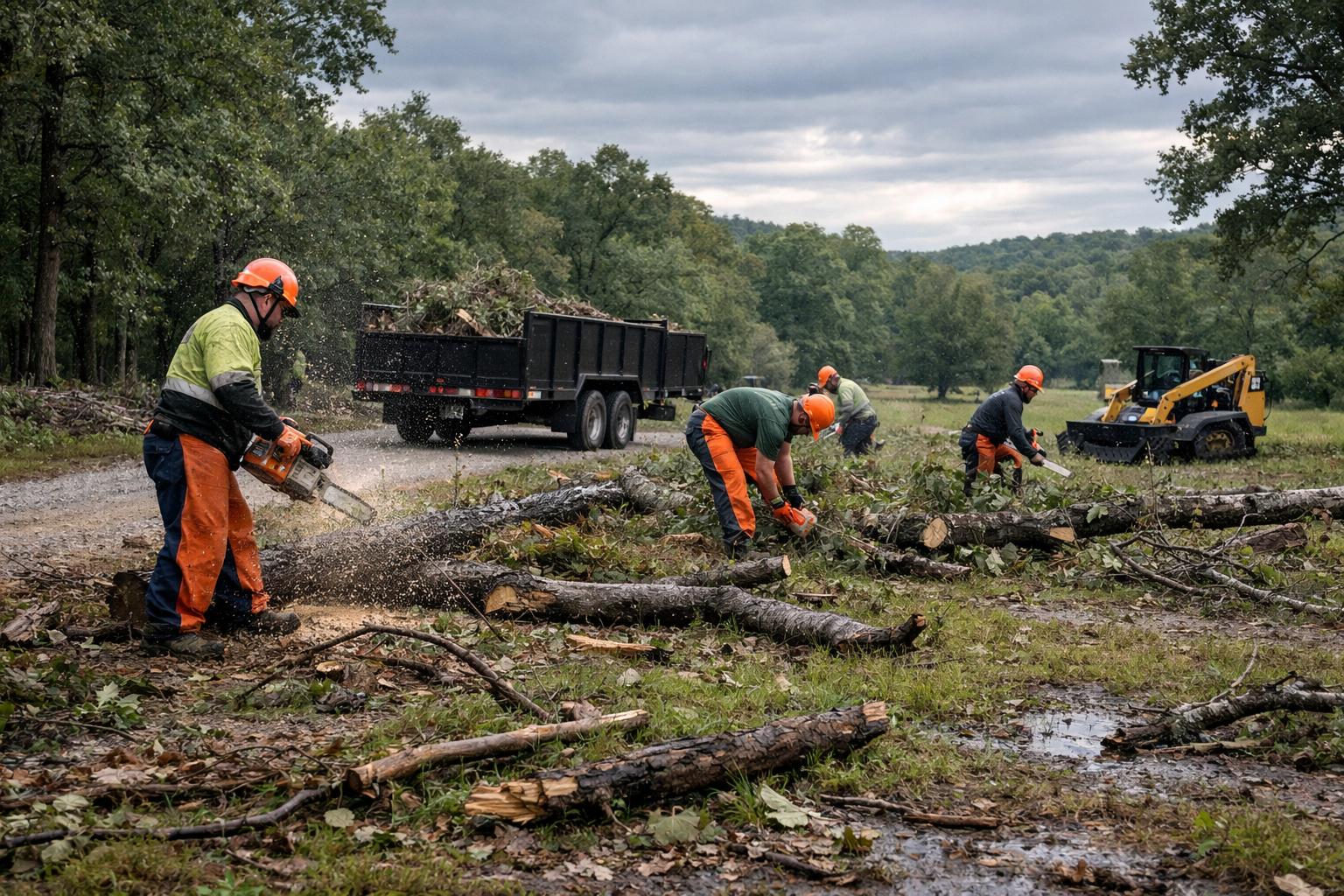
A tree produces branches, foliage, logs and sawdust. The quote should describe what happens to that material. Some customers want usable logs left in a designated spot; others prefer wood and green waste to be hauled away. There may also be a difference between rough cleanup and a more complete tidy-up. Neither arrangement is universally best: the important part is knowing exactly what you are buying.
For a commercial property, specify how the site must be left for staff, tenants, visitors or the next contractor. Point out any surfaces that need extra protection and whether the work area must be cleared before reopening. If the property is shared, clarify where trucks or debris can be staged and who is responsible for notifying others. A detailed scope helps prevent disagreement after the cutting is complete.
When proposals use vague terms such as “cleanup included,” ask what that means in practical terms. Do branches and smaller debris leave the property? Are larger logs cut to a specified length? Is a stump included? Is the lawn or garden area restored? A short written clarification before booking is easier than trying to settle different interpretations later.
How to compare tree removal quotes fairly
To make a useful comparison, ask each company to quote the same job. Share the same photos and site details, explain your desired stump outcome and cleanup, and make sure each estimator knows about structures, wires, access restrictions and potential permit needs. Whenever possible, request an on-site assessment. A site visit gives the estimator a chance to inspect the tree, ground and work area rather than relying on assumptions. A site-specific “tree removal cost Toronto” quote should make those observations and assumptions clear.
For a step-by-step hiring checklist, see how to choose a tree service in Toronto. Compare proposals line by line. Look for a description of the tree or trees, the removal method at a high level, protection of nearby property, stump work, debris handling, exclusions, anticipated site condition after the job and any permit assumptions. Confirm how changes are handled if conditions differ from what was visible during the estimate. Ask whether the quote includes the entire agreed scope or whether some tasks are separate.
Check who will perform the work and what qualifications matter for the job. ISA-certified arborists have relevant professional credentials, but you should still ask who is responsible for planning and supervising this specific work. Ask for proof of current insurance and confirm that the coverage is appropriate to the work and site. Bosco Tree is fully insured with $2 million liability coverage and has ISA-certified arborists. These facts do not replace your own review of the proposal, but they help you ask informed questions.
Price is part of the decision, not a substitute for scope. A lower quote may reflect a narrower service, omitted stump grinding, debris left on site or a different work method. It may also simply reflect a contractor’s operations. Ask for clear explanations rather than assuming either that the lowest proposal is unsafe or that the highest is best. A professional company should be willing to discuss what is included and what is not. When comparing “tree removal cost Toronto” quotes, ask each provider to explain the same scope before you compare.
Questions to ask before you accept a quote
- Did you inspect the whole tree and the surrounding work area?
- What removal method do you expect to use, and how will nearby structures be protected?
- Are stump grinding or stump removal included, or quoted separately?
- Will the branches, chips and logs be hauled away or left on site?
- Does the scope account for overhead wires, narrow access and neighbouring property?
- Could a permit or arborist report be needed, and who confirms that?
- Can you provide proof of insurance and explain the qualifications of the people planning the work?
- What happens if weather or newly discovered site conditions require a change?
- How will the area be left when the work is complete?
What a free on-site quote from Bosco Tree should clarify
A useful quote is not just a number. It should connect the observed site conditions to a defined scope of work. During an on-site visit, the estimator can examine the tree’s size, form and condition, access to the work area, the nearby structures and lines, and the requested finish. That context helps make the proposal more relevant than an estimate based on a generic description. When someone asks about “tree removal cost Toronto,” the site visit is where the important scope details become concrete.
Before the visit, note which tree or trees you want assessed and what outcome you are considering. Take photographs only from a safe place. Tell the estimator whether you are planning construction, whether there are known municipal permit considerations and whether the job is urgent. If you are not sure whether removal, pruning or a report is the right starting point, explain the underlying concern and ask what assessment is appropriate.
Discuss what happens to every part of the tree. The proposal should make it easy to tell whether the stump stays, whether grinding is included, how brush and logs are handled and how the immediate work area is left. If you need a particular stump finish, want logs retained or require debris removal, get that expectation written into the scope. If a task is outside the quote, ask what arrangement would cover it.
Clarify what the quote assumes about site access and safety. Mention gates, overhead wires, fences, garden features, parking, neighbouring property and constraints on working hours. An estimator cannot account for a condition they have not been told about or cannot see. If a condition changes, ask how that affects the work plan and whether the company will consult you before performing additional work.
Finally, ask about relevant credentials and insurance. Bosco Tree’s work is supported by ISA-certified arborists, more than 30 years of experience and full insurance with $2 million liability coverage. A free quote is a chance to discuss the job and understand the proposed scope; it is not an obligation to book. Learn more about Bosco Tree’s approach, call 416-206-1460 or use the contact form.
Choosing the right service for the problem
Removal is a significant decision, and sometimes the underlying concern points to another service. A tree with a few interfering branches may benefit from pruning. A tree with a damaged limb might need urgent evaluation and targeted work. A stump left from an earlier removal may be the only issue. A group of trees that conflict with a planned site project may call for coordinated lot clearing and preservation planning.
Describe what you are trying to solve rather than deciding the technical method before an arborist has assessed it. For example, if branches approach a roof or block access, explain that concern and ask whether selective pruning is appropriate. If a tree is leaning or has storm damage, emphasize the safety concern and request an evaluation. If the tree is already down, clarify whether it is blocking access or creating an immediate hazard. Bosco Tree also serves nearby communities; see its local tree removal pages for Mississauga, Brampton, Vaughan, Markham and Richmond Hill.
For routine maintenance, learn about Toronto tree trimming and seasonal considerations for tree pruning. If the tree is no longer viable or the owner has a justified need for removal, explore tree removal in Toronto. A stump left after removal can be handled through stump grinding. For a wider property project, see GTA lot clearing. A qualified arborist can help you understand the practical choices, but only you can decide the property outcome after considering the assessment and any municipal requirements.
Red flags to watch for in a low quote
A low quote is not automatically a problem, but an unusually brief or vague proposal deserves questions. Be cautious if a provider offers a firm figure without understanding the tree or work area, cannot explain what the price includes, or dismisses concerns about wires, structures and access. A promise to start immediately should not replace a safe work plan or appropriate authorization.
Ask whether the company is insured and request confirmation of relevant coverage. If a contractor cannot provide evidence of insurance, that is a serious reason to pause. Similarly, where arborist expertise is relevant, ask who is qualified to assess the tree and plan the work. Bosco Tree has ISA-certified arborists; a low quote that provides no qualified assessment may not be a like-for-like comparison.
Be wary of pressure to decide on the spot, cash-only arrangements with no written scope, unclear responsibility for cleanup, or refusal to explain how a stump, logs and debris will be treated. Avoid any proposal that encourages you to ignore a permit question or proceed before requirements are confirmed. Ask for the scope and key assumptions in writing so you can review them without pressure.
When a proposal omits details, give the provider a chance to clarify. Sometimes the difference is simply that one company has excluded stump grinding or hauling while another includes it. A fair comparison asks both companies to price the same work. If the scope remains unclear or safety and insurance questions are unanswered, consider another assessment before committing.
Get a clear assessment before you decide
Bosco Tree provides free quotes for tree removal and arborist services across Toronto and the GTA. Describe the tree, its setting and the result you want.
Frequently asked questions about tree removal cost in Toronto
Can I get a reliable tree removal quote from a photo?
A photo can help start the conversation, but it cannot show every factor affecting access, condition, nearby hazards or cleanup. An on-site assessment is a better basis for a detailed quote.
Does tree height determine the entire quote?
No. Height matters, but so do trunk size, crown form, species, condition, access, nearby structures and lines, stump work and debris handling.
Is stump grinding automatically included in tree removal?
Not necessarily. Ask whether the quote includes stump grinding or removal, what finish is intended and whether wood chips will be removed or left on site.
Will a tree removal quote include hauling away the branches and logs?
It depends on the written scope. Confirm whether branches, chips and logs are hauled away, left in a designated area or handled under a separate arrangement.
Does an emergency tree job have the same scope as planned removal?
Not always. Emergency response may prioritize immediate safety and stabilization. Confirm which urgent tasks are included and whether stump work or later cleanup is separate.
Do I need a permit before removing a tree in Toronto?
Possibly. Toronto rules can apply to protected private trees and work in ravine and natural feature areas. Confirm current requirements with the City before work begins; see the Toronto tree removal permit guide.
How can I compare two different quotes?
Compare the same scope: tree work, protection measures, stump treatment, debris removal, exclusions and permit assumptions. Ask both providers to clarify anything vague.
What credentials should I ask a tree service about?
Ask who will assess and plan the work, what relevant arborist qualifications they hold and whether the company can provide proof of current insurance for the job.
Does Bosco Tree charge for a quote?
Bosco Tree offers free quotes. Call 416-206-1460 or use the online contact form to discuss an assessment.
What should I do if a tree is damaged and unsafe?
Keep people away from the danger area and do not approach a tree near power lines. Contact a qualified tree service for urgent guidance; Bosco Tree offers 24/7 emergency service.
Talk with Bosco Tree about your tree, site and preferred scope.
Request a free quote or email info@boscotree.ca.