Tree Service Toronto: A 12-Point Checklist for Choosing Well
Ready to discuss a tree? Contact Bosco Tree for a free quote. Call 416-206-1460 or request a quote online.
Choosing a tree service Toronto homeowners and property managers can trust is about more than finding a crew with a saw. If you searched for “tree service Toronto,” you are likely comparing providers for a real property concern. The right company should understand the tree, the work area, the risks to people and property, and the local rules that may apply. It should also explain the scope in writing before work begins. Use this 12-point checklist to compare providers, ask specific questions, and choose a team whose approach feels professional from the first call through cleanup.
Key takeaways
- Ask for proof of liability insurance and workers' compensation coverage before work starts.
- Confirm who will assess the tree, who will supervise the crew, and what qualifications are relevant.
- Get a written estimate that describes the work, exclusions, access needs, and cleanup.
- Ask how the company will protect people, structures, gardens, neighbouring property, and retained trees.
- For protected trees or construction work, establish who will check permits and tree-protection requirements.
- Compare the quality and completeness of proposals, not only the amount of work they promise.
This checklist is useful whether you need a hazardous limb removed, routine pruning, stump grinding, a written arborist report, or a full tree removal. For tree service Toronto property owners can evaluate confidently, compare how each provider assesses the full site, not only the tree. It also applies to managers responsible for commercial grounds, rental buildings, institutions, and development sites. Begin with Bosco Tree’s Toronto and GTA service overview and the broader tree-care services offered if you are still defining the job.
Tree Service Toronto: What a Qualified Provider Should Offer
Tree work often happens close to roofs, fences, driveways, overhead lines, parked vehicles, gardens, and public walkways. A decision that sounds simple—remove a limb, reduce a canopy, take down a tree—can involve a complex sequence of cuts, rigging choices, access planning, and debris handling. A sound hiring decision starts with a company that treats the site as a system, not just a tree.
Toronto properties vary widely. A mature tree may stand in a narrow side yard, over a neighbour’s garage, behind a fence, or beside a busy sidewalk. The company should ask about access and surrounding conditions, then verify them during an on-site assessment. If the work is part of a larger project, details such as site access, tree protection, or clearing limits need to be discussed before a crew arrives. For planning context, see Bosco Tree’s guidance on tree removal permits in Toronto and arborist reports for Toronto properties.
1. Ask for proof of insurance and workers’ compensation coverage
Before anyone climbs, cuts, or brings equipment onto the property, ask for proof of liability insurance and workers’ compensation coverage. Do not rely on an informal assurance that the company is “covered.” Ask the provider to show current documentation and make sure the company name matches the business you are hiring. If a property manager or project owner has specific certificate requirements, explain them before accepting the estimate.
Liability coverage and workers’ compensation serve different purposes. Liability insurance addresses certain claims for accidental property damage or injury to others, subject to the policy. Workers’ compensation coverage relates to worker protection and applicable obligations. Neither phrase is a substitute for seeing evidence and confirming that the proposed contractor is the insured party. If several subcontractors may be involved, ask which business is responsible for each part of the job and how coverage applies.
Also ask whether the crew will be working near neighbouring property, public space, or shared access. A responsible estimator will want to know the work boundaries and will explain how the team intends to control the site. Bosco Tree states that it is fully insured with $2 million liability coverage. A prospective customer can ask Bosco Tree for proof of liability insurance and workers’ compensation coverage relevant to the job.
2. Confirm the arborist’s qualifications and who supervises the work
Ask who will evaluate the tree and who will be on site directing the work. “Arborist” can describe a role, but the word alone does not tell you which training, credential, or experience applies. Ask directly whether the person assessing your tree is an ISA-certified arborist, what the certification covers, and whether that person will remain involved once work begins. If the crew leader differs from the estimator, ask how the work plan will be communicated.
For a removal decision, a good assessment should consider condition, structure, targets, access, and the consequences of proposed cuts. For pruning, the discussion should explain the objective—such as removing deadwood, addressing a conflict, or shaping a canopy—rather than simply promising to “cut it back.” If you want written professional analysis rather than a work quote, ask whether an arborist report is appropriate. Bosco Tree’s team includes ISA-certified arborists and the company reports more than 30 years of experience. Read more about the company on its about page.
3. Insist on a written estimate with a clearly defined scope
A written estimate helps you compare like with like and limits confusion on the day of service. It should identify the tree or trees, describe the proposed work, state what happens to branches and wood, and clarify whether stump grinding, hauling, and final cleanup are included. If access requires a lift, crane, specialized rigging, or removal of a fence section, the proposal should say so when those details are known. Ask for any assumptions or exclusions to be written down.
For pruning, the estimate should indicate which portions of the tree are included and the intended result. For removal, it should state whether the trunk will be cut to a particular height and what happens to the stump. If the project may need permits, approvals, or tree-protection measures, have the company identify what it has assessed and what remains for the owner or another professional to confirm. Avoid treating a brief text message as a complete scope for substantial work.
Read Bosco Tree’s article on what affects a Toronto tree-removal estimate for a better framework for comparing proposals. The post is informational; the amount and scope for your property should be established through an individual assessment and written quote. Bosco Tree provides free quotes and does not need to advertise a price list to explain what the job includes.
4. Match equipment and access planning to the site
Ask what equipment the company expects to use and how it will reach the tree. The best choice depends on the site: a small backyard, narrow laneway, sloped property, or commercial frontage may call for different access and rigging arrangements. Ask whether the crew expects to use a bucket truck, lift, climbing equipment, rigging, or ground-based machinery, and what access width and surface conditions are needed.
Do not assume that more equipment automatically means a better plan. The company should explain why its approach suits your tree and site, how it will avoid damage to lawn, pavement, fences, and planting beds, and whether vehicles need to be moved. Ask what happens if the conditions observed on arrival differ from the estimate. A reliable provider will flag the limits of an initial assessment rather than promising an identical approach regardless of what is found.
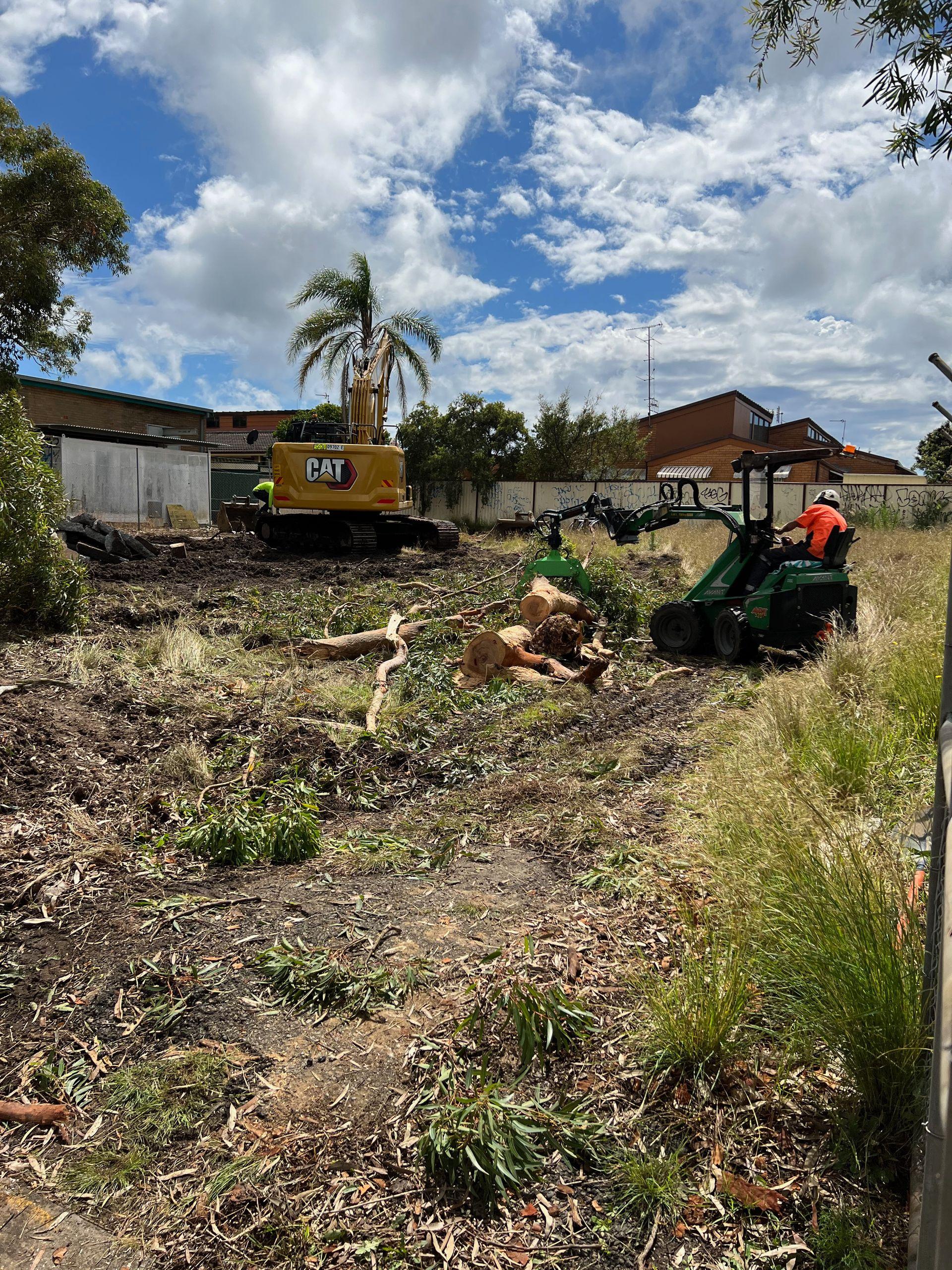
For large trees near buildings, ask how limbs will be lowered and where debris will be staged. For a crowded lot, ask how the crew will keep bystanders away and manage falling material. Where a site needs clearing beyond one tree, see the service overview for lot clearing across the GTA. This early conversation helps reveal whether the contractor has considered the full work area.
5. Ask about by-laws, permits, and tree protection
Toronto rules can affect whether a tree may be injured or removed, and construction can introduce additional protection requirements. Ask the company how it screens for permit issues and whether the estimate assumes an approval is already in place. Do not rely on a contractor’s casual “it should be fine” when a tree is protected or a project involves excavation. The property owner may need to confirm requirements with the City or obtain professional documentation before work begins.
Toronto Municipal Code Chapter 813 addresses trees and includes provisions concerning tree removal and protection. The City’s current permit guidance states that a permit is required before injuring or removing a protected tree, ravine, or natural feature. Requirements depend on details such as whether a tree is privately owned or City-owned, its size, and the property context. Confirm the latest rules directly with the City before scheduling work; do not assume that a pest issue or a tree’s decline automatically eliminates permit obligations. Bosco Tree’s guide to Toronto tree removal permits is a useful starting point, not a replacement for the City’s decision. For larger projects, ask about arborist reporting and lot-clearing planning as part of the scope.
If the project is close to retained trees, ask what protection is proposed for roots, trunks, and canopies. A plan should identify which trees are to remain and how equipment, materials, and excavation will be kept from damaging them. Tree protection zones (TPZs) can be relevant during construction, so ask whether TPZ installation or an arborist report belongs in the project. The contractor should be clear about the work it can perform and what needs coordination with the owner, designer, or municipal reviewer.
6. Check references and examples relevant to your job
Ask for references or examples of work similar to yours: a large tree removal near a building is not the same as hedge shaping, a small pruning job, or stump grinding in an open yard. References should be relevant in scale, access, and complexity. Ask what the customer hired the company to do, whether the work was completed as described, and whether the crew left the site in the agreed condition. Do not treat a handful of online comments as a substitute for a written scope and a conversation about your particular property.
A provider may not be able to share another customer’s private details, and that is reasonable. The goal is to understand how the company approaches comparable work, not to demand confidential information. Bosco Tree has more than 30 years of experience and serves Toronto and the GTA. Ask about the type of work you need and whether the team can assess it. If your property is outside central Toronto, review the relevant service information for Mississauga, Brampton, Vaughan, Markham, or Richmond Hill.
7. Evaluate safety practices before you accept a proposal
Ask how the crew will establish a work zone and protect residents, staff, visitors, neighbours, and passersby. A professional should be ready to discuss how access will be controlled, how debris will be lowered or moved, and how the team will account for roofs, windows, vehicles, utility lines, fences, and landscape features. If the tree borders a public path or shared driveway, ask who is responsible for keeping people away while work is underway.
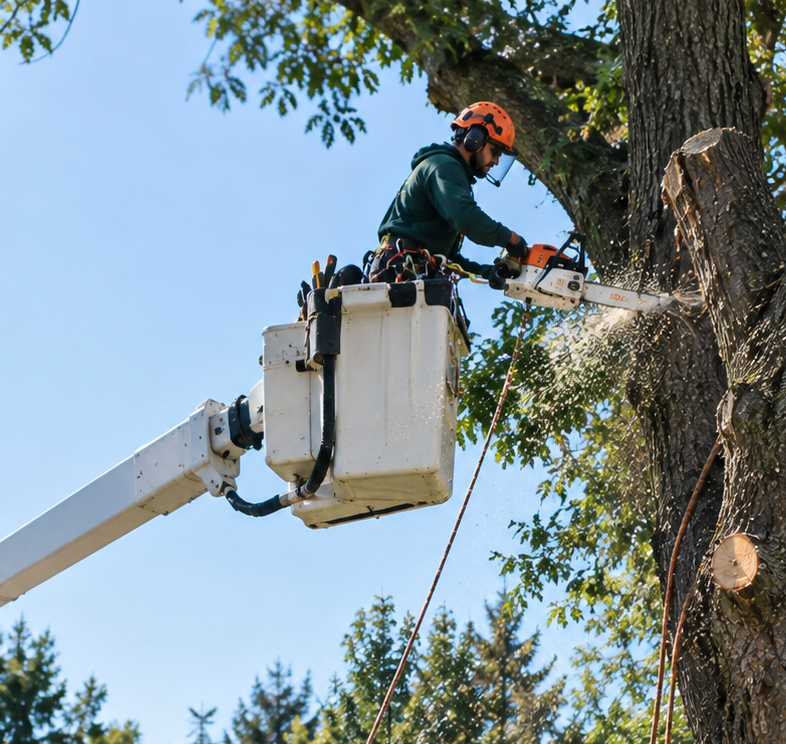
Ask who supervises the work and what happens if the crew discovers a defect or hazard that was not visible during the estimate. The company should have a process for pausing, communicating the changed condition, and agreeing on any revised scope before continuing. Clarify whether the crew will use climbing and rigging techniques, a lift, or another approach; the method must suit the tree, not simply be whichever is quickest. A company’s safety explanation should be specific enough that you can picture how the site will be managed.
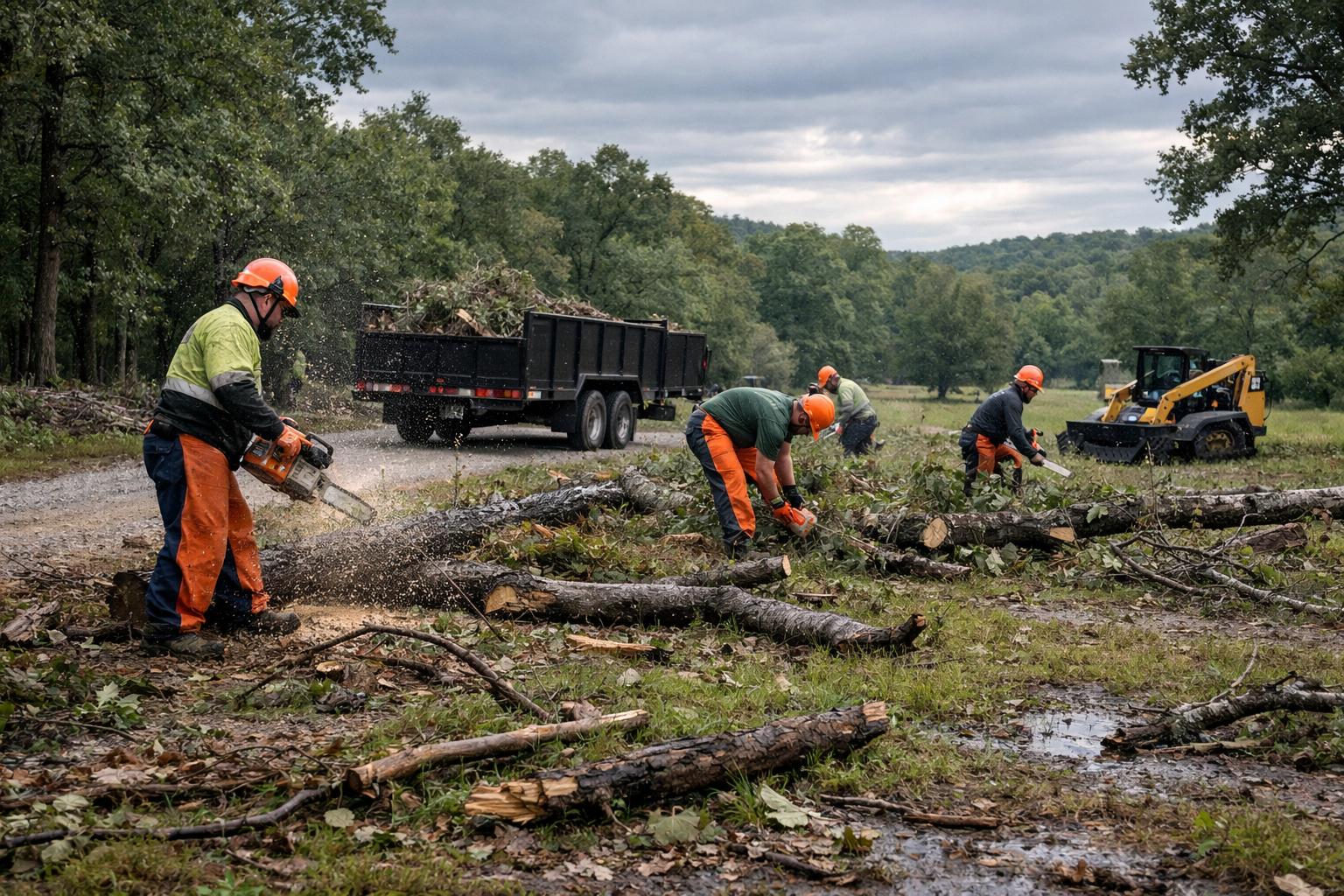
For storm-related damage, ask whether the work is urgent and what can safely be done immediately versus after a full assessment. Bosco Tree offers storm-damaged tree removal in Toronto and 24/7 emergency response. If there is an immediate danger, keep away from the affected area and call for professional help rather than attempting to secure or cut a damaged limb yourself.
8. Confirm cleanup, hauling, and stump arrangements
“Cleanup included” can mean different things to different people. Ask what the crew will remove, what will remain, and how the ground will look when the job is complete. Clarify whether branches, logs, chips, and leaves will be hauled away, left in an agreed location, or processed on site. If you want firewood or wood sections kept, state the desired dimensions and placement in advance. Confirm how the team will handle the access route and any protective mats or temporary barriers.
Stump work is often a separate decision from removing the above-ground tree. Ask whether the quote includes grinding, the depth or area planned, and what happens to resulting chips and surface material. A grinder can affect nearby landscaping, shallow roots, edging, or buried features, so identify anything that may not be visible. Explore Bosco Tree’s stump grinding and removal service if clearing the stump is part of your goal. A written agreement can distinguish removal of the tree from the additional work needed to reclaim the space.
9. Ask how the company handles timing and site access
Before booking, discuss when the crew can attend, how long the work may take, and what the property needs to do to prepare. Ask whether vehicles must be moved, gates unlocked, pets kept indoors, or access coordinated with a neighbour. For shared or commercial sites, identify who will notify tenants, staff, deliveries, or building users. A provider should not make promises about a precise completion time without considering weather, permits, access, and the actual condition of the tree.
Pruning timing can depend on species, purpose, and conditions; ask an arborist rather than assuming that all trees should be trimmed in one season. For relevant planning, read Bosco Tree’s guide to the best time to trim trees in Toronto. Where the requested work is limited to a particular part of the canopy or a specific clearance issue, the company should explain what can realistically be achieved and how the tree may respond.
Need a clear scope before deciding? Bosco Tree provides free quotes across Toronto and the GTA. Call 416-206-1460 or send a quote request.
10. Look for communication that is clear and accountable
Notice how the company responds to basic questions. Does it explain its approach in plain language? Does it tell you when it needs to inspect the site? Does it distinguish what it knows from what needs confirmation? Clear communication matters because tree work can involve changing conditions once the crew sees the full site. You should know whom to contact, how a scope change will be approved, and what documentation you will receive.
Ask whether you will receive a written estimate, schedule confirmation, and a point of contact. If a different crew is assigned, ask how they will receive the agreed scope and any site-specific instructions. If the company cannot provide a clear answer about insurance, scope, or who is responsible for permits, pause before committing. A professional should be able to explain the process without pressuring you to make an immediate decision.
11. Watch for warning signs in the sales process
Be cautious if a representative pressures you to sign immediately, refuses to describe the work in writing, avoids questions about coverage, or claims that every tree problem requires the same solution. An estimate that is unusually vague can leave you uncertain about cleanup, stump work, access, and what happens if the crew finds additional hazards. A contractor who dismisses permit concerns without checking the tree and property details is not giving you the certainty you need.
Other warning signs include promises to “top” a tree without explaining the arboricultural purpose, claims that an assessment is unnecessary for a complex or hazardous tree, or requests for a large unclarified payment before you have a complete agreement. Ask another qualified provider for an assessment if recommendations differ materially. The intent is not to delay necessary safety work; it is to understand the reason for the recommendation and whether the proposed method is appropriate.
12. Compare proposals by value, not just by the bottom line
Put estimates side by side and compare the tree or trees covered, the scope, cleanup, stump handling, equipment assumptions, access, safety measures, permits, timing, and exclusions. The best tree service Toronto option is the provider whose plan makes these details clear and fits your property. If two proposals differ, ask each company to explain the difference. One may include hauling and stump grinding while another includes only the trunk and branches; one may anticipate difficult rigging while another has not described its plan. A low total is not meaningful if it leaves essential work undefined.
Do not use price alone as a proxy for competence, but do not assume that a higher estimate is automatically better either. Ask what makes the work different and whether the contractor has accounted for the same site conditions. Bosco Tree provides free quotes, but the most useful first step is a clear assessment of your objective. Learn more about professional tree removal, tree trimming, and the complete range of services available across the GTA.
Questions to ask when comparing tree service Toronto companies
Use a short phone conversation to decide whether a company is worth inviting to assess the site. You do not need to know the technical answer in advance; a provider’s response can show whether it is listening, asking the right questions, and explaining its process.
- Are you insured, and can you provide proof of liability insurance and workers’ compensation coverage?
- Will an ISA-certified arborist assess the tree, and who will supervise the crew?
- Can you visit the property and provide a written estimate describing the work and cleanup?
- What equipment and access will the work require, and what could affect the plan?
- How will you protect the house, neighbouring property, utility lines, garden, and people using the site?
- Do you see any permit, tree-protection, or arborist-report requirements that we should verify?
- Does your estimate include hauling, stump grinding, and final cleanup, or are those separate?
- What should I do to prepare the site and keep people safe before the crew arrives?
Keep notes about what each company says, and make sure the answers appear in the estimate where they affect the scope. If your concern is a damaged tree that may need urgent attention, explain what happened, whether anything is hanging or unstable, and what people or structures are nearby. For planned pruning, describe the goal and ask whether the requested result can be achieved without removing more live canopy than needed. If you are working in North York, the service details for tree pruning in North York may help you frame the request.
What a professional on-site assessment should look like
A proper assessment is a conversation and a site review, not simply a quick glance followed by a blanket recommendation. The arborist should ask what you are trying to solve, inspect the tree from useful viewing angles, and consider the surrounding targets and access. The assessment may include checking the trunk, main unions, crown, visible roots, previous pruning, and signs of stress or damage. The level of detail depends on the type of work and whether you need a service quote, a risk opinion, or a formal report.
Expect the assessor to explain what they observed, what remains uncertain, and why the proposed work addresses your concern. If a tree is being retained, ask how it should be monitored and what changes should prompt a follow-up. If removal is proposed, ask whether pruning or another option would solve the issue, and what makes removal the more appropriate choice. The company should also discuss boundaries, debris, equipment access, and how the crew will protect the site.
For commercial properties, ask the assessor to consider how work will affect pedestrian routes, deliveries, parking, tenants, and routine operations. A tree service Toronto property manager hires should be able to explain how the work fits around normal site use. Agree on any restricted areas and who will communicate with building users. If the tree is near construction or a planned landscape change, discuss the work sequence, TPZ needs, and whether an arborist report is required for the project. The earlier these questions are addressed, the less likely that tree work will conflict with access or construction plans.
How Bosco Tree fits the checklist
Bosco Tree is a tree removal and arborist company based in Toronto serving the GTA. The company states that it has more than 30 years of experience, employs ISA-certified arborists, is fully insured with $2 million liability coverage, provides 24/7 emergency service, and offers free quotes. Those supplied business facts speak to several of the questions in this checklist: experience, arborist credentials, insurance, emergency availability, and a no-cost quote to start discussing scope.
Bosco Tree’s services include tree removal, tree pruning and trimming, stump grinding and removal, 24/7 emergency tree service, arborist reports, TPZ installation, and lot clearing. If you want to understand the company before booking, visit the Bosco Tree about page or browse its complete service list.
Use the same questions with Bosco Tree that you would use with any provider: request current insurance documentation, explain the work you need, ask for a written estimate, and clarify the scope and site-preparation requirements. An estimate should be based on the actual property and should state what is included. A free quote is a practical starting point, not a substitute for checking permits or making sure the agreed work matches the tree and site conditions.
If you are comparing a tree removal proposal with another type of care, look at seasonal pruning considerations, storm response planning, and the separate guidance on ash tree removal and emerald ash borer. The right service depends on the problem the tree presents, the desired outcome, and the assessment—not a generic recommendation applied to every yard.
Frequently asked questions about choosing a tree service in Toronto
What should I check before hiring a tree service in Toronto?
Ask for proof of liability insurance and workers’ compensation coverage, confirm relevant arborist credentials, and request a written estimate that explains the work, cleanup, and exclusions. Also ask how the company will manage safety, site access, and any permit questions.
Should I ask a tree company for proof of insurance?
Yes. Ask for proof of liability insurance and workers’ compensation coverage before the work begins. Confirm that the documentation applies to the business you are hiring and ask whether any subcontractors will take part.
Does every tree removal in Toronto require a permit?
No single answer applies to every tree. Toronto requires a permit before injuring or removing a protected tree, and requirements depend on tree and property details. Check current City guidance before work is scheduled.
What should a written tree removal estimate include?
It should identify the tree and describe the removal method or scope, equipment and access assumptions, debris handling, cleanup, stump work, exclusions, and any permit-related assumptions that affect the job.
How do I compare two tree service quotes?
Compare the scope, safety plan, equipment, cleanup, stump grinding, access, timing, and exclusions—not only the total. Ask each company to explain differences so you know whether both proposals cover the same work.
Do I need an arborist to assess a tree before removal?
An arborist assessment is especially useful when the tree is large, declining, close to a target, or subject to permit or construction requirements. It helps clarify condition, risk, and whether pruning or another option could meet your goal.
What questions should I ask about cleanup and stump grinding?
Ask whether branches and trunk sections will be hauled away or left, whether final cleanup is included, and whether stump grinding is part of the quote. Confirm how chips and the work area will be handled.
What should I do if a tree is damaged in a storm?
Keep people away from the tree and any hanging or fallen limbs, and do not try to cut or secure unstable material yourself. Contact a qualified tree service for an assessment; call an emergency provider if there is an immediate hazard.
Does Bosco Tree provide free quotes in Toronto?
Yes. Bosco Tree offers free quotes for tree care in Toronto and the GTA. Call 416-206-1460 or use the contact page to describe the tree and request an assessment.
What services does Bosco Tree provide?
Bosco Tree provides tree removal, tree pruning and trimming, stump grinding and removal, 24/7 emergency tree service, arborist reports, TPZ installation, and lot clearing across Toronto and the GTA.
Ready to compare options for your property? Contact Bosco Tree to discuss the tree and request a free quote. Call 416-206-1460 or request a quote online.