Ash Tree Removal Toronto: Emerald Ash Borer and Your Options
Concerned about an ash tree? Arrange a free quote from Bosco Tree. Call 416-206-1460 or request a quote online.
Ash tree removal Toronto property owners are considering often begins with one unsettling sign: a thinning canopy, bark damage, or a tree that no longer leafs out as expected. Emerald ash borer (EAB) is an invasive beetle that attacks true ash trees, and its larvae feed beneath the bark, damaging the tissue that transports water and nutrients. But a single visible symptom is not enough to decide that a tree must come down. A careful arborist assessment can help determine whether monitoring, treatment, pruning, or removal is the appropriate next step.
Key takeaways
- Emerald ash borer larvae feed under bark and damage the tissues that carry water and nutrients.
- Possible signs include canopy thinning, dieback, epicormic shoots, bark splitting, and visible galleries; confirm concerns with a qualified arborist.
- Ash removal is not automatic: tree condition, location, risk, and treatment feasibility all matter.
- The City of Toronto runs an EAB management program for selected City-owned ash trees; private trees are a separate responsibility.
- Toronto permit requirements depend on the tree and property; verify current requirements before cutting.
- Bosco Tree offers arborist assessment, safe tree removal, and stump grinding, with free quotes.
For homeowners and property managers across Toronto and the GTA, the practical question is not simply whether EAB is present in the region. A search for ash tree removal Toronto is often the start of a bigger decision: whether this particular tree can be retained safely. It is what the particular tree is doing, what could be affected if it fails, and whether a treatment option makes sense given the tree’s condition. If an ash tree is near a house, driveway, walkway, parking area, or neighbouring property, early evaluation can help you make a considered plan rather than waiting for a crisis.
What is emerald ash borer?
Emerald ash borer is a non-native, metallic green beetle that attacks species of true ash (Fraxinus). The adult beetle lays eggs on or near ash bark. After hatching, larvae tunnel into the area beneath the bark and feed in winding galleries. That activity disrupts the tree’s vascular tissue, which moves water and nutrients through the trunk and branches. As damage accumulates, the canopy can decline and the tree may eventually die.
The City of Toronto identifies EAB as an invasive insect and reports that it has been present in Toronto since 2007. The City’s EAB page describes an integrated pest management program and treatment of selected City-owned ash trees. That municipal program does not mean that every ash tree on private property is treated or maintained by the City. Owners should first establish whether the tree is on private land or City property and then contact the appropriate party.
Private ash trees that appear healthy may warrant a discussion with an arborist about whether a treatment such as TreeAzin is suitable. The City advises owners to ask their arborist whether a healthy privately owned ash tree could benefit from treatment that may slow infestation. Treatment is not a guarantee that a tree will remain healthy indefinitely. It is a professional decision that depends on timing, tree condition, likely benefit, and the owner’s goals. Read the City’s current emerald ash borer information for its guidance on the municipal program and private trees.
Signs that an ash tree may be affected by EAB
Symptoms vary, and other causes can produce similar changes. A tree may show more than one sign, but none should be treated as a diagnosis by itself. An arborist can inspect the crown, trunk, bark, branch pattern, and surroundings to distinguish EAB-related decline from drought stress, root damage, other pests, or age-related changes.
Thinning canopy and branch dieback
Look for a crown that is less full than it used to be, branches that fail to leaf out, or dieback that begins in the upper canopy and progresses. Compare the tree’s present appearance with its own previous seasons rather than judging it against a neighbouring tree of a different species. A change in leaf density does not confirm EAB, but it is a reason to document what you see and request an assessment.
Epicormic shoots and new growth on the trunk
When a tree is stressed, it may produce clusters of new shoots from the trunk or main branches. These are sometimes called epicormic shoots. The City’s EAB information illustrates such growth as a sign of ash decline. Note where these shoots appear and whether the canopy above them is thinning. Avoid cutting off the shoots before an arborist sees them if the tree is being evaluated, since they may provide useful context about the pattern of decline.
Bark changes, galleries, and woodpecker activity
Loose or split bark, small D-shaped exit holes, and serpentine feeding galleries beneath the bark can be associated with EAB. Woodpeckers may forage where larvae are present, so increased activity can also be a clue. Do not remove bark or climb the tree to search for signs: disturbing the tree or working at height can be unsafe, and an isolated mark can be misread. Photograph signs from the ground and share them with an arborist.
If the tree is already losing major limbs, has a large dead section, or stands over an area people regularly use, treat the situation as a safety concern regardless of whether EAB is ultimately confirmed. Keep people clear of the immediate area and request prompt professional advice. For urgent damage or a tree that appears unstable after a storm, Bosco Tree provides 24/7 emergency tree service in Toronto; call 416-206-1460 when immediate assistance is needed.
Why a dead or declining ash can become hazardous
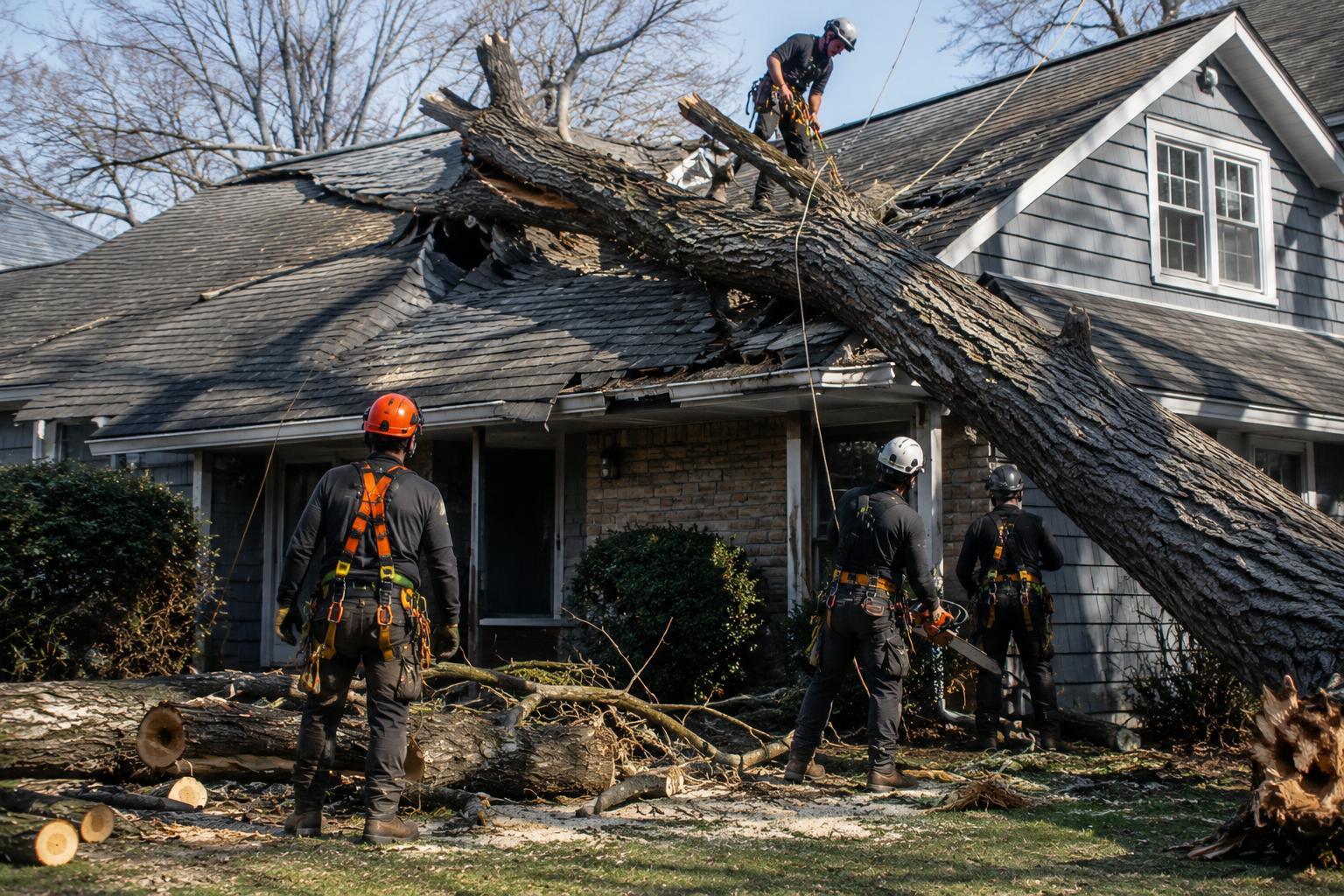
As a living tree declines, branches and stems may lose strength. Deadwood can break away, and a weakened trunk or root system may be less able to withstand changing weather and normal loading. The risk is influenced by the tree’s condition, how much sound wood remains, the size and location of defects, the exposure of the site, and what lies within reach if a limb or the whole tree fails. A dead tree standing in a remote corner presents a different exposure than one over a roof, walkway, parking space, or play area.
That distinction matters: “dead” is not a full risk assessment, and “still standing” does not establish that a tree is safe. A qualified arborist should consider likelihood of failure and potential consequences, then explain options in terms the owner can understand. Sometimes a targeted pruning job or reduction in exposure is reasonable; in other cases, the size, condition, or setting makes removal the prudent course. For a wider overview of removal planning, see tree removal in Toronto.
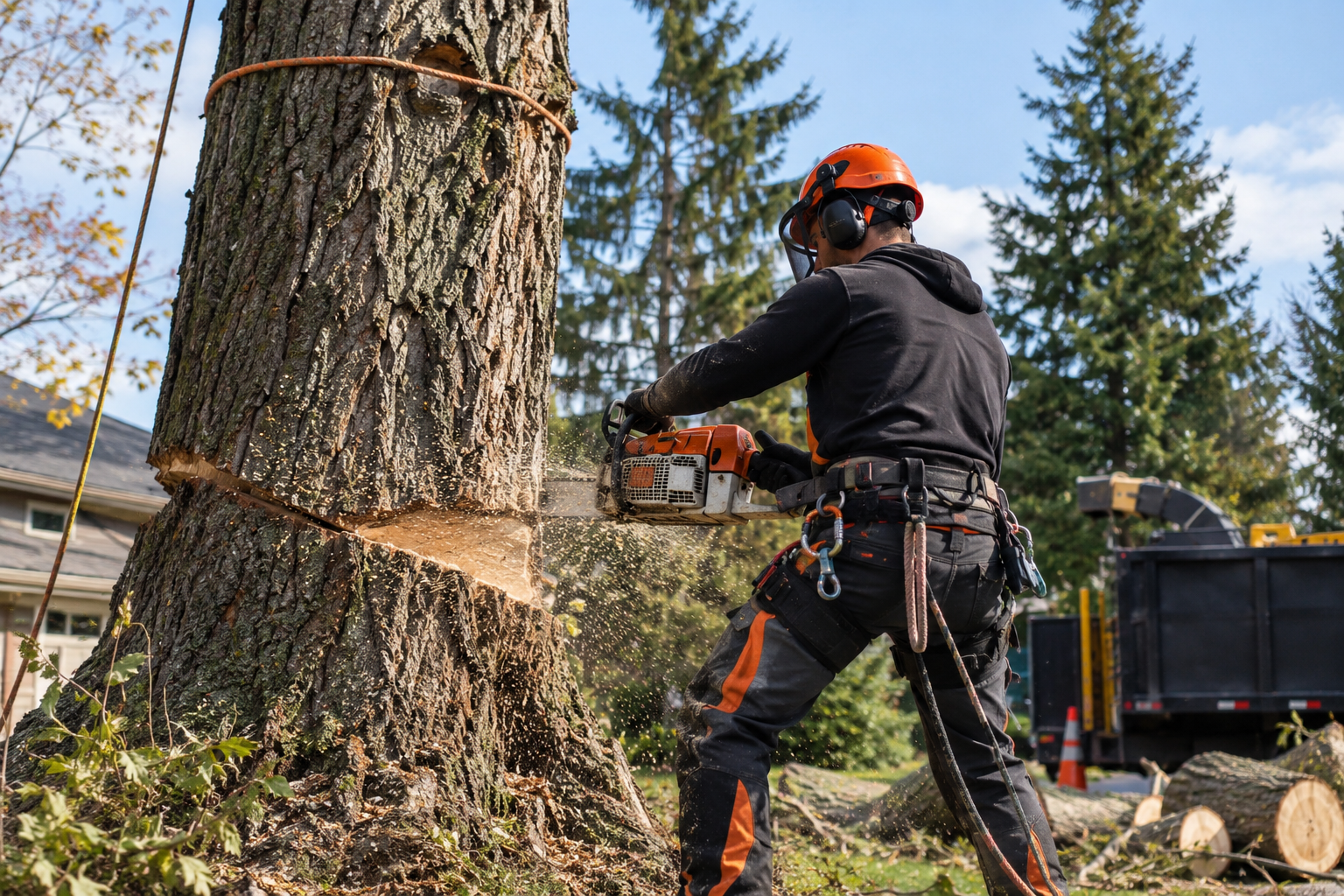
Do not attempt to remove a large dead ash yourself. Dead wood can be unpredictable, and branches may break while being handled. Climbing, chainsaw use, rigging, and work around buildings require training, planning, and suitable equipment. Keep children, visitors, and vehicles out of the immediate drop zone until a professional has assessed the situation. If a hazardous limb is the primary concern, an arborist can advise whether professional pruning and trimming can address it safely or whether whole-tree removal is more appropriate.
Ash tree removal Toronto: deciding between treatment and removal
There is no responsible one-size-fits-all answer. When ash tree removal Toronto property owners are weighing is a serious possibility, the decision should follow an assessment rather than a symptom checklist alone. Treatment may be worth discussing when an ash is still in good condition, has meaningful landscape or shade value, and can be treated early enough for the intervention to have a reasonable chance of helping. An arborist should examine the crown and trunk, assess stress and structural condition, and explain what treatment can and cannot do. If you consider treatment, ask what signs would trigger reassessment and how often the tree should be monitored.
Removal becomes a stronger consideration when the tree is dead or substantially declining, when important structural parts are compromised, or when the risk to people and property is unacceptable. The decision also depends on setting. A declining ash over a roof, parking area, driveway, sidewalk, or frequently used yard deserves a different response than a tree in a less-used space. A professional assessment should connect the tree’s condition to the consequences of failure, not rely on a broad statement that all ash trees are doomed or that all can be saved.
Ask the arborist to set out the options plainly: treatment and monitoring, specific pruning, removal, or another appropriate intervention. Ask what would change the recommendation, what the likely next steps are, and what the work does not solve. If the preferred option is removal, find out whether the stump remains and whether grinding is included. Bosco Tree offers arborist reports and can provide a free quote for tree removal in Toronto.
Questions to ask during the assessment
- What makes you think this is an ash tree, and what evidence suggests EAB or another cause of decline?
- How much of the canopy is affected, and what is the condition of the trunk and major branches?
- Are there defects or dead limbs over a target such as a home, walkway, driveway, or parking space?
- Could treatment be appropriate, and what conditions would make it less useful?
- What monitoring or follow-up would you recommend if we retain the tree?
- If you recommend removal, what specifically makes that option safer or more practical here?
- Does the proposed scope include stump grinding, debris removal, and restoration of the work area?
- What permits or approvals may apply, and who will confirm them before work?
These questions help you understand the reasoning rather than trying to diagnose the tree yourself. If one contractor recommends immediate removal and another sees a viable treatment path, ask each to explain the evidence behind the conclusion. For a large or particularly consequential tree, a second qualified assessment can help you decide with greater confidence. Bosco Tree provides tree care throughout Toronto and the GTA, including nearby communities such as Mississauga, Brampton, Vaughan, Markham, and Richmond Hill.
Toronto by-law and permit awareness for ash removal
Do not assume that an ash tree can be removed without checking local requirements. Toronto Municipal Code Chapter 813 contains the City’s tree provisions, and the City states that a permit is required before injuring or removing a protected tree, ravine, or natural feature. The City’s permit process considers the specific tree and property. The applicable route can differ for private trees, City-owned trees, trees in ravine areas, and work connected to a development or construction project.
Toronto’s current EAB guidance says that a City tree permit may be needed before removing a privately owned ash tree over 30 centimetres in diameter. The precise requirement depends on the details and current rules; verify directly with the City before work is scheduled. The City’s tree and ravine permit guidance explains the application process. Consult the official Toronto Municipal Code Chapter 813 for the legal text, and check the City’s permit-planning guide for a local overview.
The City’s EAB program concerns selected City-owned ash trees; it does not provide routine maintenance or treatment for private property trees. If you believe the ash is located on the City-owned road allowance, contact the City for direction rather than hiring a private crew to remove it. If the tree is on your property, ask who is responsible for confirming permit status and what documents may be needed. Do not treat pest infestation or a verbal estimate as permission to proceed.
During construction or landscaping, ash removal may be only one part of a site plan. Identify retained trees, work limits, access routes, and protection measures before excavation or equipment movement. A Toronto arborist report or GTA lot-clearing plan may be relevant depending on the project. If a tree protection zone is required, discuss TPZ installation and related tree-care services with a qualified provider and coordinate the work with the project team.
The City of Toronto’s ash tree program: what it does and does not mean
Toronto describes an Emerald Ash Borer Integrated Pest Management program and says the City treats selected City-owned ash trees. It also advises owners of healthy private ash trees to ask an arborist whether treatment may be beneficial. This is important context, but it should not be read as a promise that the City will treat, remove, or replace a privately owned tree. This program information should not be read as a promise that the City will treat or remove every private ash tree.
For a City-owned ash tree on a road allowance, Toronto states that dead and dying trees will be removed and replaced by the City, with homeowners notified in advance. If a City tree appears dead or dying and may need attention, follow the City’s direction and contact 311. For a private ash tree, the owner should arrange an assessment and confirm any relevant permit requirements. When it is unclear where the property boundary or tree ownership falls, check with the City before deciding who should authorize work.
The City’s public information is current as of the time this article was prepared, but municipal processes and program details can change. Confirm the latest instructions directly with the City of Toronto before making a treatment or removal decision. Bosco Tree can help assess the tree and provide a quote for the work under consideration; it does not replace the City’s role in determining approvals or municipal responsibilities.
What to expect from an ash tree assessment
A professional assessment should begin with your concern and the tree’s history: when the symptoms appeared, whether the canopy has changed, whether limbs have failed, and whether nearby work may have affected roots or soil. The arborist should confirm the species as far as practical, examine the crown, trunk, and accessible roots, and look at the target area. The assessor may ask to see photographs from earlier seasons or to access more than one side of the tree.
The site visit should consider the tree in context. Is it close to a house, garage, overhead line, public sidewalk, road, parking stall, or neighbouring property? How frequently is the target area used? Can equipment reach the work area without creating a separate hazard? Are there fences, retaining walls, gardens, or other trees that must be protected? Such details can shape both the risk evaluation and the removal plan.
After the inspection, ask for a clear explanation of the findings and options. A useful recommendation describes the observed condition, distinguishes confirmed signs from possibilities, states whether the tree needs ongoing monitoring, and explains the reasons for any proposed work. If you are commissioning a written report for planning, permitting, or another formal purpose, confirm what the report will cover and who will use it. Bosco Tree’s arborist reporting service can be discussed for Toronto and GTA properties.
How ash tree removal is planned safely
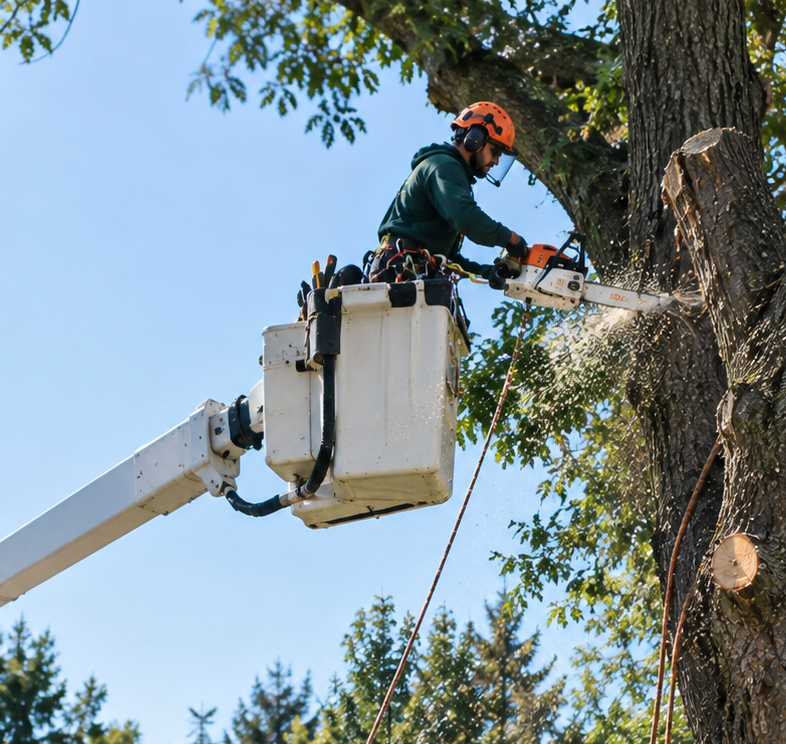
When removal is warranted, a trained crew plans the sequence of cuts and how each section will be controlled. The method depends on tree size and condition, available space, equipment access, overhead hazards, and nearby targets. Some trees can be dismantled in sections; other sites require a different approach. A professional should explain the plan and identify any limits before work begins rather than suggesting that every ash can be felled in one piece.
Need an arborist to assess the ash tree? Bosco Tree offers free quotes across Toronto and the GTA. Call 416-206-1460 or request a quote online.
Ask how the crew will keep people clear of the work zone and protect structures and landscape features. Clarify whether branches and trunk sections will be chipped, hauled away, or left as agreed. Ask whether the quote includes stump grinding and removal, and how chips or surface material will be handled. If you intend to replant, ask what space may remain usable and whether additional site preparation is required; do not assume that removal alone prepares the site for a new tree.
For emergency situations such as a split trunk or a large hanging limb, keep away from the tree and contact a qualified service. Bosco Tree offers 24/7 emergency tree service for urgent tree concerns. To compare the general removal process with other work, see the information on tree trimming and tree pruning in North York. The right work is the work that responds to the assessed condition and the owner’s needs—not an automatic removal of every ash tree with a symptom.
Choosing a provider for ash tree removal Toronto homeowners need
Not every tree company is equally prepared for a declining ash in a confined or high-use area. Before you agree to work, ask for proof of liability insurance and workers’ compensation coverage, confirm whether an ISA-certified arborist will assess or supervise the job, and request a written estimate. The proposal should describe how the tree will be dismantled, what equipment the site requires, how the work area will be secured, and whether stump grinding and debris removal are included.
Ask how the contractor will address permit questions. A company can help identify issues and explain its scope, but the City determines whether an approval is needed and whether an application is accepted. Ask who will obtain any required approval and what must be in place before removal. The same conversation should identify access limits, neighbouring property, utilities, public walkways, and retained trees.
Visit the Bosco Tree home page to learn more about local tree care. Bosco Tree is a Toronto-based tree removal and arborist company serving the GTA. The company states that it has ISA-certified arborists, more than 30 years of experience, full insurance with $2 million liability coverage, and 24/7 emergency service. Its services include arborist assessment, safe tree removal, and stump grinding and removal, and it offers free quotes. You can review the Bosco Tree company information and full list of tree services.
When a crew recommends removal, ask how it will protect people and property, where pieces will be lowered, what will happen to the wood and chips, and how the stump area will be left. A safe removal plan is specific to the tree and site. For urgent hazards, Bosco Tree provides 24/7 emergency tree service. If you need to plan a related scope, see tree removal in Toronto, tree trimming, or storm-damaged tree removal.
What happens after an ash tree is removed?
Removal may leave a stump and a quantity of chips or wood. Decide whether you want the stump ground and whether you plan to restore the area, plant a replacement, or use the space differently. Grinding and surface preparation are separate tasks; discuss the expected result, chip handling, and any nearby landscape features with the contractor. If a replacement tree is part of your plans, consider the available space and future canopy before choosing a location or species, and seek qualified advice suited to the site. People searching “ash tree removal Toronto” should also ask whether stump grinding is included and how the work area will be left.
Property managers may also need to update maintenance plans, inform occupants, and ensure that walkways or parking areas are safe after work. For construction sites, coordinate tree removal and protection of retained trees with the broader site plan. If the work is part of a wider clearance, Bosco Tree’s GTA lot-clearing service may be relevant; if pruning rather than removal is considered, consult an arborist about appropriate pruning options in North York.
Keep a record of the assessment, quote, any permit correspondence, and completed work. These details help future property owners or managers understand why the tree was removed and what was done. They can also help the arborist compare later observations if nearby trees show similar symptoms. For more planning context, see Toronto tree removal permit considerations, factors that affect a removal estimate, and the guide to choosing a Toronto tree service.
Frequently asked questions about ash tree removal in Toronto
What is emerald ash borer?
Emerald ash borer is an invasive beetle that attacks true ash trees. Its larvae feed beneath the bark and damage the tissues that carry water and nutrients, which can lead to decline and death.
What are common signs of emerald ash borer in an ash tree?
Possible signs include canopy thinning, branch dieback, epicormic shoots, bark changes, visible feeding galleries, and increased woodpecker activity. These signs are not a diagnosis by themselves; ask an arborist to assess the tree.
Does every ash tree with EAB need to be removed?
No. An arborist should assess the tree’s condition, structure, location, and risk. Treatment or monitoring may be worth discussing for some trees, while removal may be prudent for dead, declining, compromised, or hazardous trees.
Can a healthy ash tree be treated instead of removed?
Possibly. Ask an arborist whether treatment such as TreeAzin is appropriate for the tree and whether its condition and timing make treatment worthwhile. Treatment is not a guarantee that the tree will remain healthy indefinitely.
Does Toronto require a permit to remove an ash tree?
A permit may be required for a protected tree, and Toronto’s EAB guidance says a permit may be needed to remove a privately owned ash tree over 30 centimetres in diameter. Confirm current requirements with the City before work begins.
Does the City of Toronto remove or treat private ash trees?
The City’s EAB program covers selected City-owned ash trees. Private-property owners should arrange an arborist assessment and check applicable permits.
How do I know whether an ash tree is City-owned or private?
Tree location and property boundaries matter. If you are unsure whether a tree is on the City-owned road allowance or private property, ask the City to clarify responsibility before authorizing removal.
Why can a dead ash tree be dangerous?
Dead or declining wood can lose strength, and branches or stems may fail. The risk depends on the tree’s condition and what lies within reach, so keep people clear and request an arborist assessment.
Does Bosco Tree offer ash tree assessment and stump grinding?
Bosco Tree provides arborist services, tree removal, and stump grinding and removal across Toronto and the GTA. For ash tree removal Toronto homeowners are planning, contact the company for a free quote based on the tree and site.
What should I do if an ash tree becomes an emergency?
Keep people away from the tree and any hanging or fallen limbs, and do not attempt to cut unstable material yourself. Contact a qualified emergency tree service; Bosco Tree offers 24/7 emergency service at 416-206-1460.
For additional seasonal guidance, see the best time to trim trees in Toronto. For nearby GTA service information, visit Bosco Tree’s pages for Mississauga, Brampton, Vaughan, Markham, and Richmond Hill.
Get an assessment before deciding what to do. Bosco Tree offers free quotes for ash tree work in Toronto and the GTA. Call 416-206-1460 or request a quote online.