Storm Damaged Tree Removal Toronto: What to Do and Who to Call
If a storm has damaged a tree on your property, first protect people—not the tree, the lawn or the schedule. For storm damaged tree removal Toronto residents may need fast professional help, but not every damaged tree needs immediate removal. A hanging limb, split trunk, uprooted root plate or tree leaning toward a building needs careful assessment. Downed or potentially live electrical wires are an emergency: stay well away, keep others back and call 911 or the utility. Never touch a wire, a branch in contact with a wire or equipment near it.
Key takeaways
- Stay away from downed wires and anything touching them; call 911 or the utility and keep people clear.
- Do not climb, cut, pull or move a storm-damaged tree or a suspended limb yourself.
- Once the area is safe, photograph visible damage from a safe distance and contact your insurer about documentation and next steps.
- A qualified arborist can assess whether targeted pruning, stabilization, monitoring or removal is appropriate.
- Bosco Tree offers 24/7 emergency tree service in Toronto and the GTA, with no promised response time; call 416-206-1460 for urgent assistance.
Need a professional assessment after a storm?
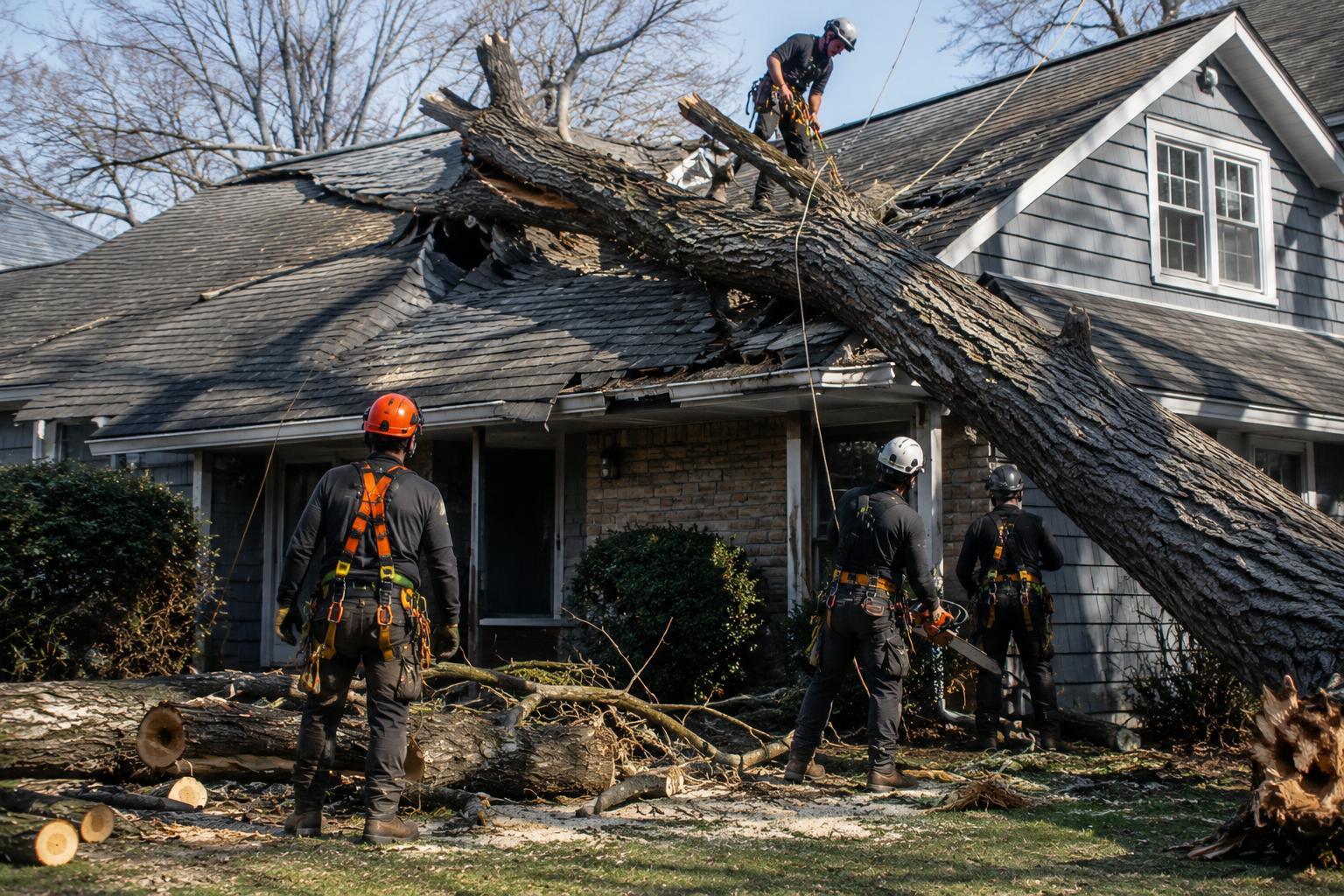
Storm damaged tree removal Toronto: first steps for safety
Severe wind, ice, heavy rain or snow can leave a tree partially broken while it still appears upright. A trunk may split without falling; a limb may be caught in another branch; roots may have lifted on one side; or a tree may lean differently after the ground becomes saturated. These conditions can change quickly. People searching “storm damaged tree removal Toronto” need a safety-first plan before deciding whether removal is needed. Keep people, pets and vehicles out of the affected area. Do not walk beneath hanging limbs to inspect them, and do not assume a branch is stable because it has stopped moving.
Electrical hazards need a separate response. Treat every downed wire as energized, even if it looks inactive, and keep far away. Do not touch a tree, fence, vehicle, puddle or debris that may be in contact with a wire. Call 911 if there is an immediate threat to life, fire or public safety, and notify the utility about a downed line. Do not ask a tree crew to work near a live wire; utility personnel must address the electrical hazard first. When you call for an arborist, state plainly whether wires are present or may be involved.
Look for other immediate risks from a safe location: a tree blocking an exit, a limb over a public path, structural damage to a home, or a tree leaning toward an occupied area. If a building or roadway is unsafe, move people away and contact emergency services as appropriate. For city-owned trees, report the problem through the City of Toronto's tree service channels rather than arranging private work on public property. The City's storm guidance distinguishes public-tree reporting from private-property responsibilities.
What to do before an emergency tree crew arrives
Once immediate dangers are addressed, give the arborist clear information by phone. Describe the location, the apparent damage, what the tree or branches threaten, and whether anyone is injured or trapped. Mention utility wires, blocked access, a damaged structure, steep ground or other hazards. Share whether the tree is on private property or appears to be a street tree. These details help the company understand the situation; they do not replace an on-site assessment.
- Keep the exclusion area clear. Move people and pets away from the tree, limbs and debris. Do not set up a ladder or try to remove a branch.
- Leave access for responders. If it is safe, move vehicles and movable items out of the work area without going beneath unstable limbs or crossing a hazard zone.
- Take photos only from safety. Capture wide views and close details from a place where you are not under or beside unstable material. Do not enter a damaged building or cross debris to get a better image.
- Contact your insurer. Ask what information and documentation they need and how they want you to proceed. Keep copies of communications and any written assessment or work documentation.
- Do not disturb evidence unnecessarily. Avoid cutting, dragging or disposing of damaged material before you have spoken with the insurer, unless immediate action is needed to protect people or prevent further danger.
Photographs can help record visible conditions, but they cannot make a hazardous tree safe or determine insurance coverage. Coverage depends on the policy and the circumstances. A tree professional can document observed damage and the work performed, while your insurer decides its own requirements. If a storm has damaged a tree but no immediate danger is apparent, schedule an assessment soon rather than guessing from the ground. The City of Toronto also advises property owners that a storm-damaged private tree should be assessed to determine whether it can be maintained or should be removed.
When you contact Bosco Tree's emergency tree service in Toronto, be prepared to explain whether the situation is active and what is at risk. Many people searching “storm damaged tree removal Toronto” are facing different levels of urgency, so describe the hazard rather than assuming every damaged tree needs removal. Bosco Tree is a Toronto-based tree removal and arborist company serving the GTA, offering 24/7 emergency service. There is no guaranteed arrival time; access, safety conditions and the nature of the incident affect how work can proceed. If the issue can safely wait, a scheduled inspection may be the appropriate first step.
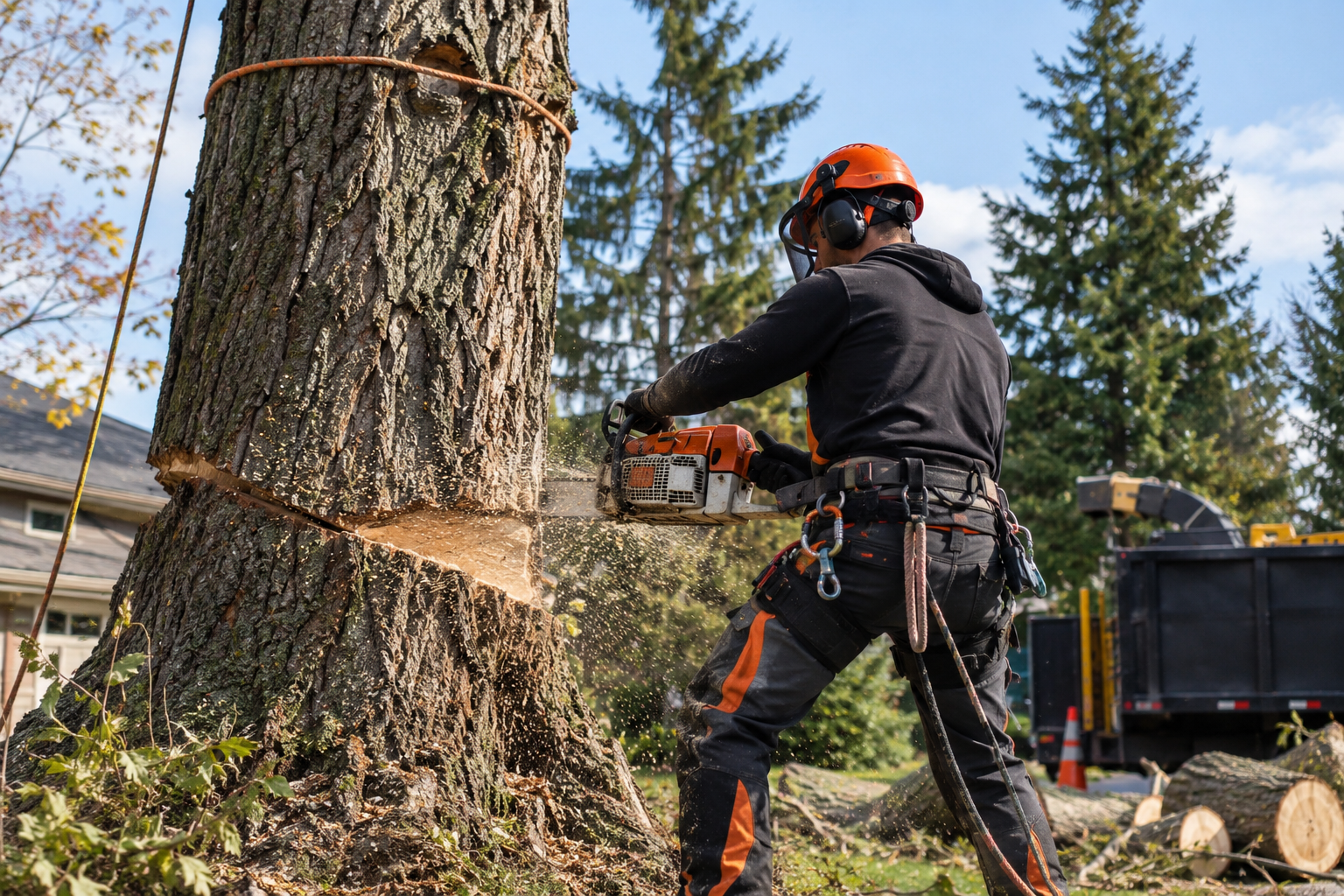
Recognizing storm damage that needs professional assessment
Storm damage can be obvious, such as a fallen trunk, or subtle, such as a newly formed crack at a branch union. A tree that remains upright is not necessarily stable. The following signs warrant professional evaluation, particularly when the tree is near a home, driveway, sidewalk, play area or another place people gather:
- A fresh crack or split in the trunk, a major limb or the union where stems meet.
- A large branch hanging, partially broken, twisted, or resting on another limb or structure.
- Soil lifting or cracking around the base, exposed roots or a root plate that has shifted.
- A new lean, especially when it appeared after saturated soil or high winds.
- Several broken limbs, a damaged crown, or a branch that has fallen into another tree's canopy.
- Contact with a roof, vehicle, fence or service line, or damage that may affect a public route.
Do not use a checklist to declare the tree safe. Each condition has context: species, size, defects, soil, recent weather and what lies in the potential fall zone all matter. Some trees can be retained with selective pruning or other arboricultural work; others have damage that makes removal the safer course. A professional inspection should explain the visible concerns, the options and any limitations caused by weather or access. For broader planned work, see tree removal in Toronto, tree trimming and pruning and tree pruning in North York.
Emergency removal or scheduled assessment?
Not every storm-damaged tree requires an emergency removal. The deciding issue is whether there is an immediate danger, whether the tree can be reached safely and what an arborist observes on site. A broken limb suspended over an entrance, a tree resting on a home or a root plate that has shifted toward an occupied area may require urgent response. By contrast, a tree with minor branch loss and no apparent instability may be suitable for a scheduled inspection and a planned repair. Do not make that determination by entering the drop zone.
When to treat the situation as urgent
Call for emergency help when a tree or limb threatens people, blocks a critical access route, has damaged a structure, is in contact with utilities or appears likely to fall into an occupied area. A search for “storm damaged tree removal Toronto” should lead first to a safe assessment, not a do-it-yourself attempt. If there is an immediate threat to life, fire or public safety, call 911. If wires are involved, stay away and notify the utility; crews must not work into an electrical hazard. Tell the arborist what is happening and whether the site remains accessible. Bosco Tree offers 24/7 emergency tree service in Toronto, but no specific arrival time can be promised.
Urgent work does not mean rushing into an unsafe scene. A professional may need to wait until a utility has made the area safe, weather conditions allow controlled work, or emergency responders have cleared access. In a severe storm, a crew's ability to reach a site can also be affected by blocked roads and multiple hazards. Be clear about the risk, follow instructions from emergency services, and keep the area isolated until the appropriate professionals say it is safe.
When a scheduled arborist visit may be appropriate
If there is no immediate threat and the damaged tree is away from people and structures, a scheduled inspection can help determine what work is actually needed. A professional may recommend selective pruning, removal of damaged material, additional monitoring or full removal. For routine pruning decisions after the immediate storm concern is resolved, see the seasonal guide to the best time to trim trees in Toronto. A tree can sometimes be retained even after losing a limb; in other cases, a crack or root failure makes removal appropriate. Avoid deciding solely by the amount of debris on the ground or by whether the tree still has leaves.
After a storm, owners often feel pressure to remove a tree quickly. A measured assessment can distinguish cosmetic damage from a structural defect and avoid removing a tree unnecessarily. It can also identify hidden hazards that are not obvious in a photograph. If removal is recommended, ask what condition supports that recommendation, what work area is needed and whether any municipal or utility coordination applies. For non-emergency work, review Bosco Tree's tree removal service in Toronto and request a free quote.
Toronto trees, property responsibility and by-law questions
Tree rules can depend on ownership, trunk size, location, ravine status and the kind of work proposed. A tree on City property is not the same as a private tree, and tree removal is not interchangeable with ordinary pruning. The City of Toronto's storm-damage guidance says a storm-damaged tree on private property should be assessed to determine whether it can be maintained or should be removed, and that the property owner is responsible for hiring an arborist to complete that assessment. For a City-owned tree, report the hazard to the City rather than hiring a private crew to work on it.
Do not assume that storm damage automatically answers every permit question. Toronto Municipal Code Chapter 813 and related City guidance have exceptions and definitions that depend on the facts, and the applicable rules can change. The official municipal storm page is the right place to confirm current direction for a specific situation. If work is not immediately necessary for safety, check the City's current requirements before arranging removal. A qualified arborist can help identify the issue, but the property owner should confirm municipal requirements with the relevant authority.
For work that involves development, protected trees or neighbouring properties, preserve records of the assessment and ask whether additional approvals or arborist documentation are needed. Bosco Tree provides arborist reports in Toronto and lot clearing across the GTA; the appropriate service depends on the project. A storm event does not remove the need to distinguish private and public trees, understand site restrictions or follow applicable rules.
How to document storm damage for your insurer
For anyone searching “storm damaged tree removal Toronto” after a severe weather event, document what you can see without putting yourself in danger. From a safe position, take wide photographs that show the tree and its relationship to the home, garage, fence or other damaged property. If safe, add closer images of visible cracks, broken limbs and debris. Record the date you noticed the damage and the storm conditions as you understand them, without guessing at the cause or extent. Avoid standing under a damaged canopy, climbing onto a roof, entering an unstable structure or approaching any downed wires to obtain a better image.
Contact your insurer promptly and ask which records they need, whether they want an inspection before cleanup and how they want you to handle emergency mitigation. Keep notes of who you spoke with and retain relevant emails, photos, assessments, invoices and work descriptions. These records may be useful in the claims process, but they do not guarantee that a loss is covered. Coverage depends on the policy and the circumstances, and only your insurer can confirm its requirements and determination.
When there is immediate danger, safety takes priority over obtaining a perfect record. Make only the emergency arrangements needed to protect people and property, then document the situation as soon as it is safe. Tell the tree company that you have contacted your insurer and ask for a clear description of the work performed. Avoid statements that promise an insurance outcome or characterize a tree as covered damage; a tree professional can describe observed conditions and actions, not decide the claim.
It may also be helpful to keep a simple property record: the tree's general location, what changed after the storm, visible damage to structures and any follow-up recommendations. If a tree is partly on a neighbour's property, avoid entering the neighbour's land or directing work without permission. Discuss access and responsibilities with the neighbour, insurer or appropriate professionals. For general preparation before a future event, review how to choose a Toronto tree service and keep the contact details of a qualified arborist readily available.
What happens during professional storm-damage removal
Tree work after a storm is often more complex than routine removal. A damaged tree can be under tension, branches can be suspended, and the direction in which wood moves may be difficult to predict. A professional crew assesses the tree, access, targets and hazards before deciding how to dismantle or prune it. When work involves a roof, fence, narrow yard or nearby services, careful planning protects the property and the workers. A homeowner should not attempt to help by cutting, dragging or pulling a limb.
The crew may use controlled sectional removal, rigging, equipment or a combination suited to the site. The exact method depends on the tree, access, ground conditions, available space and the location of structures and services. If the power utility needs to isolate lines, tree work near them waits for the required clearance. The priority is a controlled operation, not simply removing visible branches as fast as possible. Ask the arborist to explain the work area and any steps needed to keep people out of danger.
Some damage can be corrected with pruning rather than complete removal. A sound recommendation explains which branches are affected, what can safely remain and any remaining risks or monitoring needs. If removal is necessary, the crew can discuss whether the tree will be cut down to a stump, what debris handling is included and whether additional stump work should be scheduled. Bosco Tree's tree trimming and pruning service may be relevant when the tree can be retained; a professional inspection determines whether that option is appropriate.
When requesting service, describe how the damage occurred, what is at risk and whether you see wires, structures or blocked access. Share photos taken from a safe place, not from inside the danger zone. Ask for a written quote that identifies the proposed work and any exclusions. Bosco Tree is fully insured with $2 million in liability coverage and offers free quotes. To understand the company and its service scope, start at the Bosco Tree home page, visit about Bosco Tree or review tree-care services for the GTA.
After the tree comes down: stump and site follow-up
Removing the damaged trunk is not always the final step. The remaining stump may obstruct a walkway, interfere with future planting, attract unwanted regrowth or limit the use of the yard. Ask whether the removal quote includes stump grinding, stump removal or only cutting the tree to a specified height. These are different scopes, and asking beforehand avoids assumptions about what will happen after the canopy is cleared.
Stump grinding can reduce a stump below grade and make the area easier to restore, but the result and depth depend on site conditions and the chosen service. Roots may extend beyond the visible stump and are not necessarily removed by grinding. If the area will be replanted or used for construction, describe that plan when requesting the quote so the work can be discussed in context. Bosco Tree provides stump grinding and removal in Toronto as a follow-up service.
Once the immediate hazard is resolved, walk the property only when the crew or responsible professional confirms the area is safe. Note any remaining damaged trees, roots disturbed by equipment, broken fences or other concerns, and ask the crew what was left behind. Preserve the written work description and photographs for your records. If the storm affected multiple trees, schedule a broader assessment rather than assuming that the most visible damage is the only concern.
For nearby locations, Bosco Tree also offers service information for Mississauga tree removal, Brampton tree removal, Vaughan tree removal, Markham tree removal and Richmond Hill tree removal. The service options and site conditions vary, so include your location and circumstances when requesting an assessment.
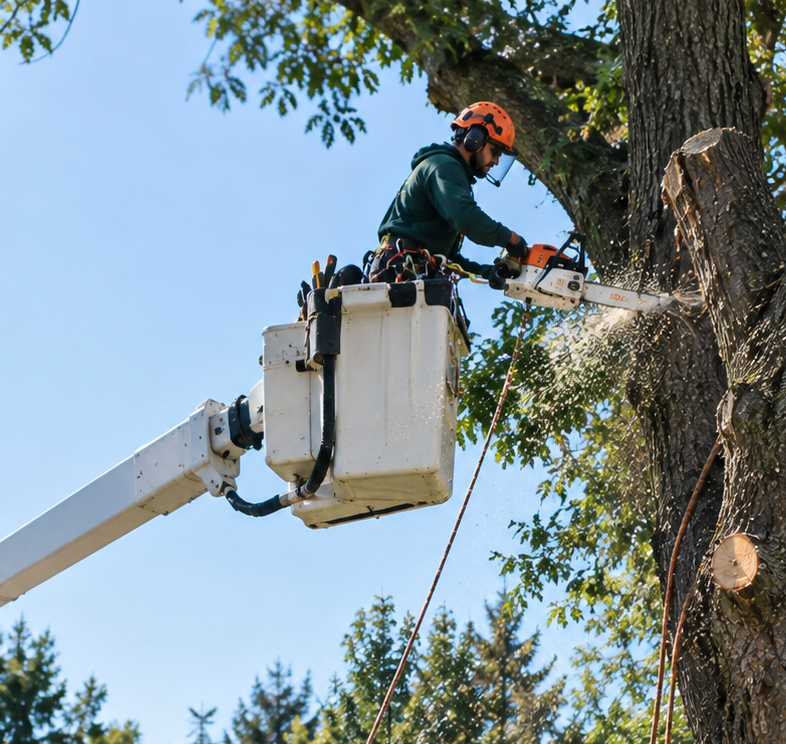
Choosing a tree company after a storm
Urgency can make it harder to compare options, so focus on clear, verifiable questions. Ask who will assess the tree, what work is proposed, how the crew will protect the structure and landscape, how debris will be handled, and whether stump work is included. Ask the provider to explain any risks that remain after the work. Do not accept pressure to enter a hazardous area or make decisions before the scene is safe.
For a company working on your property, insurance matters. Bosco Tree is fully insured with $2 million in liability coverage, and its arborists are ISA-certified with more than 30 years of experience. Bosco Tree serves Toronto and the GTA, provides free quotes and offers 24/7 emergency tree service. Those facts do not establish a response time or insurance coverage for a homeowner's claim, but they can help you understand the company's qualifications and service model.
If the tree may be retained, ask whether pruning or another intervention could address the damage safely. If removal is recommended, ask why, what portion will be removed and what happens to the stump. A company should be able to explain its assessment in straightforward terms and identify where a utility, municipal office or insurer must be involved. For a wider decision checklist, use this guide to choosing a Toronto tree service.
A storm may expose older problems as well as create new ones. If the tree is an ash or has shown ongoing decline, an assessment may need to consider health and structure beyond the storm break; see the guide to ash tree removal in Toronto for related service considerations. If the tree is close to a property line, gather information and discuss access with the affected neighbour before non-emergency work begins.
Storm damage may need fast attention. Keep everyone clear and get professional guidance.
What information should I have ready when I call?
In a concise description, share where the tree is, what has visibly changed, what it could hit, and whether access is blocked. Mention any injuries, utility wires, damaged structures or City-property concerns. If you have safe photographs, say so; do not take new ones by entering the hazard area. A caller does not need to diagnose the tree. Accurate observations help the arborist understand the situation and identify whether a utility or emergency service must be involved first.
If the situation is not immediately dangerous, explain that when you call and ask about an assessment and a free quote. A tree company cannot confirm stability from a brief description alone. Bosco Tree can discuss its service options, but does not promise a specific response time.
Storm-damaged tree removal in Toronto: a practical decision path
- Protect people. Move away from the tree, branches, downed wires and damaged structures. Keep children and pets out of the area.
- Call emergency services or the utility when needed. Use 911 for immediate danger to life or public safety, and notify the utility about downed lines. Do not approach or touch wires.
- Identify whether the tree is public or private. Report City-owned tree hazards to the City; do not arrange private work on a City tree.
- Contact the appropriate tree professional. Describe the situation and request a safe assessment. Do not attempt do-it-yourself cutting or cleanup under an unstable canopy.
- Record visible damage safely. Photograph from a safe distance, note when it occurred and contact your insurer for its instructions.
- Confirm scope and follow-up. Ask whether pruning or removal is recommended, what debris handling includes and whether stump grinding is separate.
This sequence can keep a stressful event manageable without promising an insurance result or assuming every damaged tree must be removed. When people and property are safe, gather information and let a qualified professional evaluate what the tree can support. Read more about tree-removal planning considerations in Toronto and local tree-removal permit questions for non-emergency projects.
Frequently asked questions about storm-damaged tree removal
1. What should I do first if a tree falls during a storm?
Keep people and pets away from the tree and any unstable branches. If there is an immediate threat to life or public safety, call 911. Treat nearby downed wires as live and notify the utility.
2. Is it safe to cut a broken branch myself?
No. Storm-damaged limbs may be under tension, suspended or unstable. Do not climb, cut, pull or move them; wait for a qualified tree professional to assess the hazard.
3. What if the tree or branch is touching a power line?
Stay well away and keep others clear. Do not touch the wire, tree, branch or nearby objects that may be in contact with it. Call 911 for immediate danger and notify the utility.
4. Does every storm-damaged tree need to be removed?
No. Depending on the damage and the tree's condition, an arborist may recommend selective pruning, monitoring, further assessment or removal. An on-site professional evaluation is needed to determine the appropriate option.
5. How quickly can Bosco Tree respond to an emergency?
Bosco Tree offers 24/7 emergency tree service in Toronto and the GTA, but does not promise a specific response time. Site access, safety conditions and the nature of the incident affect how work can proceed.
6. What should I photograph for an insurance claim?
From a safe location, photograph the overall scene and visible damage to the tree and property. Contact your insurer to ask what records it requires and how to proceed; coverage depends on your policy and circumstances.
7. Who is responsible for a storm-damaged private tree in Toronto?
The City of Toronto says the property owner is responsible for hiring an arborist to assess a storm-damaged tree on private property. For a City-owned tree, report the hazard to the City.
8. Do I need a permit to remove an emergency-damaged tree in Toronto?
Permit requirements depend on the tree, property and circumstances, and may change. Confirm current requirements with the City of Toronto before non-emergency work; the City's storm-damage page provides guidance for private and City trees.
9. Does emergency tree removal include stump grinding?
Not necessarily. Tree removal and stump grinding can be separate scopes. Ask whether the quote includes stump work, debris handling and site cleanup before authorizing non-emergency work.
10. Does Bosco Tree offer a free quote for storm damage?
Bosco Tree offers free quotes for tree-care services. For an active hazard, call 416-206-1460 and describe the situation; for non-urgent service, use the contact form to request an assessment.
Call for a safe storm-damage assessment
If you searched “storm damaged tree removal Toronto,” begin with safety rather than the decision to remove. A storm-damaged tree can change from a maintenance concern into a safety hazard. Stay clear of unstable material, treat wires as live, call emergency responders or the utility when appropriate, and leave cutting to trained professionals. Once the scene is safe, document what you can, contact your insurer and ask an arborist to determine whether pruning or removal is the right next step.
Bosco Tree serves Toronto and the GTA with ISA-certified arborists, more than 30 years of experience, full insurance with $2 million in liability coverage, free quotes and 24/7 emergency tree service. Call 416-206-1460 for urgent guidance or use the contact form for a quote. No response time is guaranteed, and any work will depend on safe access and assessment.
Need help with a storm-damaged tree? Tell us what happened and where the hazard is.