
Lot Clearing for Builders and Developers in the GTA: Process, Permits and Scheduling
Before machinery arrives on a new-build lot, the team needs to know which trees may be removed, which should be retained, and how site work can avoid preventable damage. Planning lot clearing for builders GTA projects is more than cutting vegetation: it can involve a site walk, arborist documentation, municipal approvals, tree protection zones, safe sequencing, stump grinding, and careful debris handling. This guide is for builders, developers, and homeowners preparing a lot for a new home, addition, or other construction work.
- Begin by identifying trees, property constraints, access, and intended construction—not by assuming every tree can be cleared.
- Confirm the responsible municipality’s current by-laws and permit requirements before injuring or removing trees.
- Mark retained trees and establish protection measures before excavation, deliveries, grading, or equipment traffic.
- Choose selective or broader clearing based on approved plans, retention goals, and actual work limits.
- Agree on stump, brush, wood, and debris handling, plus coordination with other trades, before work starts.
Bosco Tree provides lot clearing, arborist reports, tree removal, pruning, stump grinding, and Tree Protection Zone (TPZ) installation across Toronto and the GTA. Its ISA-certified arborists have 18 years of experience, and the company is fully insured with $2 million liability coverage. The right scope depends on the project, property, local rules, and what the site inspection reveals; no contractor can promise a permit decision. Use the steps below to organize questions and avoid treating a clearing request as a substitute for approvals or construction planning.
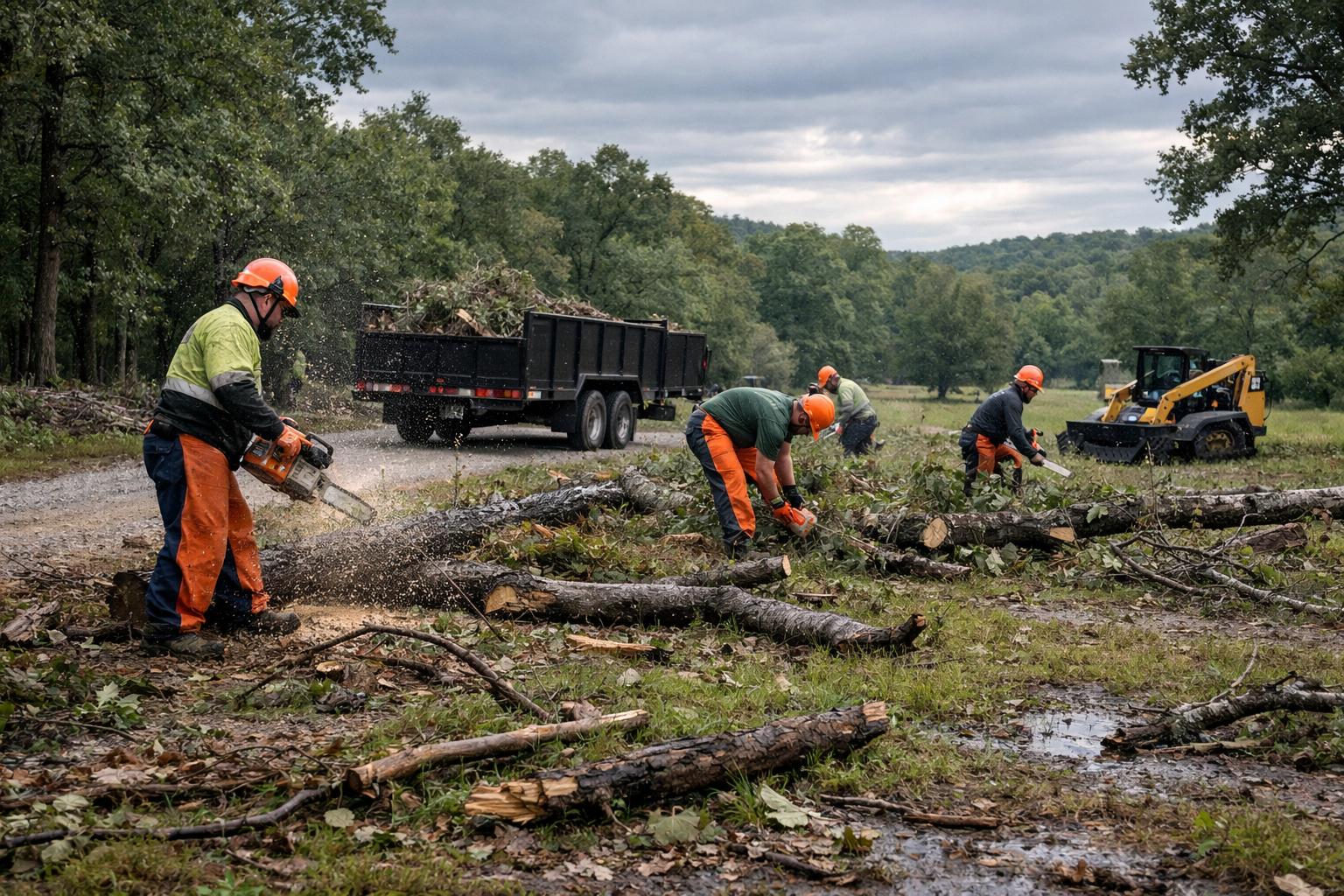
How does lot clearing for builders in the GTA work?
Lot clearing for builders in the GTA starts with mapping trees, boundaries, access and planned work, then confirming approvals and protection for trees to remain. The team defines removals, schedules authorized work and agrees on stump and debris handling, so clearing fits the construction plan and local rules.
Discuss the construction scope: proposed building footprint, driveway, temporary access, foundation excavation, service trenches, retaining walls, grading, staging, and landscape work. Identify neighbouring trees whose branches or roots cross the boundary, trees on municipal land, fences, overhead lines, slopes, ravines, and narrow access points. Clarify who owns each tree and who has authority to authorize work. Property lines and tree ownership are not always obvious from a fence or trunk position; confirm them before a tree is marked for removal.
Record the project’s objectives and constraints. Does the design depend on clearing the full lot, or can some trees stay? Is there a preferred access path that avoids a root zone? Will existing grades change? Are there protected trees or natural features? Are there approved plans, conditions, or earlier arborist documents? These answers help the team distinguish work that is necessary from work that is merely convenient and identify where a design adjustment might protect a valuable tree.
At the walk, document visible trees, their approximate positions, apparent condition, and the areas needed for construction. This preliminary review is not itself a permit approval, a boundary survey, or a final arborist report. It is a practical way to spot questions early and determine what professional documents, municipal contacts, or design revisions may be needed before a clearing date is discussed.
How to plan lot clearing for a GTA build
- Map the site. Show property lines, trees, proposed construction, grading, utilities and access.
- Review tree condition. Ask an arborist to identify relevant trees and retention concerns.
- Confirm local rules. Check permits, approvals and written conditions with the responsible municipality.
- Define work limits. Distinguish approved removals, retained vegetation and items needing clarification.
- Protect retained trees. Mark the approved protection zones and brief every site trade.
- Coordinate the sequence. Align removal, stump work, deliveries and excavation with site logistics.
- Agree on cleanup. Document stump treatment, wood, brush, hauling and exclusions before work starts.
Step one: understand site constraints and tree condition
Before designing a clearing plan, determine which trees are present, what work is planned near them, and whether they appear suitable for retention. A tree inventory or arborist report may be required by the municipality, project approval, or site conditions. Even when not required, an arborist’s assessment can help the team identify possible hazards, health concerns, retention opportunities, and tree protection measures. Bosco Tree provides arborist reports in Toronto and lot clearing services across the GTA.
Do not treat an initial visual impression as a final designation. A tree with sparse foliage may still be retainable, while a tree that looks vigorous can be poorly placed relative to excavation or machinery. The arborist can consider species, size, form, visible defects, root-zone conditions, likely impacts, and the project’s long-term plans. The design team can then decide whether to retain, protect, prune, investigate further, or propose removal subject to the required municipal review.
Make the inventory usable in the field. Give each tree or group a clear label that matches the report and plan. Show proposed removals separately from retained trees and indicate where access, storage, fencing, excavation, or utilities are anticipated. A plan that everyone can interpret reduces the chance that a crew mistakes a retained tree for a removal, or sets up equipment inside a protected area because the drawing was not translated to the site.
Step two: confirm permits, by-laws, and approvals
Tree rules vary among GTA municipalities and may depend on ownership, tree size, location, condition, ravine or natural-feature status, development approvals, and the type of proposed impact. Confirm the current rules for the exact property with the responsible municipality before pruning, injuring, removing, or beginning construction activity that could affect a protected tree. A building approval or contractor’s schedule should not be assumed to replace a separate tree permit.
For example, the City of Toronto states that a permit is required before injuring or removing certain protected trees, including private-property trees at least 30 centimetres in diameter and trees planted as conditions of approvals or agreements, subject to the by-law’s specific provisions. The City also identifies construction impacts within a Tree Protection Zone as a reason a permit may be needed. This is Toronto guidance, not a universal rule for Mississauga, Brampton, Vaughan, Markham, Richmond Hill, or any other jurisdiction. Check the current official requirements for the project address and ask the municipality if the proposed activity or exception is unclear.
Where an application is needed, establish who will prepare and submit the required materials, who will respond to municipal comments, and whether any other review is involved. An arborist report, tree inventory, site plan, protection plan, or other documentation may be requested depending on local process and project details. The City’s guidance on when to apply for a Toronto tree or ravine permit explains the City’s own requirements. Submitting an application does not guarantee that a permit will be issued.
Step three: distinguish selective clearing from full clearing
Selective clearing removes only the vegetation or trees needed for an approved layout, access, safety, or site objective. It can leave room for valuable trees and landscape features to remain, provided the design and protection measures are workable. Selective work requires clear marking, crew communication, and attention to equipment routes and temporary storage. It is not just “removing fewer trees”; the retained trees need a plan for roots, trunks, crowns, and the conditions they will experience through construction.
Broader or full-lot clearing may be considered when the approved scope and site conditions call for a more extensive removal of trees, brush, or other vegetation. The phrase “full clearing” does not override permits, ownership, protected features, or retained-tree obligations. Before treating the whole parcel as clearable, the team must confirm what approvals allow, which vegetation is in scope, whether any trees are to remain, and where adjacent or public trees may be affected.
Often the best answer is a defined work boundary with a tree-by-tree schedule: remove items specifically approved for removal, retain and protect designated trees, and reserve uncertain items for clarification before work. The estimate and work order should describe the intended result, limits, access assumptions, stump handling, and debris disposition. If plans change after approval—for example, a utility route moves or the building footprint expands—pause and confirm whether the revised work changes the tree review or permit requirements.
Lot-clearing decisions to settle before equipment arrives
| Decision | What to confirm | Who should review |
|---|---|---|
| Tree removal limits | Which trees are approved and included? | Owner, arborist and municipality |
| Retained trees | Where is the protection boundary? | Arborist and site supervisor |
| Site access | Can equipment avoid protected areas? | Builder and clearing contractor |
| Stump treatment | Which stumps and finish are in scope? | Builder and tree contractor |
| Debris handling | What stays, is chipped or is hauled? | Owner and contractor |
Tree Protection Zones: retain trees by protecting roots and soil
A Tree Protection Zone is an area established to protect a tree from damage during construction. The zone is not simply a circle under the canopy; its size and required safeguards depend on the tree and applicable municipal or project requirements. Root systems can extend into areas where workers may not expect them, and injury can occur without a visible wound to the trunk. Excavation, soil compaction, grade changes, material piles, vehicle parking, washout, and trenching can all affect retained trees.
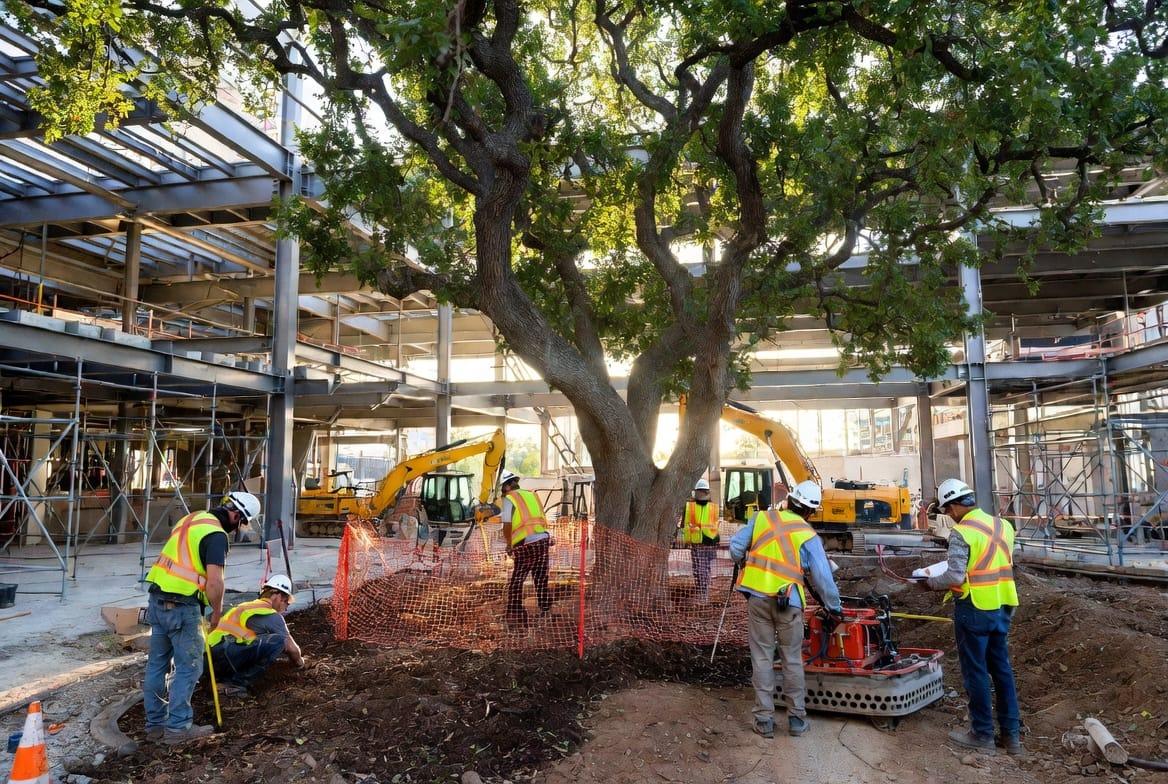
Where a TPZ is required, show it on the plan and mark it on site before construction-related activity begins. Install the specified barrier or hoarding at the approved location and maintain it throughout the work. Keep equipment, building materials, soil, waste, fuels, concrete washout, and temporary facilities out of the protected area unless the approved plan expressly allows an activity. Do not remove or relocate protection just to make a delivery easier; consult the project lead and relevant authority before any change.
TPZ installation should be coordinated with the arborist and site supervisor. Check that fencing is visible, stable, and installed where the plan shows it. Make sure subcontractors know the boundary during site orientation, and include the protected areas in delivery and equipment-routing instructions. Bosco Tree offers Tree Protection Zone information for Toronto projects and TPZ installation as a service. Toronto-specific requirements should be verified directly with the City; a plan for one municipality should not be copied as if it were automatically valid elsewhere.
Protection is also a design and sequencing issue. If the tree is retained, construction drawings and site logistics must provide a realistic way to do the work without repeatedly crossing its protected area. Discuss alternatives such as a different access route, adjusted staging, hand work in constrained sections, or revised utility placement with the project’s qualified professionals. No single workaround is right for every site; the approved plan and the tree’s needs govern.
Stump grinding, wood, brush, and debris handling
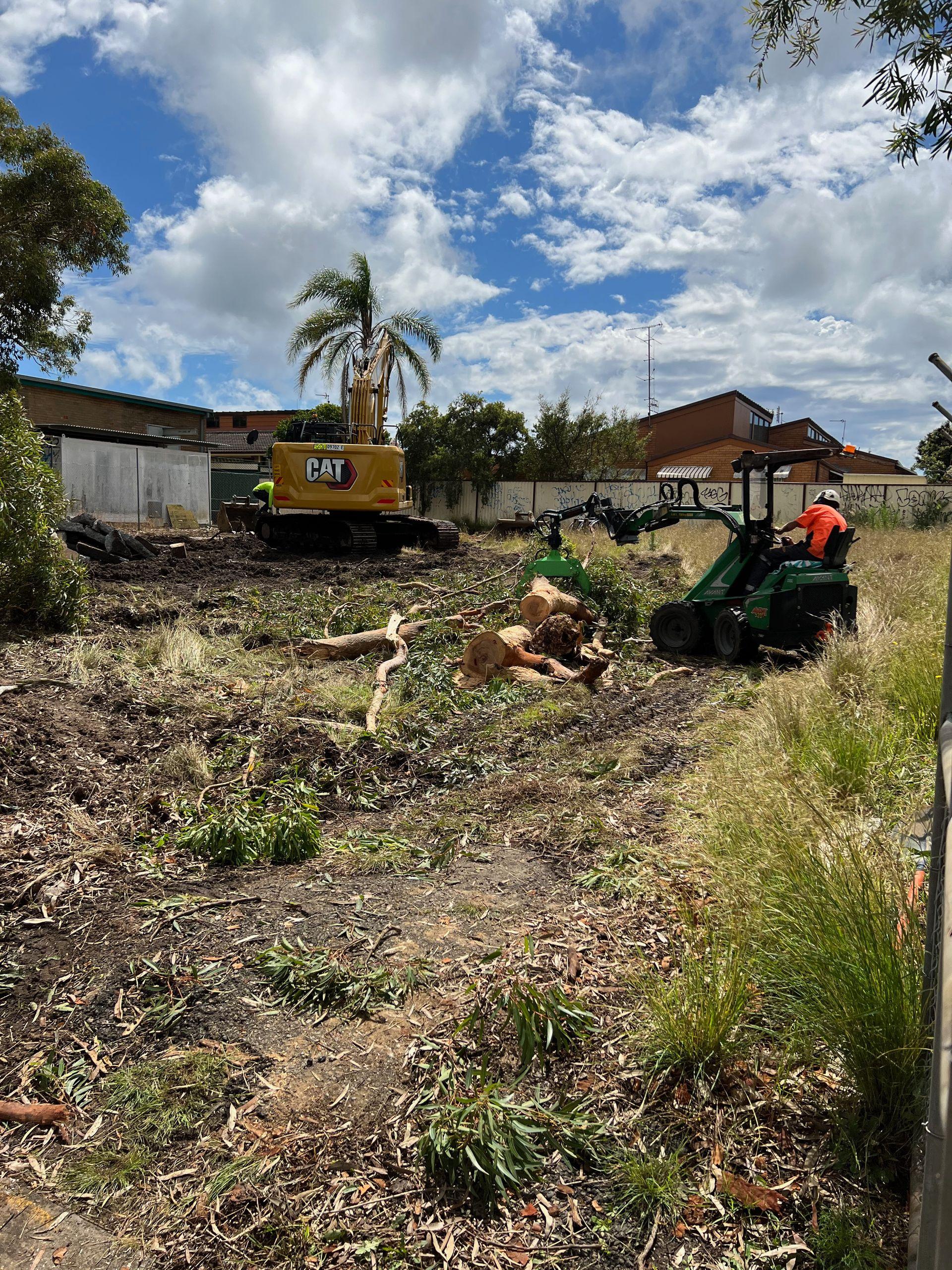
Tree removal and stump work are related but distinct scopes. Confirm whether stumps will be left in place, ground, or removed by another method, and identify any limits near foundations, services, retaining walls, or other obstacles. Grinding can reduce a stump below the surrounding grade, but the requested depth and finish should be agreed in advance. Root removal beyond the stump may be a separate operation and can disturb soil or nearby trees. Review stump grinding and removal services and the guide to stump grinding versus stump removal when defining what should happen after the tree comes down.
Decide how logs, chips, brush, and other green waste will be handled. Some clients want suitable wood retained or cut to a requested size; others expect materials to be removed from the property. Clarify the disposal destination, access for loading, whether a chipper or hauling vehicle can reach the work area, and how the site should be left. Construction debris, fill, concrete, and general waste are not the same as tree debris and may require separate handling.
Protect completed work and adjacent property while material is moved. Consider gates, driveways, lawn surfaces, paving, drainage, overhead obstructions, and safe turning space. Identify what is not included, such as hauling unrelated waste, grading, soil replacement, landscape restoration, or utility disconnection, unless those tasks are expressly part of the agreement. Clear boundaries prevent the builder from expecting a finished landscape when the work scope was limited to tree removal and debris removal.
Coordinate the work with builders and other trades
Tree work is most effective when integrated into the project schedule. The clearing contractor needs to know when survey staking, utility locates, demolition, excavation, deliveries, fencing, and foundation work will occur. The site lead needs to know when tree protection must be installed and who may authorize changes. Utility providers or other qualified contractors should handle their own systems; tree crews should not be asked to work on electrical or communications lines outside their scope.
Before the crew arrives, confirm site access, work limits, contact person, parking and staging arrangements, gates, operating hours, known hazards, and the required order of operations. Ensure removal trees are visibly marked in accordance with the approved plan while retained trees are clearly protected. If survey stakes conflict with tree markings, stop and resolve the difference before cutting. Keep neighbours informed when the project’s access, shared boundary, or expected noise may affect them.
Construction changes can create new tree impacts even after an initial plan was reviewed. A relocated trench, wider driveway, larger excavation, new crane position, or grade adjustment may extend into a protected area. Refer changes back to the arborist, designer, and municipality as appropriate. Do not assume that a verbal “it should be fine” is adequate for a protected tree or a condition attached to an approval.
Safety and responsibility on an active site
Lot clearing combines heavy equipment, cutting operations, falling material, traffic, uneven ground, and other construction activity. Site-specific hazard controls matter. Keep workers and the public outside the work area, establish communication between the crew and the site lead, and clarify who may stop or restart work when conditions change. Wet ground, poor access, overhead conflicts, unstable limbs, and hidden services can alter the work plan. The crew should be told about known hazards before work begins, not after equipment is positioned.
Tree contractors should work within their scope and use appropriate methods and equipment. Builders should identify utilities and coordinate required locates through the applicable process. Never ask a crew to cut or handle branches near energized lines without the proper utility coordination and qualified personnel. If a tree or limb is affecting electrical infrastructure, keep clear and contact the appropriate utility or emergency authority rather than attempting removal.
Confirm responsibility for barriers, signs, traffic control, pedestrian access, neighbour notification, and cleanup. A safe plan accounts for people who are not part of the construction team, including residents, delivery drivers, and passersby. Work should pause if the approved clearing boundary is uncertain, if an unexpected tree is discovered, or if a retained tree is damaged. Promptly document the issue and consult the designated project decision-makers.
A practical pre-clearing checklist
- Confirm boundaries. Check ownership and trees covered by the agreed work scope.
- Verify approvals. Review municipal requirements and any written conditions before work starts.
- Use matching plans. Share the arborist report, removal list and protection plan with the crew.
- Mark trees clearly. Resolve any conflict between survey stakes, removal marks and retained-tree labels.
- Protect retained trees. Install and inspect required barriers before site activity begins.
- Coordinate logistics. Confirm access, staging, utilities, other trades and the site contact.
- Specify cleanup. Agree on stumps, logs, chips, brush, hauling and final site condition.
What to request in a lot-clearing quote
Ask the contractor to make the proposed work understandable. A useful scope identifies which trees or vegetation are included, whether work is selective or broad, what the crew assumes about access, and how the site will be left. The quote should state what happens to stumps, logs, branches, chips, and debris, and flag exclusions such as landscaping or restoration. If a permit or approved plan defines the allowable work, ensure the contractor has the current documents and that the estimate reflects them.
Builders should also clarify sequence and coordination without assuming a completion date that has not been agreed. Discuss dependencies, access conditions, site readiness, weather sensitivities, and the need to coordinate with surveyors, utilities, excavation contractors, and other trades. A plan can describe the intended order of work without promising a fixed duration; actual field conditions may affect the work and the project schedule. For a new-build property, consider whether a tree assessment should precede final design, rather than discovering a protection conflict after the layout is set.
For general tree-removal scope, review tree removal in Toronto and the Toronto tree removal permit guide. If your project is in Mississauga or Vaughan, see the relevant Mississauga tree page or Vaughan tree page; confirm permit questions with the municipality responsible for the address.
If the plan calls for a protected tree to remain, coordinate the arborist and tree crew early. Bosco Tree’s related resources include Tree Protection Zones, arborist reports, tree trimming, stump grinding, tree work near a house, and tree work near power lines. You can also review how to prepare for tree removal day and how to choose a tree service before confirming a work scope.
When to call a professional lot-clearing contractor
Call an arborist or qualified tree contractor before the layout is fixed, whenever tree retention or removal is uncertain, and before work near protected trees. Bosco Tree provides lot clearing across the GTA; share the approved plans and request a free quote to discuss a defined scope.
Frequently asked questions
What is included in lot clearing?
The scope can include removal of specified trees or vegetation, cutting and processing, stump work, and handling or hauling wood and brush. Confirm each item in writing because grading, soil work, utility disconnection and landscape restoration may be separate tasks.
Do I need a permit to clear trees on a GTA lot?
Requirements vary by municipality, property, tree and type of impact, so check with the authority responsible for the address before work begins. Toronto has its own protected-tree and permit rules, which should not be assumed to apply across the GTA.
Does a building permit cover tree removal?
Do not assume a building approval replaces a separate tree permit or tree-protection approval. Confirm the requirements and any conditions with the municipality handling the property, and share the written decision with the arborist, builder and tree contractor.
What is a Tree Protection Zone?
A Tree Protection Zone is a designated area intended to protect a retained tree during construction. Its location and restrictions should follow the applicable approved plan and local requirements, and the boundary should be clearly marked and respected by every trade.
Can we keep some trees while clearing the rest?
Selective clearing may be possible when it aligns with the design, approvals and site conditions. Retained trees need practical protection for roots, trunks and crowns, plus access and construction sequencing that avoid preventable damage throughout the project.
Should an arborist visit before the builder sets the final layout?
An early arborist review can identify trees and potential conflicts while design changes may still be considered. Whether a report is required depends on the municipality, project, approvals and site conditions; ask the authority what documents it needs.
Is stump grinding automatically included with tree removal?
No. Stump grinding or removal should be confirmed as a separate scope item unless the quote expressly includes it. Agree on the desired finish, access and any limits near foundations, underground services, retaining walls or trees intended to remain.
How should a builder handle wood and brush after clearing?
Decide in advance whether suitable wood will remain, whether brush will be chipped and whether materials will be hauled away. Confirm loading access and the cleanup standard so the construction team understands the site condition expected after tree work.
What if the construction plan changes after tree approvals?
Pause before expanding work into a protected area or changing a removal limit. Ask the project arborist and responsible municipality whether the revised design affects the approved plan, permit conditions or need for additional review before the crew proceeds.
Does Bosco Tree work with builders and homeowners on new-build lots?
Bosco Tree provides lot clearing, arborist reports, tree removal, pruning, TPZ installation, stump grinding and emergency tree service across Toronto and the GTA. Call 416-206-1460 or request a free quote to discuss the site and proposed work scope.
Learn more about Bosco Tree services, the company’s arborist team, and other tree-care guides, or return to the Bosco Tree home page. Clear permit questions with the appropriate authority before scheduling regulated work; local rules and approval conditions can change.

Tree removal for home addition Toronto | Bosco Tree
Plan tree assessment, Toronto permits, protection for retained trees, authorized removal and site preparation alongside your home addition.

Arborist vs Tree Service Toronto | Bosco Tree
Learn when to call an arborist, a tree service or both in Toronto, and what to ask before booking tree care.
Tree Protection Zone Toronto | Bosco Tree
Plan tree protection for Toronto construction with guidance on arborist reports, TPZ barriers, project steps, and City approvals.
Tree Removal Permit Toronto: Do You Need One?
Learn when Toronto tree rules may apply, what an arborist report can do and how to confirm current permit requirements before work starts.