Tree Protection Zone Toronto: Requirements for Construction Projects
If your project involves excavation, grading, equipment access, or material storage near a tree, a tree protection zone Toronto plan can help prevent avoidable damage and support a smoother construction process. A Tree Protection Zone (TPZ) is a defined area around a tree that is protected from damaging work. Its size and required safeguards depend on the tree, site conditions, applicable City rules, and project approvals. Do not assume a fence line chosen on site is adequate: confirm the current requirements with the City and have an arborist prepare project-specific guidance.
What is a tree protection zone in Toronto?
A Tree Protection Zone is the defined area around a tree that a project must protect from construction impacts. Its boundary and safeguards depend on tree size, ownership, site conditions and City requirements. Use the current approved plan and verify project-specific directions before excavation, access or material storage.
Planning construction near a tree? Ask Bosco Tree about a site-specific assessment and TPZ installation.
Key takeaways
- A TPZ is a clearly protected area around a tree, intended to protect roots, trunk, crown, soil, and growing conditions from construction impacts.
- Toronto requirements vary with tree ownership, size, location, by-law protection, and the nature of the proposed work. Verify current rules with the City.
- An arborist report documents tree conditions and potential construction impacts; a tree preservation or protection plan translates that assessment into site safeguards.
- TPZ fencing or hoarding should be installed before construction disturbance and maintained through the relevant work, as required by the approved plan.
- Do not excavate, stockpile, park equipment, alter grades, or dispose of materials inside a protected zone unless the City-approved plan specifically allows it.
What a tree protection zone means on a Toronto construction site
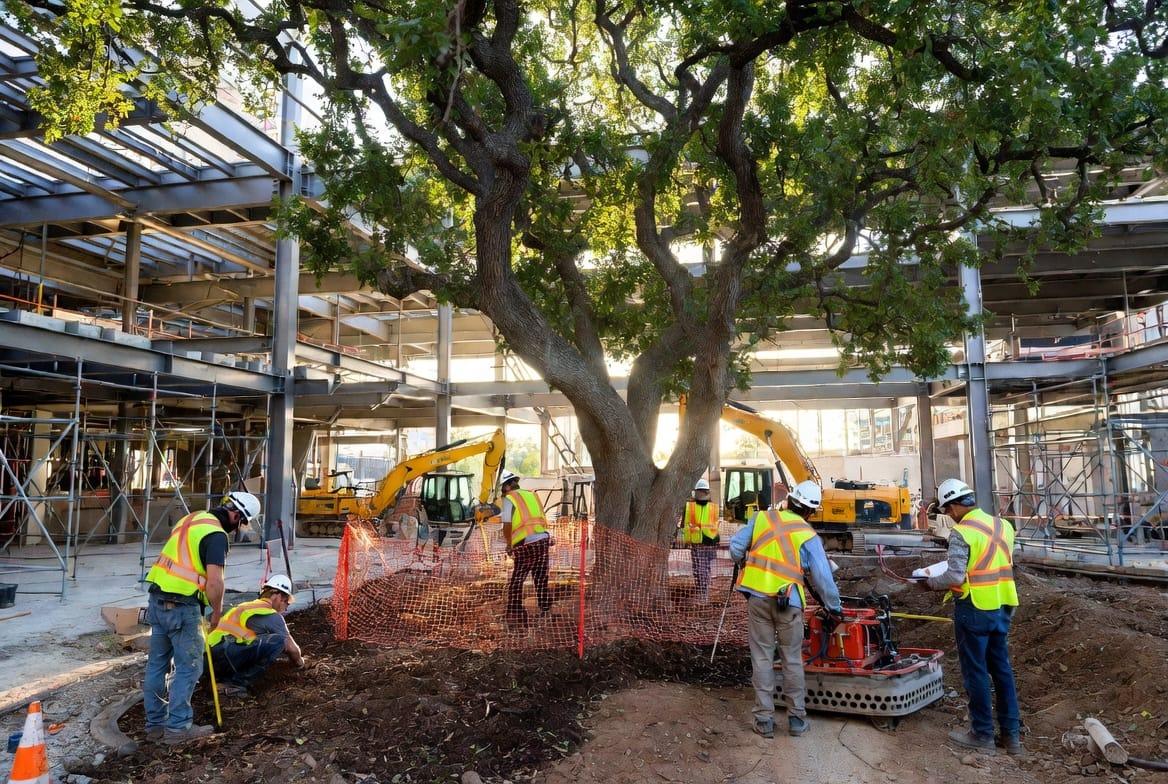
A tree protection zone is the area around a tree that must remain protected so construction does not damage the parts needed for stability and long-term health. People often focus on the visible trunk, but a tree’s roots extend through soil beyond the trunk flare. Roots absorb water and nutrients, anchor the tree, and rely on suitable soil conditions. A construction activity that appears to miss the trunk can still cut roots, compact soil, change drainage, or expose roots to drying and temperature extremes.
In practice, the TPZ is marked on the site plan and established on the ground with a barrier such as approved fencing or hoarding. The barrier makes the protected boundary understandable to contractors, delivery drivers, inspectors, and property owners. It also provides a practical reference point for scheduling, site access, excavation limits, and material handling. A barrier is not merely a visual reminder: it is a control that must be placed correctly, kept intact, and respected throughout work.
The City of Toronto publishes a Tree Protection Policy and Specifications for construction near trees. Municipal Code Chapter 813 includes Article II concerning trees on City streets and Article III concerning private tree protection; Chapter 658 addresses ravines and natural features. Which provisions apply depends on the tree’s status and the site context. Municipal requirements and policies can change; always check the latest City documents and project conditions rather than treating a generic diagram as approval. For service context, explore Bosco Tree’s tree care services, including Toronto arborist reports and tree removal where separately authorized and appropriate.
Why Toronto requires tree protection during construction
Construction can affect trees through direct injury and through less visible changes to soil and water. Excavation may sever roots; trenching and drilling can cut through root areas; heavy machinery can compact soil and reduce air and water movement. Raising or lowering grade can bury roots or expose them. Stockpiled materials, wash water, fuel, concrete, or other debris can interfere with the soil and harm trees. Temporary access routes and staging zones can have lasting effects if they cross the protected area.
Tree protection is intended to reduce these impacts and preserve trees where the project can reasonably accommodate them. Retaining a tree can require early planning: survey existing trees, coordinate building and landscape designs, set clear construction limits, and assign responsibility for barriers and inspections. A TPZ therefore connects design decisions to day-to-day site controls. It can help a homeowner avoid preventable conflicts during a renovation and help a builder coordinate trades before work starts.
City policy also reflects the fact that trees may be subject to different by-laws. A tree on private land, a City-owned street tree, or a tree in a ravine or natural feature area may have different protections and review pathways. Chapter 813 and Chapter 658 are not interchangeable, and a building or tree permit should not be assumed to cover every approval. Confirm which rules apply to the property and proposed work with the City’s Urban Forestry or permit staff. For broader property work, see Bosco Tree’s GTA lot clearing service and our guidance on Toronto tree removal permits.
What determines the required TPZ boundary?
The boundary is not a universal radius that can be guessed from a photo. The City’s Tree Protection Policy and Specifications describe minimum distances that are determined in relation to trunk diameter at breast height, with separate provisions for trees in areas protected by the Ravine and Natural Feature Protection By-law. Site-specific approval conditions, tree condition, root distribution, proposed construction, and professional recommendations can also matter. Do not copy a distance from an old project or assume a measurement for one tree applies to another.
Before establishing the fence, identify the trees relevant to the work area, confirm which are City-owned or private, record trunk sizes as required, and check whether the site is within an area protected by Chapter 658. The applicable City document should be read in full, including its current specifications and any project-specific requirements. If there is uncertainty about a measurement or an exception, confirm current requirements with the City. Bosco Tree can assess the site and install TPZ fencing or hoarding in accordance with the information provided for the project; the final approved plan and City directions govern.
A TPZ may extend beyond the tree’s canopy edge, and a visible canopy is not a dependable substitute for the prescribed boundary. Equally, the zone can interact with access routes, foundation work, utility trenches, and neighbouring trees. A site-specific review helps show where protection is practical, where design conflicts exist, and whether an approved method is needed for constrained work. For related planning questions, see how to choose a tree service in Toronto and how an arborist differs from a tree service.
Bosco Tree is a Toronto-based tree removal and arborist company serving the GTA. The company’s stated qualifications include ISA-certified arborists, 18 years of experience, full insurance with $2 million liability coverage, 24/7 emergency service, and free quotes. For information about the company and its approach, visit about Bosco Tree or browse its Toronto-area tree care website.
Tree protection zone Toronto: planning before construction starts
For anyone searching “tree protection zone Toronto,” the practical starting point is a current site plan and a clear understanding of which trees and approvals are involved. A project-specific plan is more reliable than applying a remembered distance from another property.
How arborist reports and TPZ plans work together
An arborist report helps establish the facts about trees on or near a project: which trees are present, their location and condition, how proposed work may affect them, and what should be done to retain or manage them. The report can describe tree-by-tree observations and recommend protective measures or explain why a tree cannot be retained. Its scope should match the planning or permit question. A report is not a substitute for City approval, and a generic template is not a site-specific evaluation.
A tree preservation plan or TPZ plan turns those findings into instructions that can be implemented. It should show the trees to be protected, the boundaries of the protection zones, fence or hoarding locations, construction limits, and any approved measures for work near the protected area. Depending on the submission and project, related drawings or notes may need to coordinate with grading, servicing, excavation, demolition, and landscape plans. Confirm exactly what the City requires for your application.
The City’s current Guidelines for Completing an Arborist Report discuss tree preservation plans where trees are to be retained and protected. The City’s Tree Protection Policy and Specifications for Construction Near Trees describes protection distances and site controls. The City may revise documents, so check the current versions and any instructions issued for your application. Bosco Tree can provide arborist report services and TPZ installation as part of a coordinated scope where appropriate.
Think of the report as the evidence and professional reasoning, and the plan as the practical map and requirements that site personnel must follow. If a contractor relies only on a fence installation quote, they may not have the approved boundary or conditions. If a report exists but is not reflected in site drawings or a pre-construction briefing, workers may not know where protection begins. Keep the approved plan available on site and make sure the site supervisor can explain the protection requirements to each trade.
Checklist: activities to keep outside a protected tree zone
- Excavation and trenching. Do not cut into soil inside the zone unless the approved plan and City direction specifically allow it.
- Vehicles and equipment. Keep machinery, parking and repeated access routes outside the protected boundary.
- Material storage. Do not stockpile soil, lumber, bins, fill or demolition debris within the zone.
- Grade and drainage changes. Avoid burying or exposing roots or redirecting water without approved direction.
- Spills and wash water. Keep fuel, concrete, tool wash and other liquids away from protected soil.
- Fence changes. Do not move, open or remove the barrier to solve a work conflict informally.
What can damage trees inside or near a TPZ?
Direct impacts include cutting roots, scraping bark, breaking branches, or placing a load against the trunk. Less obvious impacts include soil compaction from vehicles or repeated foot traffic, excavation that severs roots, grade changes that bury or expose roots, and changes to drainage. Construction materials and equipment can obstruct soil, while spills or wash water may contaminate it. Even a temporary staging area can cause harm if it occupies the root area for long enough or blocks access to protective barriers.
Tree roots are not distributed in a perfect circle or limited to the dripline. Root growth responds to soil, moisture, available space, and obstacles. A shallow trench or narrow access cut can intersect important roots, and a tree may show decline well after the disturbance. That is why a TPZ must be established before work begins and maintained rather than repaired after damage occurs.
Examples of activities that typically need to be kept out of a protected zone unless specifically approved include:
- Excavating, trenching, drilling, or driving stakes into the soil.
- Parking vehicles, operating machinery, or creating a temporary access route.
- Stockpiling soil, fill, lumber, stone, bins, or demolition debris.
- Changing ground level, redirecting water, or installing a temporary drain.
- Washing tools or equipment, disposing of liquids, or mixing construction materials.
- Attaching signs, cables, lights, or other items to the tree or its barrier.
Do not treat this list as a full statement of the law or the approved plan. Project-specific permissions and City specifications govern. If a site constraint appears to make a conflict unavoidable, stop and ask the project arborist and City contact how to proceed. Do not move the fence or make an informal exception simply to keep work on schedule.
Project document and field control: what each does
| Item | Main purpose | Who should confirm it |
|---|---|---|
| Arborist report | Records tree observations and construction impacts | Project arborist and City application staff |
| TPZ or preservation plan | Maps protection boundaries and site measures | Project arborist and approving City office |
| Approved site drawings | Coordinate protection with excavation and access | Designer, builder and project team |
| Fence or hoarding | Marks the approved no-go boundary on site | Installer and site supervisor |
| Inspection record | Documents barrier condition and observed encroachment | Project arborist or designated professional |
Hoarding and fencing: the visible boundary that protects the plan
TPZ fencing or hoarding should match the project’s approved protection plan and the current City specifications. The barrier needs to be installed at the approved location, stable enough for the site, continuous where required, and visible to workers and visitors. For a tree protection zone Toronto installation, the approved drawing and current City specifications should control placement and barrier detail. Depending on the project and the applicable specification, the barrier type and height may vary. The City’s current documentation should be consulted for the specific material and configuration; confirm current requirements with the City rather than assuming one product or height applies to every site.
Bosco Tree offers TPZ installation for construction projects. Before installation, the team needs the approved drawing or other site direction that identifies the boundary, relevant trees, access constraints, and required barrier detail. The fence should be installed before demolition, grading, excavation, or other disturbance that could affect the tree. A barrier put up after site activity begins cannot undo damage that has already occurred.
Once installed, the barrier must not be treated as a convenient temporary divider. Keep the area inside it free of construction traffic and materials; keep gates or access points controlled if the plan permits them; and repair or report any damage promptly. The site supervisor should tell workers what the boundary means and who is authorized to approve changes. Photos taken after installation can help document the initial condition and show whether the barrier remains in place during the project.
Where the project has limited space, the correct response is not to shrink the zone informally. A qualified professional can review whether an alternate method is permissible, and the City may need to review or approve it. Any alternative should be documented, designed for the specific tree and site, and understood by the construction team before the work takes place. A written, approved method is safer than a verbal workaround.
Inspections and monitoring through construction
Inspections help confirm that protection measures remain in place and that site activity is consistent with the plan. The timing and frequency depend on the project conditions, the approved requirements, and any City directions. A pre-construction review can verify the tree inventory, boundary, fencing, and contractor awareness. Follow-up checks can look for barrier movement, damage, encroachment, soil disturbance, or changes to the tree. The project’s arborist or designated professional should document observations and advise on corrective action where needed.
Inspections do not replace daily site responsibility. The contractor and supervisor should include tree protection in site orientation, logistics planning, and daily checks. Everyone who controls a delivery, excavator, crane, or landscape crew should know the no-go area and how to ask for guidance. If a barrier is damaged, or a machine enters the zone, stop the relevant activity when safe, record what occurred, protect the area, and contact the project arborist and City as appropriate. Do not conceal damage or make repairs that change the approved arrangement without direction.
After construction, the tree may need continued observation or care based on the arborist’s recommendations. Some effects become apparent later. A tree preservation plan may include measures for managing roots or soil, but any such work should be done under professional direction. A post-work review can document the condition and identify follow-up steps. Keep project records, approvals, reports, inspection notes, and photos together with the final construction documents.
For related tree work that may arise around a site, Bosco Tree also provides tree trimming in Toronto, tree removal, and stump grinding and removal. A protected tree should not be pruned, injured, or removed just because it conflicts with a proposed design; confirm the required permits and approvals first.
Steps to plan a Toronto tree protection zone
- Identify nearby trees. Show trees near the work area and boundary on current site information.
- Confirm status and location. Check ownership and whether ravine or other protections may apply.
- Engage an arborist. Have a qualified professional consider tree condition and proposed work impacts.
- Coordinate drawings. Align building, grading, servicing, excavation, access and landscape plans.
- Prepare required documents. Confirm current report and protection-plan requirements with the City.
- Obtain City decisions. Do not assume an application or building permit authorizes tree impacts.
- Install the approved barrier. Set and document fencing or hoarding before site disturbance.
- Maintain and inspect protection. Brief crews, keep the zone clear, record checks and report conflicts promptly.
That sequence is a practical framework, not a substitute for the specific permit conditions. Some applications require additional documents or steps, and the City’s process may change. The City’s page on how to apply for a tree or ravine permit describes its current application information. Verify the required documents and review path with City staff before committing to a construction schedule.
Need a TPZ installed for an upcoming project? Talk with Bosco Tree about the approved plan, site access, and installation timing.
Responsibilities for builders, homeowners, and contractors
Tree protection works best when it is built into the project before crews arrive. The property owner or developer should provide accurate site information, engage the appropriate professionals, and make sure required approvals are obtained. The designer should coordinate building and servicing layouts with the preservation plan. The builder and site supervisor should establish barriers, communicate restrictions, and manage daily access. Trades and delivery teams should respect the boundary and report any conflict rather than making changes on their own.
Homeowners often coordinate smaller additions, driveways, decks, pools, or landscape changes. Even work that seems modest can involve excavation or equipment near roots. Ask your designer or contractor to identify nearby trees before the layout is finalized. If a tree is protected or lies in a sensitive area, contact the City early. A short review at the start can prevent expensive delays, redesign, and avoidable tree injury later.
Builders and developers may need to coordinate multiple approvals and drawings. Ensure the tree information on the arborist plan aligns with the latest survey and construction set. If plans change, re-check the protection boundary and conditions before proceeding. A TPZ plan is only useful when it matches what is being built. Where tree protection obligations are unclear, get the City’s direction in writing and share it with the design and field teams.
Bosco Tree serves Toronto and the GTA with arborist reports, TPZ installation, tree pruning, removal, stump grinding, emergency service, and lot clearing. The company states that it has ISA-certified arborists, 18 years of experience, full insurance with $2 million liability coverage, 24/7 emergency service, and free quotes. Learn about Bosco Tree’s background and explore its tree services for homeowners and projects.
What happens if a tree protection plan is ignored?
Ignoring an approved protection boundary can injure a tree and create consequences for a project. The City’s contravention information explains that injury to or removal of a by-law-protected tree without the required permit can be illegal and may lead to enforcement action. This article does not state specific penalties or determine whether a particular site is in violation. Requirements and consequences depend on the facts, applicable by-law, permits, and current City direction. Confirm current requirements with the City before work begins.
Potential project effects can include a stop to the activity, requests for corrective measures, additional review, delayed work, or enforcement action where applicable. A damaged tree may also decline after construction, creating a later safety or replacement issue. The best prevention is to make protection clear, communicate it to all contractors, and stop to seek advice when a design or field condition conflicts with the plan. A tree protection zone Toronto project should keep the approved boundary visible to every trade, delivery team, and equipment operator from the start. If damage has already occurred, document it honestly, protect the area, notify the project arborist, and follow City direction.
The City provides a process for reporting a tree or ravine contravention. For an active project, consult the City and the project’s arborist rather than relying on a general online article. Keep communications in the project file and make sure any corrective work is reviewed before it proceeds.
How to hire a TPZ installation provider
Ask whether the provider has reviewed the approved arborist report and protection drawing, what information they need before site mobilization, and what is included in installation. Confirm the planned barrier placement, access constraints, installation timing, and who will be available if site conditions differ from the plan. Clarify whether the installation provider also performs inspections or whether those are handled by the project arborist or another professional.
A responsible provider will not guess the boundary from the canopy or decide independently to relocate a fence. When comparing tree protection zone Toronto installation options, ask how the approved drawing, site access, and barrier specifications will be checked before mobilization. If you searched for tree protection zone Toronto requirements, confirm that the scope is based on the latest City direction rather than a generic installation detail. They should ask for the current project documents and flag any conflict before installation. They should also clarify whether repairs, relocation, or follow-up visits are included in the agreed scope. The best arrangement makes responsibilities clear among the owner, arborist, installer, and contractor.
When requesting a quote, include the site location, project timing, approved plan if available, the number and position of trees, access constraints, and any required barrier details. If you are still in design, explain the stage and ask what information Bosco Tree needs to advise on the next step. A free quote can clarify the scope and logistics; the approved plan and City requirements still determine what must be installed.
Related services and planning resources
If a project ultimately requires authorized tree work, Bosco Tree can discuss tree removal in Toronto, 24/7 emergency tree service in Toronto, tree removal in Mississauga, tree removal in Brampton, and tree removal in Vaughan. The service pages explain local coverage; they do not replace a City approval. For additional planning, read the guides on tree removal scope and costs, Toronto tree removal permits, choosing a Toronto tree service, and arborists versus tree service providers.
For hazard concerns on a retained tree, see warning signs that warrant an arborist’s review, storm-damaged tree guidance, and ash tree removal information. For ongoing care, explore tree pruning in North York, when to trim trees in Toronto, stump grinding versus stump removal, and GTA lot clearing. Bosco Tree also serves homeowners in Markham and Richmond Hill.
Find company information at About Bosco Tree, explore the full services directory, or contact the team to discuss the site and request a free quote. If your project is outside Toronto, the team can discuss service availability across the GTA.
When to call a professional about this tree issue
Engage an arborist before excavation, demolition, grading or equipment access could affect a retained tree. A site-specific report and approved protection plan can guide the boundary and barrier; verify the City’s current requirements for the project. Learn about Toronto arborist reports and request a free quote for TPZ planning or installation.
Frequently asked questions about Toronto tree protection zones
What is a tree protection zone?
A tree protection zone is a defined area around a tree that is protected from construction impacts. It helps safeguard roots, trunk, crown and soil conditions needed to retain the tree. The boundary and measures should follow current City requirements and the approved project plan.
How is a TPZ distance determined in Toronto?
Toronto’s Tree Protection Policy and Specifications set minimum distances related to trunk diameter and distinguish ravine and natural-feature areas. The applicable boundary may also depend on tree status, site conditions and approvals. Confirm the current measurement with the City and project arborist.
Do I need an arborist report for construction near a tree?
It depends on the project and the City’s application requirements. A report may be needed to document trees and assess construction impacts. Check the current instructions for your application and engage an arborist early to establish the appropriate scope.
What is the difference between an arborist report and a TPZ plan?
An arborist report records tree observations and evaluates likely construction impacts. A TPZ or preservation plan translates recommendations into boundaries and protective measures, such as fence locations and work limits. Required deliverables depend on the project and City instructions.
When should TPZ fencing or hoarding be installed?
Install the barrier before demolition, grading, excavation, equipment access or other disturbance that could affect the tree. Follow the approved plan and current specifications. A fence installed after site work begins cannot undo root, soil or trunk damage that has already occurred.
Can contractors store materials or park equipment inside a TPZ?
Keep materials, vehicles, excavation and grade changes outside the protected zone unless the approved plan and City direction specifically allow them. If the site layout conflicts with the boundary, stop and seek professional and City guidance rather than moving the barrier.
Does a TPZ protect the trunk only?
No. A TPZ is intended to protect the tree and growing conditions, including roots and soil as well as the visible trunk and crown. Construction can harm roots through excavation, compaction or grade changes even when equipment never touches the trunk.
What should I do if a TPZ fence is damaged?
Stop affected work when safe, protect the area, document what happened and notify the site supervisor and project arborist. Contact the City as appropriate and follow its direction. Do not conceal damage or relocate the barrier without approval.

Lot Clearing for Builders GTA | Bosco Tree
A practical GTA lot-clearing guide for builders and homeowners covering arborist review, permits, retained trees, TPZs and site coordination.

Tree removal for home addition Toronto | Bosco Tree
Plan tree assessment, Toronto permits, protection for retained trees, authorized removal and site preparation alongside your home addition.

Arborist vs Tree Service Toronto | Bosco Tree
Learn when to call an arborist, a tree service or both in Toronto, and what to ask before booking tree care.
Tree Removal Permit Toronto: Do You Need One?
Learn when Toronto tree rules may apply, what an arborist report can do and how to confirm current permit requirements before work starts.