Tree Removal Downtown Toronto: Tight-Access Tree Service by Certified Arborists
Tree work in the downtown core can mean a mature canopy above a narrow side yard, a garden reached through a lane, a shared fence line or a building close to the work area. Bosco Tree provides tree removal downtown Toronto property owners can request with a careful look at access, protection and the work sequence. Our Toronto-based company serves the GTA, including The Annex, Yorkville, Cabbagetown, Riverdale, Leslieville, High Park, Rosedale, Parkdale, Little Italy and the Beaches. Each tree and parcel is different; an on-site assessment is the foundation for a realistic plan.
Talk with our team about a difficult access route, a tree close to a home or a storm-related concern. Call 416-206-1460 or request a free quote from Bosco Tree. We are based in Toronto; this page does not represent a separate downtown office. The quote process begins with understanding the tree, the property layout and the result you need, then explaining the scope and relevant questions.
Tree removal downtown Toronto: planning for close quarters
A removal plan in a dense neighbourhood must account for where the tree stands and where people, buildings, vehicles and utilities are positioned. A narrow lot may leave little room to work from the ground. A rear garden may be reached only from a lane or through a building. A shared fence can make a boundary especially important. Mature trees may sit beside older homes, additions, garages and landscaped areas, while renovations or new construction can change how a site is used. These are planning considerations, not claims that every downtown address has the same conditions.
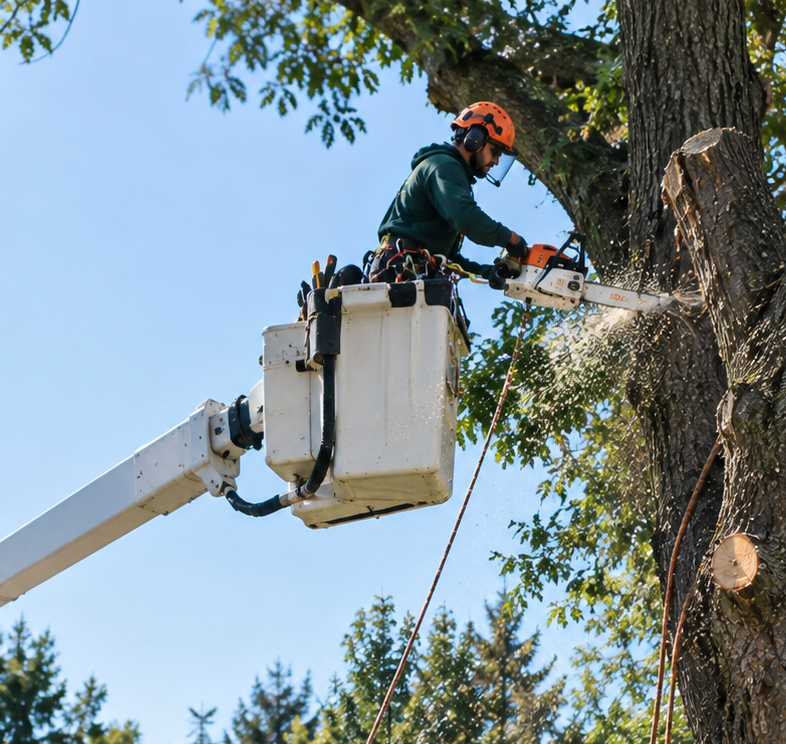
The words “tight access” describe a constraint, not a job method. The arborist considers the tree’s height, structure, condition and canopy, the available work zone, potential drop zones, access for people and equipment, and how debris can be handled. When suitable, sections may be lowered with ropes and rigging rather than allowed to fall freely. In some situations a crane may be part of a professionally assessed plan, but it is not a default solution and cannot be promised without reviewing access, setup space, overhead restrictions and the tree itself. Equipment choice follows the site assessment.
In a compact downtown setting, preparation includes a conversation about gates, lane access, parked vehicles, patios, play areas and neighbouring property. We seek to understand who controls the access route and what permissions may be needed. If a fence, planting bed or hardscape could be affected, the proposed work area should be discussed in advance. A good plan is explicit about what is included, what needs to be cleared, and any conditions that could change the work once the crew sees the site.
In The Annex and Yorkville, Cabbagetown and Rosedale, tree work may occur near established buildings and landscaped yards. In Riverdale, Leslieville, Parkdale and Little Italy, the same need for careful sequencing applies where a parcel has limited room. Near High Park or the Beaches, proximity to public green space or a ravine-like landscape does not by itself establish a permit boundary; the exact property and City mapping matter. We do not infer a property’s legal status from its neighbourhood name.
Tree-related concerns can be sudden or gradual: a storm-damaged branch, a tree with visible decay, an ash tree that has declined, limbs affecting roof clearance or a tree near a renovation footprint. A symptom alone does not prove that removal is required. When pruning or another treatment may suit the goal, an arborist can discuss that option. Our guide to hazard-tree warning signs describes observations that can justify asking for professional advice, and our ash tree removal guide covers the context of ash decline.
Tree services in downtown Toronto
Tree removal. When removal is the appropriate solution, the crew develops a safe sequence for the tree and the site. Learn about tree removal in Toronto. Tight working space can influence access planning and material handling; it does not change the need to assess the tree, protect the work area and confirm permissions.
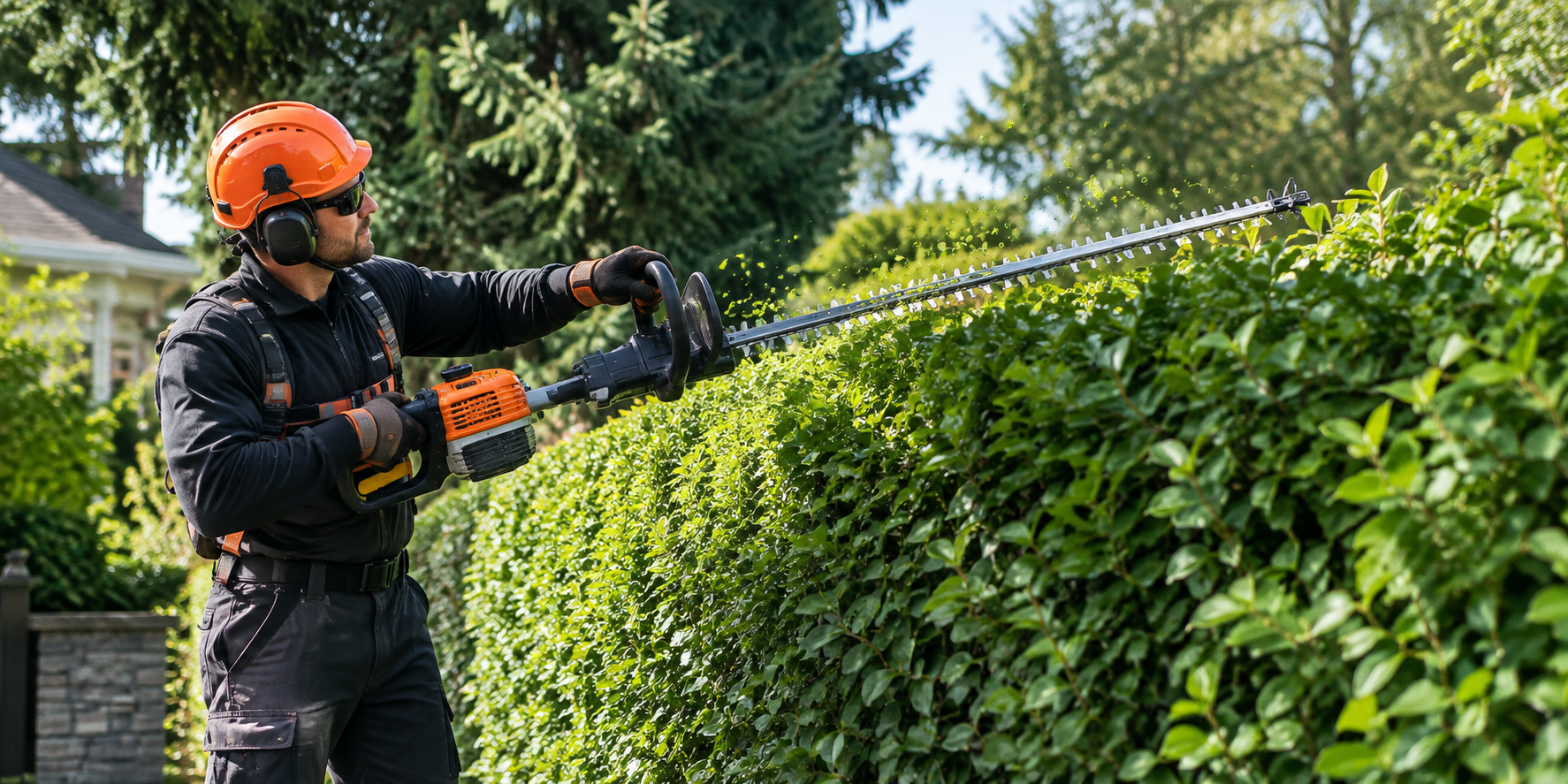
Pruning and trimming. Selective pruning may address clearance or branch concerns without removing a whole tree, where appropriate. Explore Toronto tree trimming and pruning. The scope should preserve suitable tree structure and be based on the intended outcome and condition of the tree.
Stump grinding. A stump left in a small yard or beside a path can constrain future use. See stump grinding and removal in Toronto. Access, underground services and the requested finish affect how the work is planned, so raise those details before the visit.
Emergency response. For a tree or limb damaged by a storm, our 24/7 emergency tree service can help address urgent hazards. Keep people away from unstable trees and never approach downed wires; report immediate electrical danger to the relevant utility or emergency service.
Arborist reports. A project, permit application or property question may require written observations. Learn about arborist reports in Toronto. Confirm the requested report type with the decision-maker; an arborist report does not replace a municipal permit or approval.
Lot clearing and protection. Larger redevelopment work may require lot clearing in the GTA and advance planning for trees intended to remain. TPZ installation can help define and protect a tree protection zone where appropriate or required. Coordinate protection expectations with the project team before site disturbance.
Review Bosco Tree’s complete service list, learn more on the company background page, or browse the tree-care blog for additional practical reading.
How a downtown tree removal project proceeds
- Share the situation. Explain the concern, the intended outcome and whether there is an immediate hazard. Mention if the tree is in a rear yard, lane-accessed space or a location with a shared boundary.
- Assess the tree and route. The site review considers tree condition, nearby structures, overhead space, ground access, gates, material removal and work-zone constraints. A photo or address alone cannot establish every detail.
- Confirm who controls access. If a lane, driveway, gate or neighbouring property is involved, identify permissions and any practical restrictions before the work date is proposed.
- Check permits and protection rules. Confirm current City requirements for the specific tree and parcel. Resolve permit questions before work starts.
- Agree on scope and method. Discuss the work sequence, protection, debris handling, stump work and any assumptions that affect the quote. A crane or rigging approach is considered only if the site and tree support it.
- Prepare and perform the work. Keep the area clear, coordinate access and follow the agreed safety plan. Ask about cleanup and the final condition before the crew begins.
Clear communication is particularly useful when a small rear yard, a narrow route or a shared fence line affects how a crew can approach the tree. The project plan should state what the customer needs to arrange, such as moving vehicles or securing access, and what Bosco Tree will do within the quoted scope. If the tree or access conditions differ from what was assessed, pause to review the plan rather than assume the original arrangement still applies.
Equipment and safety in confined downtown spaces
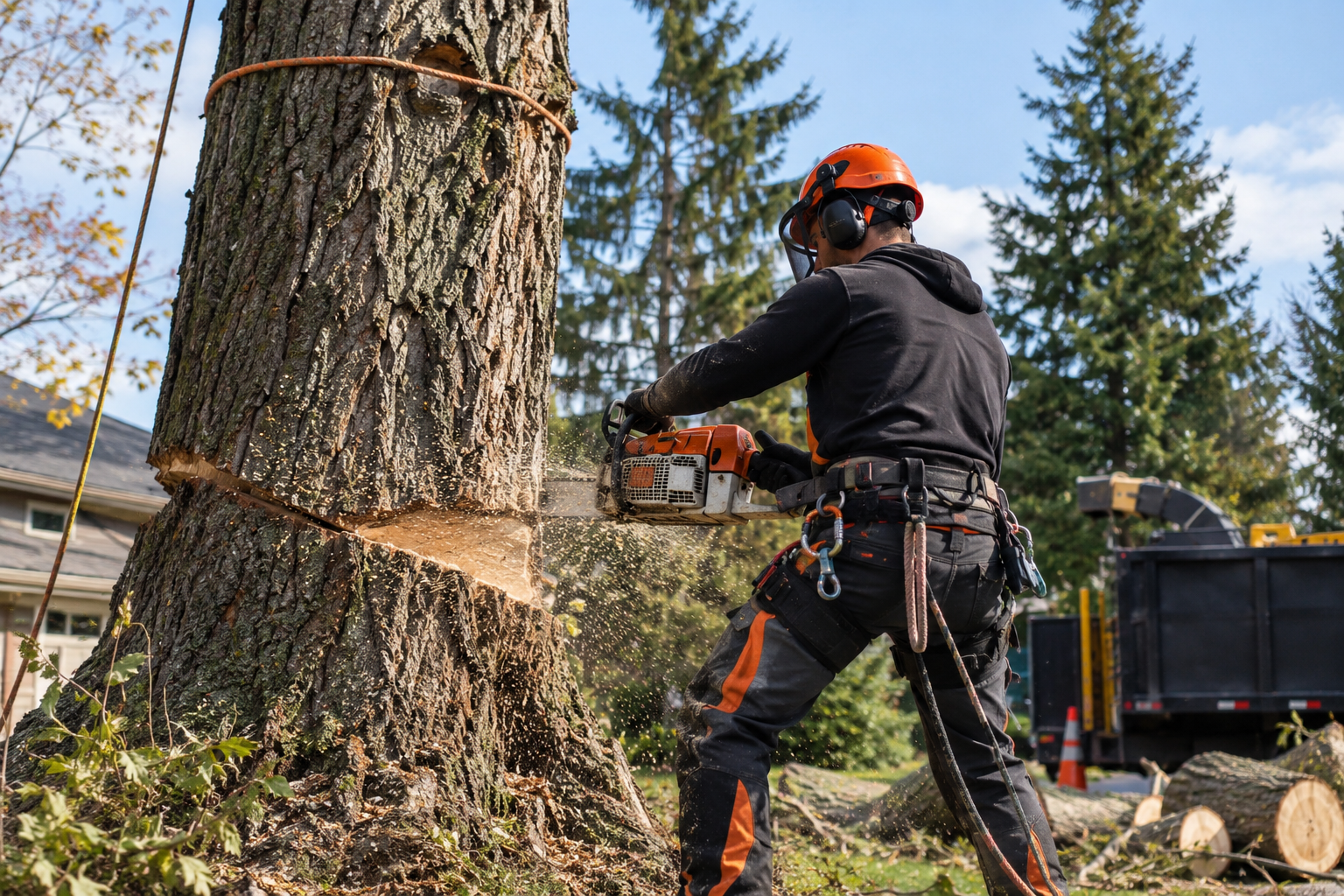
The equipment used depends on the tree, access and job plan. Arborists may use climbing systems, ropes, rigging, chainsaws, chippers and other suitable tools. If a tree is close to a building or fence, controlled lowering of sections may be considered when appropriate. Rigging is a technique, not a guarantee that every section can be placed without affecting surrounding space. The work area, anchor options, tree condition and crew access all need to be assessed.
A crane can sometimes be considered for a particular job, but it requires a suitable setup location, access and clearance and may not be feasible on a narrow street or lane. Do not assume a crane will eliminate access constraints or make an otherwise unsuitable plan safe. The arborist should explain the approach after reviewing the site and should identify any requirements affecting nearby space. We do not promise a particular machine before that review.
Before work, discuss which gate or route will be used, whether a lane must remain passable, where vehicles or outdoor furniture should be moved, and what areas need protection. On a shared boundary, clarify the property line and any access or consent arrangements. Do not assume that permission to work on one property permits entry onto a neighbour’s land or authorizes damage to a shared fence. If tree limbs are near electrical conductors, stay away and contact the relevant utility. Never attempt to cut a hung-up or unstable branch yourself.
Small details can matter: overhead service lines, balconies, roof edges, fragile paving, gardens, basement access, parked cars and pedestrian routes. The crew needs a clear zone that suits the planned work. An emergency does not make unsafe access safe; if the area presents immediate danger, keep people away and contact appropriate emergency services. For practical next steps after severe weather, see storm-damaged tree removal guidance.
What can affect a downtown Toronto tree removal quote?
Quotes reflect the specific tree and work scope. Factors may include tree size, health, branching structure, proximity to buildings and public space, the working height, whether climbers can safely access the tree, and whether limbs can be lowered in controlled sections. A tight rear yard can require more planning than a site with open ground, even if the trees appear similar from the street.
Access is a practical cost driver without any price being assumed here. A narrow gate, multiple turns, stairs, a long carry to a staging location or a lane with limited room for equipment can affect handling. If a crane is under consideration, setup conditions and the ability to position equipment matter. Nearby fences, roofs, patios and landscaping may call for additional protection or a more deliberate sequence. Debris handling, stump grinding, cleanup and any report are separate scope questions to discuss clearly.
Timing and coordination can affect logistics. A property undergoing renovation may require coordination with contractors and protection plans for trees that remain. If neighbours or a property manager control access, obtain the necessary arrangements before confirming a schedule. Tell us about known underground utilities, access restrictions or permit status. Our Toronto tree removal cost guide describes factors that can influence a quote; only a review of the job can determine the scope for a particular address.
Certified arborists and insurance
Bosco Tree states that its arborists are ISA-certified, the company has 18 years of experience, and it is fully insured with $2 million liability coverage. For an urban tree project, ask the service provider who will assess the tree, what the plan covers, how access and property protection are handled, and whether proof of insurance is available. These questions are useful whether the request is a one-tree removal or a larger project.
A clear quote should identify the work being undertaken and distinguish removal from pruning, stump work, debris handling or reporting. It should also identify site assumptions, especially if work depends on access through a lane or another parcel. Explore how to choose a Toronto tree service for additional questions to ask. Certification and insurance do not replace City permits or establish that a planned removal is authorized.
Toronto tree by-laws and permit checks downtown
Toronto’s municipal tree rules apply according to the tree, land and circumstances—not simply the neighbourhood label. Chapter 813 of the Toronto Municipal Code addresses trees and includes protections for private trees and City street trees. Chapter 658 governs ravine and natural-feature protection in designated areas. A tree may need a permit before it is injured or removed. Current City guidance is on the Tree and Ravine Protection page; consult the Chapter 813 by-law and Chapter 658 by-law for legal text.
Private-tree rules consider measurements and other criteria; applicable thresholds and protection categories can depend on current by-law text and the parcel. City street trees are subject to City protections. A downtown address near a park or ravine does not establish that a tree falls within a protected area. Check the City’s current map and permit information for the exact location. Do not treat “heritage neighbourhood” as a substitute for checking whether the property or tree has a separate designation or applicable planning condition.
Before planning removals for renovations, additions or new construction, check permit requirements and any tree-protection conditions early. The Toronto permit guide and tree protection zone guide provide background, while ravine-property tree work guidance explains why location must be confirmed. A TPZ installation may be part of protecting a retained tree; it does not itself grant permission to remove another one.
Dead, damaged or hazardous trees still warrant careful confirmation. Do not assume a tree is exempt based only on its appearance or a neighbour’s past experience. Read dead tree removal information, and ask the City what documentation or permit process applies. An arborist report may help answer a project question, but it is not a permit, planning approval or legal determination.
Neighbourhoods served in downtown Toronto
“Downtown” is a useful service-area description, not a guarantee that all district boundaries or property conditions are identical. Bosco Tree responds to requests across the central city, including The Annex, Yorkville, Cabbagetown, Riverdale, Leslieville, High Park, Rosedale, Parkdale, Little Italy and the Beaches. Toronto’s social-planning neighbourhoods have defined geographies, while local usage and planning designations may differ. A neighbourhood name cannot settle a tree-permit question; the property address and current City mapping are what matter.
- The Annex and Yorkville: Where a tree is close to a building or a confined side yard, discuss access and protection in advance. The work plan depends on the parcel rather than a general assumption about the area.
- Cabbagetown and Rosedale: Trees near older homes, gardens and property boundaries call for careful site review. Do not assume any home or tree is formally designated as heritage based only on its neighbourhood name.
- Riverdale and Leslieville: A rear yard, shared fence or limited approach can shape how material is handled. Tell us about lane access and any permissions needed before the quote.
- Parkdale and Little Italy: The crew needs to understand the route to the tree, overhead clearance and available work area. Nearby structures and public access should be considered during planning.
- High Park and the Beaches: Proximity to a park, ravine or natural feature does not by itself prove a tree is within a protected area. Check the City’s maps and rules for the exact location.
We also serve requests from nearby Toronto areas, including East York. Find related pages for tree removal in East York, North York tree pruning, Scarborough tree removal and Etobicoke tree removal. Across the GTA, explore Mississauga tree removal, Brampton tree removal, Vaughan tree removal, Markham tree removal and Richmond Hill tree removal. The City’s Toronto neighbourhood information explains social-planning areas, not property-level tree protections.
Why choose Bosco Tree for downtown tree work?
Urban tree work calls for a clear understanding of the tree and its surroundings. Bosco Tree’s stated qualifications include ISA-certified arborists, 18 years of experience and full insurance with $2 million liability coverage. A professional assessment considers the tree’s condition, access, nearby property and the intended result. When a tree may be retained, the conversation can consider whether pruning or another service fits the goal. When removal is appropriate, the work scope should make its assumptions clear.
We do not promise that every tight site can be handled by crane, that every lane can accommodate equipment, or that a particular method suits every tree. Those decisions depend on actual access and safe working conditions. The crew should be able to explain why a method is proposed and what must be arranged beforehand. That may include confirming access rights, moving vehicles or coordinating a work area with a property manager.
Good service also means distinguishing a tree-care assessment from municipal authorization. We can discuss the work and identify questions, but the City determines permit requirements and approvals. If your project involves construction, coordinate tree protection, timing and any report requirements with the project team. For Bosco Tree’s full service list, visit tree services; learn about the company on the about page, return to the Bosco Tree home page or browse the tree-care blog.
What to expect from a free downtown tree quote
To begin, tell us where the tree is, what has prompted the request and what you want the work to accomplish. Note whether the tree is reached from a lane, driveway, narrow gate, shared garden or other constrained route. Mention nearby buildings, fences, wires, paving, landscaping and any access rules. If renovation or new construction is involved, share the schedule and identify trees intended to remain.
A quote should be specific about the requested service and assumptions. Confirm whether removal, stump grinding, debris handling and cleanup are included or quoted separately. Ask what access the crew needs and whether a neighbour, landlord or property manager must authorize entry. If the site requires a City permit, check that issue before setting a work date. A free quote helps define the scope; it is not a permit, legal determination or City approval.
Some conditions can only be clarified at the property. If the route is different from the description, or a tree is more compromised than expected, the team may need to revisit the plan and scope before proceeding. Clear communication helps avoid assuming that a crane, lift or particular rigging arrangement will be possible. No response-time promise is made here for ordinary quotes.
For an urgent hazard, keep people clear of the area and call for appropriate emergency help. Bosco Tree offers 24/7 emergency tree service; contact the team at 416-206-1460. Electrical hazards and downed wires require distance and utility or emergency assistance. For a non-emergency, submit the details through our contact page.
Downtown Toronto tree removal FAQs
Do I need a permit to remove a downtown Toronto tree?
Possibly. Toronto protects some private trees and City street trees, and requirements depend on the tree, property and applicable rules. Confirm current City permit requirements for the exact address before work is authorized. A general neighbourhood description cannot determine whether a particular tree is protected.
Can a tree be removed through a narrow lane or small yard?
It depends on the tree, route, work area and safe access. A site assessment is needed before selecting a method or confirming feasibility. Share gate widths, lane constraints, overhead conditions and nearby structures when requesting a quote; do not assume that a crane or specific machine can be used.
Will Bosco Tree use a crane for a downtown removal?
A crane may be considered when the tree and site allow a suitable setup, access and clearance. It is not appropriate for every job and is not promised before assessment. The work plan may instead use another suitable method, including controlled lowering where conditions allow.
How are shared fences and neighbouring properties handled?
Discuss boundaries, access rights and nearby property before work is scheduled. A quote should identify the planned work area and any arrangements the customer must make. Do not assume a contractor may enter a neighbour’s property or that work on one side authorizes changes to a shared fence.
Does a heritage-area location change tree removal rules?
Do not assume the rules from a neighbourhood name alone. Tree protections, heritage designations, planning conditions and permits depend on the exact tree and property. Confirm current requirements with the City and any relevant decision-maker before planning removal or construction work.
Can pruning solve a problem instead of removing the tree?
Sometimes. The suitable option depends on tree condition, the concern and the goal. An arborist can assess whether pruning is appropriate or whether removal should be considered. A concern such as overhang or storm damage does not automatically mean the entire tree must be removed.
What affects a downtown tree removal quote?
Tree size and condition, close structures, access through gates or lanes, the work method, debris handling and whether stump grinding is included can affect the scope. A site-specific review is needed. Bosco Tree offers free quotes, but no job price can be confirmed without evaluating the work.
Does Bosco Tree offer emergency tree service downtown?
Yes. Bosco Tree offers 24/7 emergency tree service. Keep away from unstable trees, hanging branches and downed wires. For immediate danger or electrical hazards, contact the appropriate emergency or utility service while arranging qualified tree assistance.