
Stump Grinding vs Stump Removal in Toronto: Which Is Right for Your Yard?
When comparing stump grinding vs stump removal Toronto options, the best option depends on what you plan to do with the space, how much of the stump and root crown must be addressed, and what access the site allows. Grinding reduces the visible stump into wood chips below the surrounding surface; full removal extracts the stump and root mass to a greater extent, creating a larger disturbed area. Neither choice is automatically best for every yard.
Key takeaways
- Stump grinding cuts the stump down below grade and leaves most major roots in the ground to decay over time.
- Full stump removal extracts more of the stump and root crown but usually disturbs more of the surrounding soil and landscaping.
- Choose based on the next use of the space, planting plans, access, root concerns and the exact scope in the quote.
- Before digging or excavation, arrange utility locates through the appropriate Ontario locate service and follow its instructions; private lines may require separate attention.
- Bosco Tree serves Toronto and the GTA, offers stump grinding and removal, free quotes, ISA-certified arborists, 18 years of experience, full insurance with $2 million liability coverage, and 24/7 emergency service.
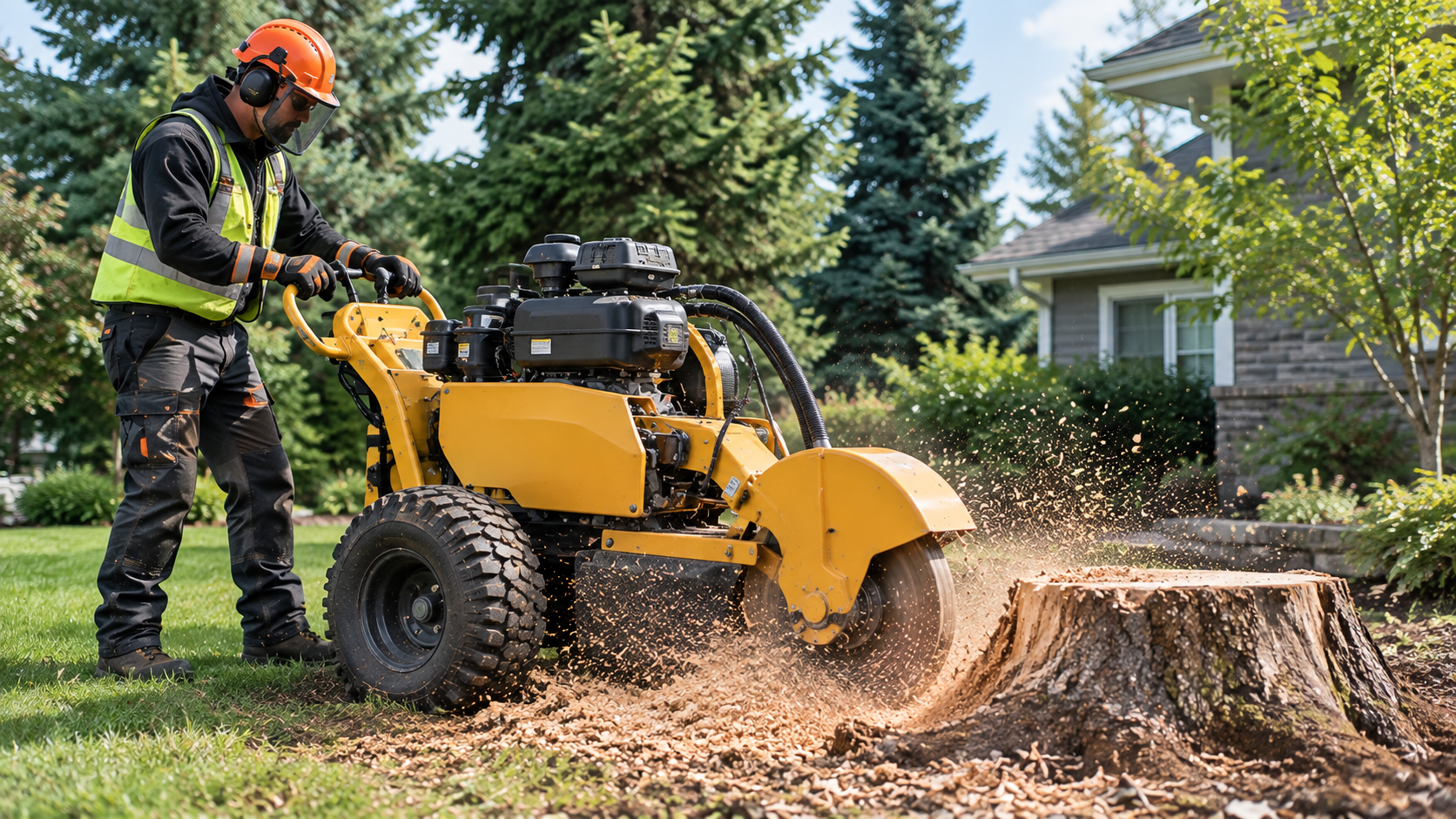
What is the difference between stump grinding and stump removal?
Stump grinding reduces the visible stump below ground level with a cutting machine, while leaving most major roots in the soil. Stump removal excavates and extracts a larger portion of the stump and root crown. The right choice depends on your next use for the space, site access, nearby features and the written work scope.
These terms are sometimes used loosely, so do not rely on a service label alone. Ask what the contractor means by removal, how far below grade the work is expected to go, what material will remain, and how the disturbed area will be left. The answer should match your plans. If you want a level lawn, a new planting bed, a paved surface or another tree in the same general spot, the details matter. In practice, stump grinding vs stump removal is a choice between two scopes with different amounts of excavation and material left behind.
Neither method removes every root stretching from the tree into the soil. A tree’s root system extends beyond the visible stump, and the amount that is practical to remove depends on the site, the machine, nearby structures and other constraints. A company should explain the intended scope rather than promising that all roots can be extracted without consequence. If your concern is a surface root or a specific obstruction, point it out and ask how that particular issue would be handled.
For a general overview of Bosco Tree’s tree-care services, see the main stump grinding service page and the details of tree removal in Toronto. Stump work may be requested after removal, but confirm whether it is included or quoted separately. If the tree has not yet been removed, planning the stump outcome at the same time can help you compare complete scopes.
How to choose between stump grinding and removal
- Define the next use. Say whether the area will become lawn, a planting bed, a patio or another feature.
- Identify the exact stump. Note its location, approximate size and condition, and whether other stumps are included.
- Describe access. Point out gates, steps, slopes, paving and sensitive landscaping along the equipment route.
- Share underground information. Identify known private services and ask who will arrange public locates and any separate private locate.
- Compare written scopes. Confirm grinding depth or the intended extent of extraction, plus what roots and material remain.
- Set the finish expectations. Agree on chip or soil handling, backfill, grading and what landscaping is excluded.
Stump-work comparison: grinding or removal?
| Consideration | Stump grinding | Stump removal |
|---|---|---|
| Work approach | Machine grinds stump below grade | Excavates stump and more of root crown |
| Material left underground | Most larger roots generally remain | More stump material is extracted; lateral roots may remain |
| Ground disturbance | Usually localized around stump | Typically a larger excavated area |
| Useful discussion point | Confirm depth, chip handling and fill | Confirm extraction extent, backfill and restoration |
| Next project | Assess whether remaining roots suit the planned surface | Coordinate excavation with the installer’s requirements |
How stump grinding works
During grinding, the operator positions a machine at the stump and reduces the wood in controlled passes. The visible trunk base is ground below the surrounding grade to a scope agreed in advance. The machine produces wood chips and may disturb some soil around the stump. The remaining roots are not generally dug out one by one; they stay underground and break down over time. A quote should say what depth or finish is planned, what happens to the resulting chips, and whether the area will be filled or left ready for your next step.
Grinding can be a practical choice when the goal is to remove the visible obstruction and make the area usable for ordinary yard maintenance, while avoiding the larger excavation that full extraction may involve. It may fit a plan to restore a lawn or landscape over the area, provided the homeowner understands that roots remain and the ground can settle as buried wood decomposes. Ask what surface preparation is included and what further soil or landscaping work you will need.
Access is a key part of feasibility. The operator needs a route to bring equipment to the stump and enough working room to position it safely. Gates, narrow side yards, steps, fences, retaining walls, slopes, gardens and nearby structures can affect the machine choice or the work plan. Describe the route and identify anything fragile or valuable before accepting a quote. If access is restricted, ask whether the provider can assess it in person and state any limitations in writing. When planning stump grinding vs stump removal, explain access constraints before the method is finalized.
Grinding does not by itself create finished landscaping. Wood chips can be useful as organic material in some contexts, but the right use depends on your design and planting plans. Ask whether chips will be left, removed or handled in another agreed way, and whether the scope includes filling, grading or re-seeding. If you have a contractor for a new patio, lawn or garden, coordinate the intended depth and final surface before the stump work begins.
How full stump removal works
Full removal involves digging and cutting to extract a larger portion of the stump and root crown. The work may leave a hole or disturbed area that requires backfill and restoration. The exact amount removed varies with the stump, roots, location and access. A provider should describe the intended excavation and what remains, rather than implying that an entire root network can always be pulled out. In many yards, major roots extend under lawns, fences, paving or nearby plantings; following every root could cause significant disturbance.
Extraction may be considered when the next project requires more of the stump and root crown to be removed, when the remaining mass conflicts with a planned excavation, or when a particular portion is physically obstructing the intended design. It is not a blanket solution to every root-related concern. Before choosing it, explain what you intend to build or plant and ask whether the proposed depth and area of excavation support that plan. If the landscaping design is not settled, ask whether a less disruptive option is sufficient for now.
Because removal disturbs more soil, the quote should address restoration responsibilities. Will the contractor backfill the opening? What material is used? Is rough grading included, or is final grading and planting left to another contractor? What happens to the extracted wood and roots? These details affect your next steps even when the work itself is straightforward. A clear scope prevents the mistaken assumption that “stump removed” automatically means a finished lawn or ready-to-build site.
Removal may also require more working room for digging, maneuvering and handling the extracted material. Nearby utilities, foundations, paving, retaining walls and landscaping must be considered. If the site is tight or the stump is near a structure, tell the provider before the visit and ask how the method will minimize unnecessary disturbance. Do not assume that roots can be cut or excavated without considering what else is nearby.
Depth, roots and what remains underground
Depth is not a universal number that can be picked without seeing the yard and knowing the planned use. A grinding scope describes how far below the surrounding grade the stump will be reduced. The right depth for a lawn may not be the same as the depth needed for a feature that involves excavation. A full-removal scope describes the stump and root crown extraction area, which is not the same thing as removing every lateral root. Ask the contractor to explain the target in terms of your finished surface and intended use.
Roots left after grinding do not disappear immediately. Buried wood decays over time, and the soil above or around it may change as decomposition proceeds. That can matter if you plan to install a precise hard surface or build in the same location. Discuss the plan with the contractor responsible for the new work. Where the new installation has structural or engineering requirements, those professionals should determine what substrate and excavation are necessary. That is why stump grinding vs stump removal should be compared by the finished use of the space, not only by the amount of wood visible today.
Roots can also extend under nearby lawn, gardens, trees and hardscape. Removing a large root may disturb soil or affect adjacent features. If a root has lifted a walkway or is interfering with a planned project, identify the exact location and ask whether the root belongs to the removed tree and what limited work is feasible. A stump service quote should not be treated as an assessment of every nearby tree’s roots or condition. Bosco Tree’s arborist report information and tree-pruning service in North York relate to other tree-care questions that may arise on a property.
When an old stump has been present for some time, its condition may differ from a recently cut stump. Decay, soil settlement, nearby plants and previous work can influence access and handling. Share what you know about when the tree came down, whether the stump has been treated or altered, and any known underground obstacles. Photos can help start the conversation, though the site may still need an in-person assessment.
Utility locates: check before digging
Homeowner utility locate requests in Ontario are submitted online through Ontario One Call, which also identifies as Ontario Dig Authority; allow at least five business days for a single-address request. Public locates do not cover private utilities such as a buried gas line to a detached garage, irrigation or landscape lighting. Arrange a separate private locate when needed, and confirm the current process and timing directly before work.
A public utility locate is not a guarantee that every privately installed line on a property has been identified. Tell the contractor about anything you know or suspect, such as lines associated with a shed, outdoor lighting, irrigation, a pool, a garage or other private features. Ask who is arranging public locates and whether private locating is needed for the planned work. Never assume a line is absent because it is not visible at the surface, and do not rely on memory or old landscaping drawings as a replacement for current locating.
Utility locating is especially relevant when comparing grinding and excavation. Grinding is not equivalent to digging out the stump, but equipment still operates in the area and the project plan should address known site conditions. Full removal involves more direct excavation. The contractor should explain how locates and identified lines affect the method, access and work area. If the locate markings or information raise a concern, pause and ask the appropriate parties to clarify before proceeding.
For details about tree removal and project preparation, use Bosco Tree’s Toronto tree protection zone resource when work is near trees being retained, and check its tree-removal permit guide if the larger project includes removing a tree. A permit question and a utility locate question are separate; verify each with the appropriate source rather than assuming that one replaces the other.
Choosing based on replanting and landscaping
Think about what will happen in the area after the stump is addressed. For a simple lawn restoration, grinding may be enough if the stump is reduced to a suitable depth and you accept that larger roots remain. Ask what soil work is included and whether the area will need additional topsoil, seed or sod from a separate landscaping provider. Do not treat the presence of chips as a guarantee that the area is ready for planting or that it will stay perfectly level over time.
If you plan to plant another tree in exactly the same spot, tell the contractor before choosing a method. The old stump and roots, the new tree’s required planting space and the soil condition all matter. Removing more of the root crown may create room, but it also disturbs more soil and cannot necessarily clear every root. A landscape professional or arborist can help evaluate the planting plan and placement. Ask whether shifting the new planting location is an option rather than assuming the old position must be reused.
For a patio, walkway, driveway or other hardscape, coordinate the stump work with whoever is designing or installing the feature. Their specifications may call for particular excavation, base preparation and compaction that a stump service quote does not include. Ask the contractor to state where stump work ends and the next trade’s work begins. That boundary is important whether you choose grinding or removal.
Garden beds and low-impact landscape changes may allow more flexibility. The key is to know whether buried roots, settling or chip residue will affect the plants you intend to grow. Explain whether the site will be planted immediately, left as lawn, or used for a future project. The more specific your goal, the easier it is to compare recommendations based on the result rather than the method name.
Access, cleanup and neighbourhood considerations
In Toronto and across the GTA, properties vary widely in access. A stump near a front curb may be approached differently from one behind a narrow side gate or beside a deck. Measure or describe the tightest passage, mention slopes and steps, and point out gates or obstacles. Ask whether machinery needs to cross lawn or paving, what protection may be used, and whether any access route must be cleared before the crew arrives. The site inspection should confirm what a phone description cannot.
Ask how the contractor will manage chips, soil and extracted material. Grinding creates a substantial volume of chips relative to the stump; the amount and handling depend on the stump and the scope. Full removal creates excavated soil and woody material. Confirm whether material will be removed, left in a designated place or handled under another agreed arrangement. Also ask whether the quote includes restoring the surface or only completing the stump work.
Before the appointment, move movable items away from the work area and identify irrigation, lighting, edging and other features that may not be obvious. Keep children, pets and bystanders away from the active work zone. Ask the provider what preparations it requires and whether access to a gate, driveway or power source is needed. Do not move marked utility flags or markings before checking with the relevant party.
For larger properties or development work, stump work may be one piece of a broader site plan. Bosco Tree offers lot clearing across the GTA and tree removal in Mississauga, as well as information about Brampton tree removal and Vaughan tree removal. Confirm the exact project and service area directly; a general service description does not replace an individual quote.
How to compare stump-work quotes
Compare written scopes rather than comparing two short labels. One quote may describe grinding below grade with chips left on site, while another may include a different finish or a separate cleanup. A quote for full extraction may include backfilling, or it may leave restoration to the owner. Make each provider state the stump, work method, intended depth or extent, material handling and exclusions. A fair stump grinding vs stump removal comparison makes those differences explicit before you choose.
Ask whether the work is quoted for one stump or multiple stumps, and whether the estimate assumes a specific access route. Confirm whether the price includes travel, cleanup or surface restoration without asking the provider to guess at unobserved site conditions. This guide intentionally gives no prices: costs depend on the actual stump, access, scope and property conditions. Request a site-specific free quote from the provider.
Also compare how each provider responds to your actual goal. If you plan to replant, ask how the method supports that plan and what soil preparation remains. If you are laying a patio, compare the contractor’s stump scope with the installer’s requirements. If roots are the concern, ask which roots or obstructions are included rather than expecting a stump quote to resolve every root issue across the yard.
For the tree work around the stump, review Bosco Tree’s guide to choosing a tree service and its information on tree trimming. If the stump is part of a storm-damage cleanup, see the guidance on storm-damaged tree removal and 24/7 emergency tree service. For general factors that affect a tree-removal quote, read tree-removal quote considerations; this does not provide a stump price or substitute for a written estimate.
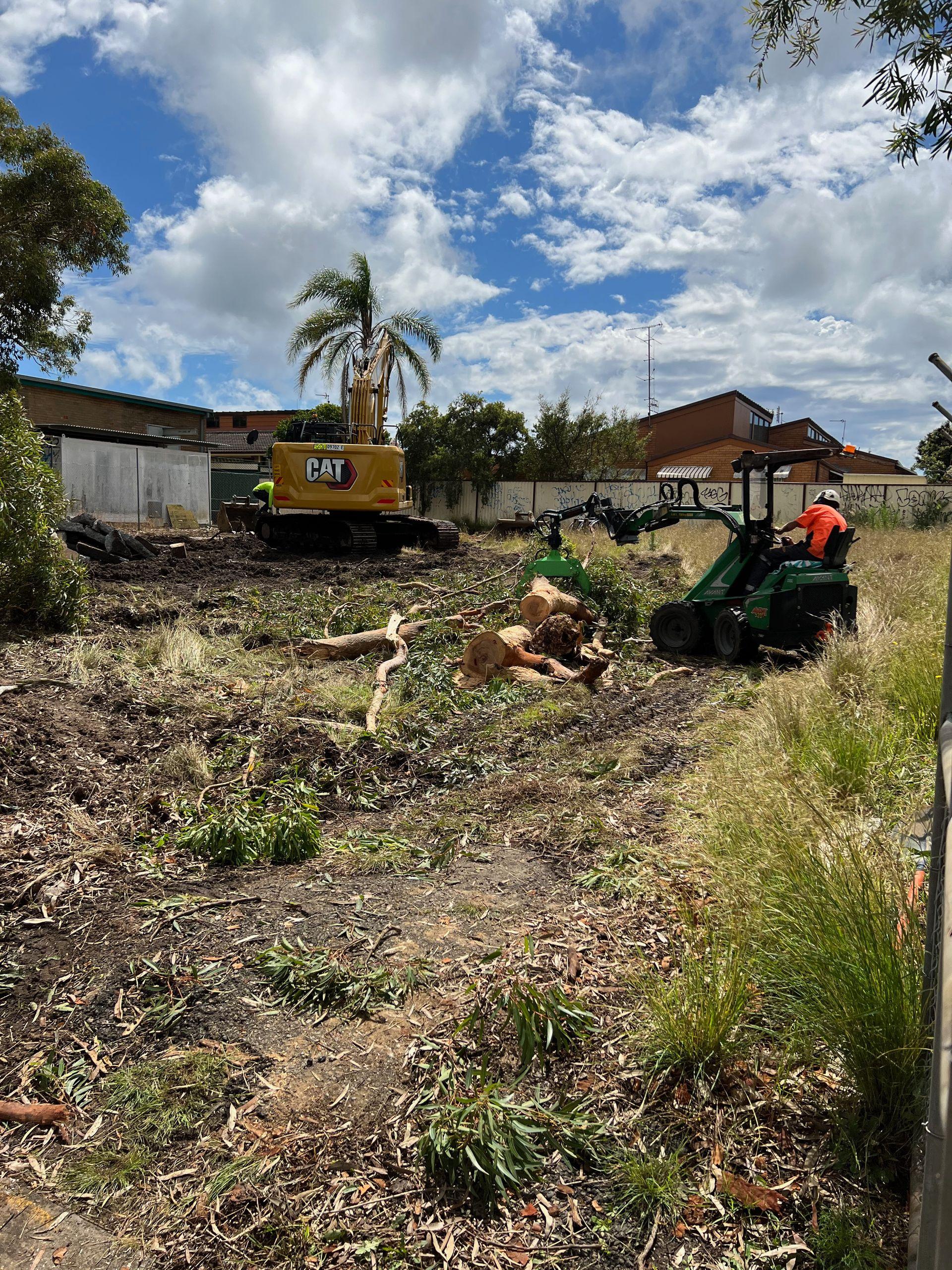
When to choose grinding, and when to discuss full removal
Grinding is often worth discussing when your main goal is to get the visible stump below the surface and reclaim the area for ordinary yard use. It can avoid the larger excavation that comes with pulling out a greater amount of stump and root crown. It may be a suitable choice for a lawn or a planting bed if you understand that roots remain and the ground may change as buried wood breaks down. Ask the contractor what finish is included and what ongoing settling or soil work you should plan for.
Discuss full removal when your project needs a larger portion of the stump and root crown out of the way, or when a defined excavation will occupy the same place. The intended build or landscape should guide the scope. The removal contractor should not guess at requirements for a new foundation, paved area or engineered installation; coordinate with the relevant designer or installer so the work is compatible with their plan.
Some homeowners choose grinding because the site is close to a fence or a garden they wish to keep. Others prefer a larger extraction because they want more of the stump mass removed. Neither preference guarantees a specific final result. The condition of the stump, the route for equipment and nearby constraints can change what is reasonable. Ask for the method to be tailored to the property, and ask what cannot be removed or restored as part of the service.
If you are uncertain, explain your next intended use rather than demanding one method by name. A good quote discussion can compare the practical outcomes: amount of excavation, what material remains underground, surface restoration, access needs and whether follow-on landscaping is required. You can then decide whether the less disruptive scope meets your needs or whether the project justifies more extensive removal.
How Bosco Tree handles stump grinding and removal
Bosco Tree is a tree removal and arborist company based in Toronto and serving the GTA. The supplied business information states that it offers stump grinding and removal, tree removal, pruning and trimming, 24/7 emergency tree service, arborist reports, TPZ installation and lot clearing. It also states that the company has ISA-certified arborists, 18 years of experience, full insurance with $2 million liability coverage and free quotes. These are the business facts provided for this article; contact the company to confirm the details and scope for your particular property.
For a quote, describe whether the tree is already down, where the stump sits, the approximate access route and what you want to do with the space afterward. Mention a planned patio, lawn repair, new planting or construction. Point out any known utility lines, irrigation, lighting or other underground features, and identify fences, gates, slopes and nearby structures. These details help the team understand what needs to be reviewed during the estimate.
Ask the estimator to state which method is proposed and what the work will leave behind. For grinding, clarify the target below grade, chip handling, fill and cleanup. For removal, clarify the extent of excavation, backfilling and the boundaries of restoration. If the ground must be prepared to a separate design specification, provide that information and coordinate with the relevant contractor. Do not assume that a stump quote includes finished landscaping.
Bosco Tree’s company information and Toronto tree-care homepage give you places to begin, while the contact page and phone number provide a way to request a free quote. For surrounding work, review its tree removal in Markham and tree removal in Richmond Hill service information. Service coverage and timing for an individual address should be confirmed directly.
Stump work can also be part of a broader tree-care question. If you are still deciding whether the tree itself should be retained or removed, read the comparison of an arborist versus a tree service. If the project involves pruning before removal, see guidance on the best time to trim trees in Toronto. For storm damage, a potential hazard or work near a retained tree, review hazard-tree warning signs and tree protection zones in Toronto. If a species-specific removal question is part of the project, ash-tree removal guide may help you prepare questions for an on-site assessment.
For local projects, Bosco Tree provides information about tree removal in Vaughan, tree removal in Brampton, and tree removal in Mississauga. The site also describes GTA lot clearing and Toronto tree trimming. The stump method is only one decision: ask how it fits the full job, who will complete each part and what the written scope leaves for you or another contractor.
Checklist: questions to settle before scheduling
Before approving a quote, check that it answers the practical questions most likely to affect your yard:
- Grinding reduces the stump. Most major roots generally remain underground.
- Removal extracts more material. It addresses more of the stump and root crown but leaves lateral roots possible.
- Match the scope to the plan. A lawn, planting bed and hardscape can call for different preparation.
- Check access and surroundings. Gates, paving, gardens, utilities and nearby structures can affect feasible methods.
- Clarify cleanup. Agree on chips, excavated material, backfill and restoration in writing.
- Arrange current utility locates. Public locates do not cover private services, which may need a separate locate.
- Confirm permit rules separately. Toronto’s private-tree permit threshold is 30 cm; a proposed 20 cm threshold reduction is pending, not in force. Confirm current requirements with the City.
Keep the agreed scope and any site notes together. If the plan changes because a buried obstacle, access issue or unexpected condition is discovered, pause and discuss the change before additional work proceeds. That gives you a chance to understand the revised scope and avoid assuming that a new task is already included.
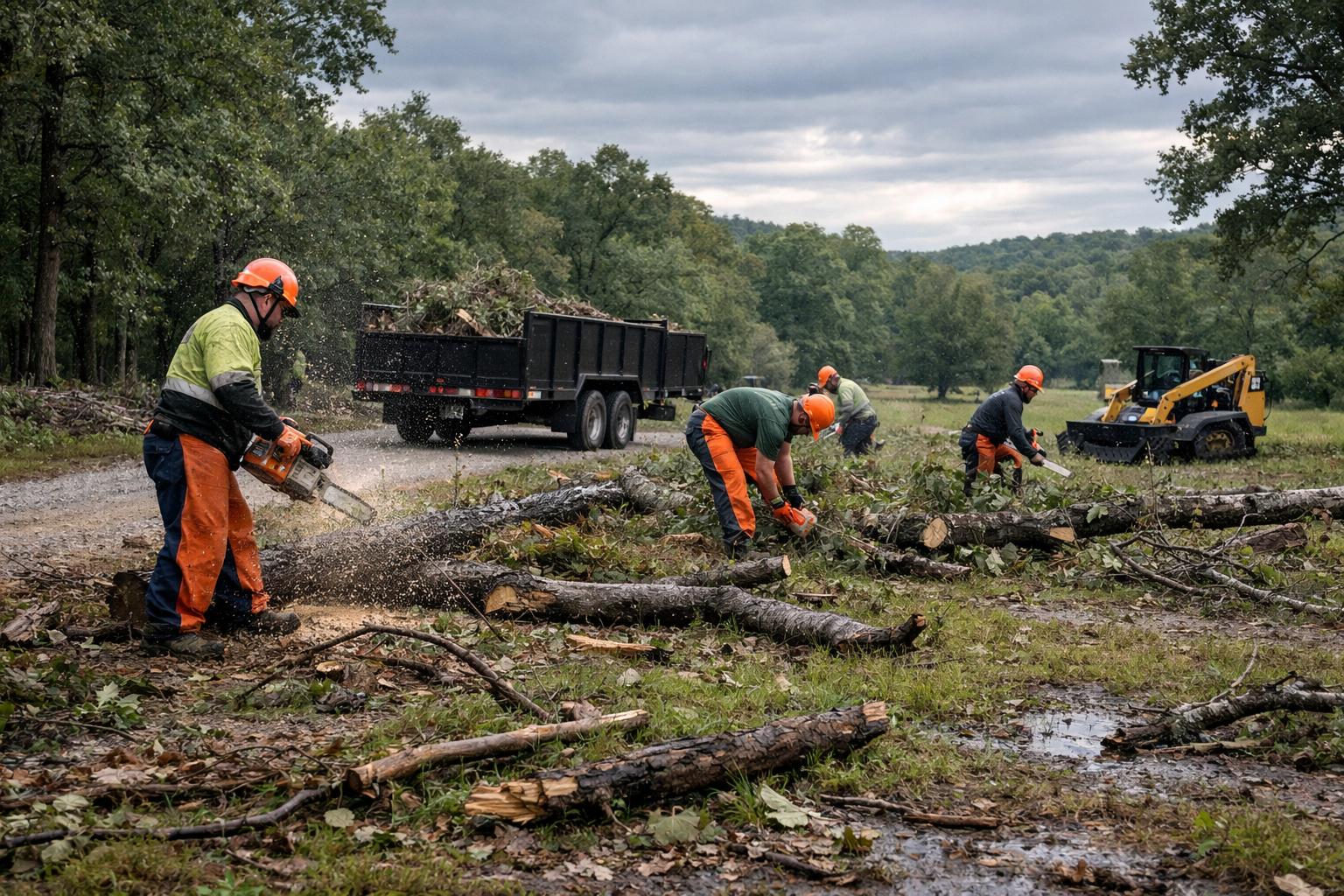
When to call a professional about stump work
Ask for a site-specific assessment when the stump is close to a structure, paving, a fence or known underground services, or when excavation is part of a planned build. Bosco Tree provides stump grinding in Toronto and free quotes. Call 416-206-1460 or contact Bosco Tree to discuss the scope.
Frequently asked questions about stump grinding vs stump removal
What is the difference between stump grinding and stump removal?
Grinding cuts the stump below ground level and leaves most major roots in the soil. Full removal extracts the stump and a greater portion of its root crown, usually disturbing a larger area. Ask what each written quote includes because contractors may use these terms differently.
Does stump grinding remove the roots?
Grinding generally does not remove the full root system. Most larger roots remain underground and decompose over time, while the visible stump is reduced below grade. Ask the contractor which specific root or stump work is included and what material will remain.
Which method is better if I want to plant another tree?
It depends on the planting location, the new tree’s space needs and how much of the old stump and root crown must be addressed. Discuss the planting plan with an arborist or landscape professional, and consider whether moving the new tree is practical.
Is full stump removal necessary before building a patio?
Not always, but the patio installer’s excavation and base requirements should guide the decision. Coordinate the stump scope with the professional responsible for designing or installing the patio, and confirm who handles backfill, grading and any further site preparation.
What happens to the wood chips after grinding?
Chip handling depends on the agreed scope and the site plan. Ask whether chips will be left, removed or placed in a designated area, and whether filling, grading or surface restoration is included. Do not assume grinding automatically leaves a finished lawn.
Do I need utility locates before stump work?
Before digging or excavation in Ontario, homeowners submit public utility locate requests online and should allow at least five business days for a single-address request. Private utilities are not covered by public locates and may need a separate private locate. Confirm the current process before work.
Will stump grinding leave a level lawn?
Grinding can reduce the stump below grade, but final leveling, topsoil, seed or sod may be separate work. Confirm the intended depth, chip handling, fill and restoration in the written quote, and ask what future settling may mean for the planned surface.
How do access and nearby structures affect the method?
Gates, narrow passages, slopes, fences, paving and nearby structures can limit equipment access and affect the work plan. Describe these conditions and ask for the site to be assessed before agreeing to a method, especially if excavation could affect adjacent features.
How do I get a stump-work quote from Bosco Tree?
Call 416-206-1460 or use Bosco Tree’s contact form to request a free quote. Describe the stump, access route, known underground features and how you plan to use the space. Ask the estimator to specify method, cleanup and restoration in the proposed scope.