Dead Tree Removal Toronto: Signs, Risks and When to Act
Dead tree removal Toronto homeowners consider should begin with a careful assessment, not a guess from one symptom. A leafless tree in winter may be dormant rather than dead, and a tree that looks unhealthy may still have living tissue. At the same time, a truly dead tree can lose branches or fail without much warning, especially if it stands near a home, sidewalk, driveway, play area or neighbouring property. Knowing what you can observe safely—and when to stop and call a professional—helps you choose a sensible next step.
Look for several clues together: buds and fine twigs, bark condition, signs of living tissue, brittle branches, crown dieback and fungal growth. None of these observations alone is a reliable diagnosis in every species or season. Do not climb the tree, cut a branch for a test, or stand under a suspect crown. If the tree is near people or property, an arborist can assess the whole tree and explain whether monitoring, pruning or removal is appropriate. Bosco Tree offers ISA-certified arborists, 18 years of experience, tree removal, stump grinding and 24/7 emergency tree service across Toronto and the GTA.
Key takeaways
- Winter leaflessness alone does not prove a tree is dead; compare signs across twigs, buds, bark and the canopy, and consider the species and season.
- A scratch test can reveal green living tissue beneath bark, but it is only one clue and should be limited to a small, low-risk spot.
- Brittle branches, extensive crown dieback or fungal fruiting bodies can signal concern; an arborist must interpret the full picture.
- A dead tree’s risk depends on its condition, targets and site; do not wait if a tree is newly leaning, cracked or shedding large limbs.
- Toronto’s City guidance says a tree that is 100 per cent dead may qualify for a permit exception; request and receive the City’s confirmation before proceeding, unless immediate work is needed to eliminate danger.
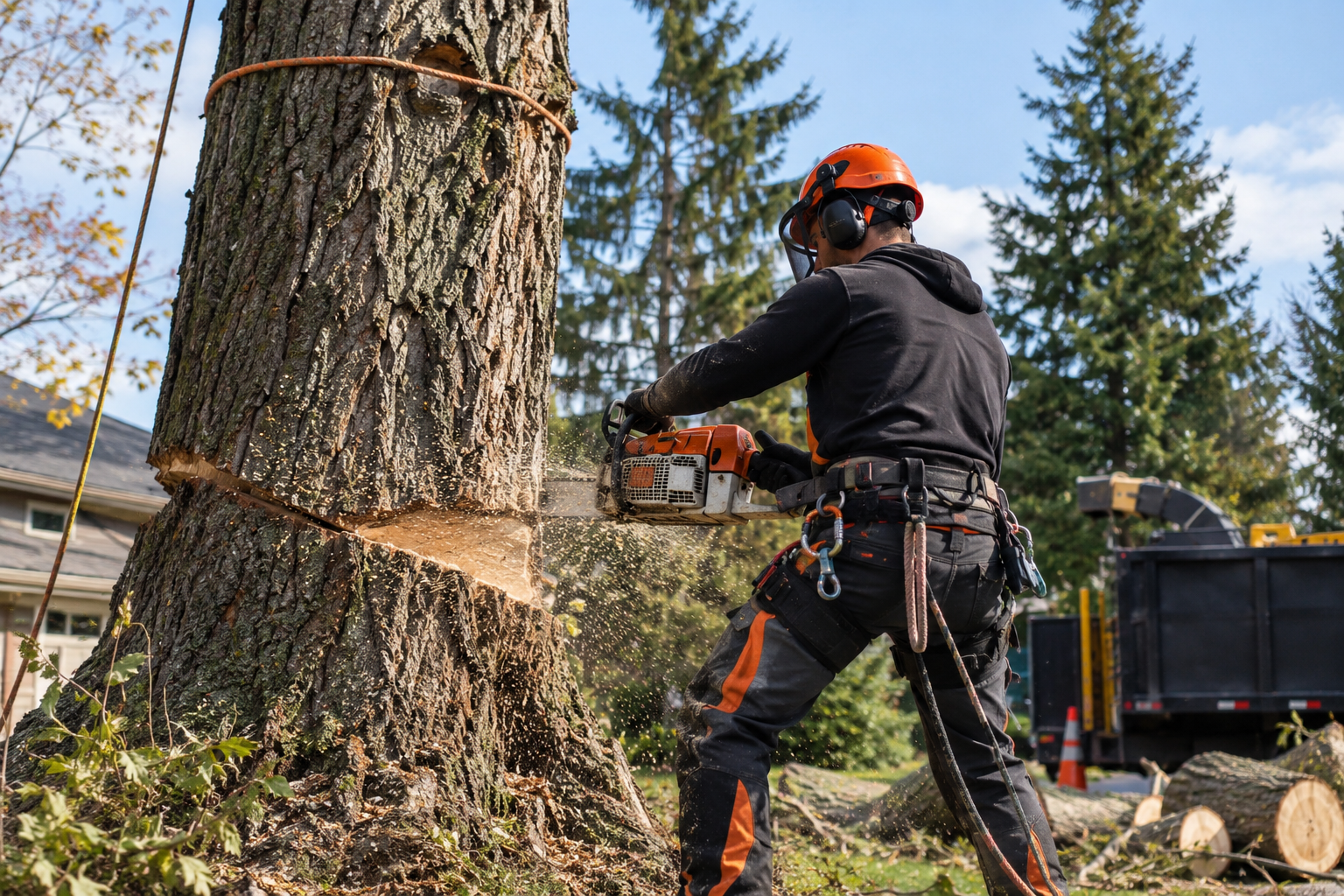
How can I tell whether a tree is dead or dormant?
Leaflessness alone does not show that a tree is dead: many deciduous trees are dormant in winter, and species differ in their seasonal patterns. Compare buds, twigs, bark and canopy condition from a safe place, but treat these as clues, not a diagnosis. An arborist can assess the whole tree and recommend next steps.
Deciduous trees naturally shed leaves in autumn and remain leafless through winter. Many also slow growth and conserve resources during colder periods. A bare crown can therefore be normal dormancy, not proof of death. Evergreen trees behave differently, and even evergreen foliage can be affected by winter injury. Before deciding that a tree has died, compare it with the expected seasonal pattern for its species and look for evidence across more than one part of the tree.
Even an experienced observer can mistake winter dormancy, drought stress, disease, insect damage or partial dieback for total death. A tree can have living tissue in some branches and dead tissue in others. Some trees leaf out later than their neighbours, and some species hold dead leaves longer than others. A single branch without leaves may have died while the rest of the canopy remains alive. If the tree has sentimental, shade or screening value, getting a sound assessment before cutting is especially important.
This guide explains what you can notice from the ground, why deadwood is a safety concern, how urgency changes with site conditions, what to ask about Toronto’s tree rules, and what happens during removal and stump follow-up. If you are comparing services, see Bosco Tree’s overview of tree removal in Toronto, the practical guide to choosing a tree service in Toronto, and the warning-sign guide to hazard trees in Toronto.
Dead or dormant? Signs to assess carefully
No visual checklist can replace an on-site assessment. Tree species, season, recent weather, site conditions, extent of damage and the tree’s history all matter. Use the following observations as prompts for a professional conversation rather than as a do-it-yourself removal decision.
Signs a tree may be dead or declining
- Widespread crown dieback: Look for a pattern across several major branches, not one leafless twig.
- Brittle fine twigs: Observe already-broken material; do not snap branches to test them.
- Missing or damaged buds: Compare several parts of the crown and consider the tree’s species and season.
- Major bark injury: Note extensive recent bark loss or a wound around much of the trunk.
- Fungal growth: Photograph visible mushrooms or shelf-like bodies without prying them off or digging.
- New structural change: A fresh lean, crack, root movement or hanging limb needs prompt professional attention.
| Observation | What it may indicate | Safer next step |
|---|---|---|
| Leafless deciduous crown in winter | May be normal dormancy | Consider species and season; reassess when appropriate |
| One dead twig or branch | Localized dieback or injury | Do not infer whole-tree death from one branch |
| Several dead limbs across the crown | Broader decline may be present | Arrange an arborist assessment |
| Fungal bodies at trunk or roots | May be associated with decay | Document safely; ask an arborist to interpret |
| Fresh lean, crack or lifted soil | Possible recent structural movement | Keep clear and seek prompt help |
Use a scratch test cautiously
A scratch test means lightly scraping a very small patch of outer bark on a low, accessible twig or branch to see the tissue beneath. Green, moist tissue can indicate that the sampled part is alive. Brown or dry tissue may indicate that it is dead. The result applies only to that small spot: one living twig does not prove the whole tree is healthy, and one dead twig does not prove the whole tree is dead.
Do not make several test wounds, scrape the trunk, cut a limb, use a knife while on a ladder, or perform the test on a branch that could fall. If the tree is large, unstable or near a target, leave assessment to an arborist. Some trees can have naturally darker inner bark or seasonal changes that make a simple color test hard to interpret. A qualified professional will consider the pattern of living and dead tissue in context, not use a single scratch as the sole basis for removal.
Check buds, twigs and bark from the ground
On a dormant deciduous tree, look for buds attached to twigs and compare a few branches around the crown from a safe place. Buds that are plump and firmly attached can be a positive sign, but their presence does not confirm that larger limbs or roots are sound. Very brittle twigs that snap easily, widespread bare branch ends, or a crown with extensive dieback may suggest decline. Do not snap twigs to test them; observe only what is already visible or on the ground.
Bark that is peeling is not automatically evidence of death. Some species shed bark naturally, while wounds, sunscald, animals, mechanical injury or disease can also change bark. Look for a large area where bark is missing, a wound that encircles much of the trunk, or a recent change accompanied by crown decline. A tree can remain alive after injury but become structurally compromised. Where a defect extends into a main stem or major union, have the tree assessed rather than trying to decide by appearance alone.
Interpret fungi and canopy dieback in context
Mushrooms or shelf-like fungal bodies near the base, on roots or on a trunk may be associated with decay, but their presence does not tell you exactly how much sound wood remains or whether the tree will fail. Some fungi feed on dead material; others are associated with decay in living trees. Their location, species, extent and the tree’s overall structure all matter. Do not pry off fruiting bodies or dig around roots to investigate. Photograph what is visible from a safe distance and share the observation with an arborist.
Look at the whole canopy. One dead branch can reflect localized injury, while a crown with widespread dieback, sparse foliage during the growing season, poor annual growth and dead tips across multiple limbs may indicate more serious decline. Seasonal leaf drop should not be confused with sudden canopy loss. If several symptoms appear together, record when they began and any recent changes to drainage, paving, excavation, construction or watering. That history helps a professional assess whether the tree is dead, declining or under stress.
Why dead trees can fail unpredictably
A dead tree is not necessarily about to fall, and a tree with green leaves is not necessarily structurally sound. The uncertainty comes from the fact that wood can decay, cracks can extend, roots can weaken, and branches can break at different times. A dead tree no longer replaces damaged tissues or adds healthy growth. Weather, moisture, wind exposure, previous injury and the tree’s position all affect how quickly its condition changes. A branch may fall before the trunk, or a whole tree may fail at its base; the exact sequence cannot be predicted by a quick glance.
Decay often begins inside a trunk or limb, where it is not visible from the ground. A hollow-looking opening does not reveal how much sound wood remains around it. A fungal fruiting body may point to decay but cannot tell you exactly how much strength is left. Trees can retain living leaves while a structural defect worsens. Likewise, a tree that has been dead for some time may remain upright, yet become more vulnerable as branches dry, attachments weaken or roots lose support. The key is to judge the potential consequence and get the condition assessed, not to rely on the tree’s appearance as a countdown.
Location changes the urgency. A dead tree in an open area away from people and property may allow time for a planned inspection. A dead or declining tree beside a home, daycare, sidewalk, road, parking area or neighbour’s yard creates a different exposure. A large dead limb over a frequently used doorway may deserve prompt attention even if the rest of the tree appears stable. If the target can be avoided while an arborist assesses the tree, keep it clear and tell household members why.
When to call now and when to schedule
Arrange a prompt assessment if you see a new lean, fresh soil heaving at the base, a split in a main stem, a hanging or partly detached large branch, rapidly spreading crown dieback, a recent root disturbance, or a tree that changed after a storm. Call emergency services if there is an immediate threat to life, a person is injured, a structure is at risk of collapse, or a wire is down. Keep well away from any tree in contact with power lines; only the utility can make the electrical hazard safe.
A scheduled assessment may be reasonable if the tree shows gradual decline without a fresh structural change, no large hanging branch is present, and people can avoid the area in the meantime. “Wait” should mean a planned next step, not ignoring the tree. Ask the arborist when to revisit the tree and what change should trigger an earlier call. A tree may need monitoring, targeted pruning or removal; a professional should explain why the option fits the condition and the targets.
Do not attempt to remove a large tree yourself because it looks dead or because a storm is forecast. Deadwood can be brittle, sections may be under tension, and a stem can behave unpredictably as it is cut. Even a seemingly small branch can fall in an unexpected direction. Avoid ladders, chainsaws, ropes, pulling vehicles and improvised rigging. If the situation is safe to observe, take a photograph from a distance and record when you noticed the change. Do not enter a fall zone for better documentation.
Toronto by-law note: check Chapter 813 before removal
Tree rules depend on ownership, size, location and the type of protection that applies. City of Toronto guidance says work that may injure or remove a private tree measuring 30 centimetres or more in diameter is generally prohibited unless authorized under the Tree Protection By-law. The City’s current “When to Apply” guidance lists dead trees among the cases where a permit is not required to remove a tree that is 100 per cent dead, but it also says that a property owner must request and receive a permit exception confirmation before removal, unless immediate work is needed to eliminate a dangerous situation. The City’s tree by-law review page also says Council endorsed reducing the minimum private-tree size from 30 cm to 20 cm, pending further analysis and an implementation strategy to be reported in 2027. Do not treat the proposed threshold as in force unless Toronto confirms it; check the City’s current requirements before work.
In other words, do not treat “it looks dead” as automatic permission to cut. The City uses the threshold “100 per cent dead,” and a tree that is declining, damaged or partly dead may not meet that exception. The City requests information such as the tree’s size, species, condition, photos and general location; it says an arborist report is recommended but not required for an exception request because staff may conduct a site inspection. If the City determines that a tree does not qualify for an exception, the property owner may choose to apply for a permit. Follow the City’s current instructions and receive any required confirmation before proceeding.
These rules should not be generalized to every tree in Toronto. City-owned trees, trees in ravines or natural features, development-related protections, neighbouring property and other approvals can involve different requirements. If you are uncertain about the tree’s status or whether an exception applies, confirm directly with the City before authorizing removal. Read the City’s current guidance on when to apply for a tree or ravine permit, and review Bosco Tree’s Toronto tree removal permit guide. This article is general information, not a permit decision or legal advice.
If the City confirms that the tree can be removed and a professional recommends removal, a written scope helps the owner understand the work. Ask whether the proposal includes the trunk and branches only, cleanup, protection of nearby structures and any stump work. Make sure the service provider understands access limitations, overhead wires, neighbouring boundaries and any required approvals. Bosco Tree’s guide to choosing a Toronto tree service outlines questions to consider before hiring.
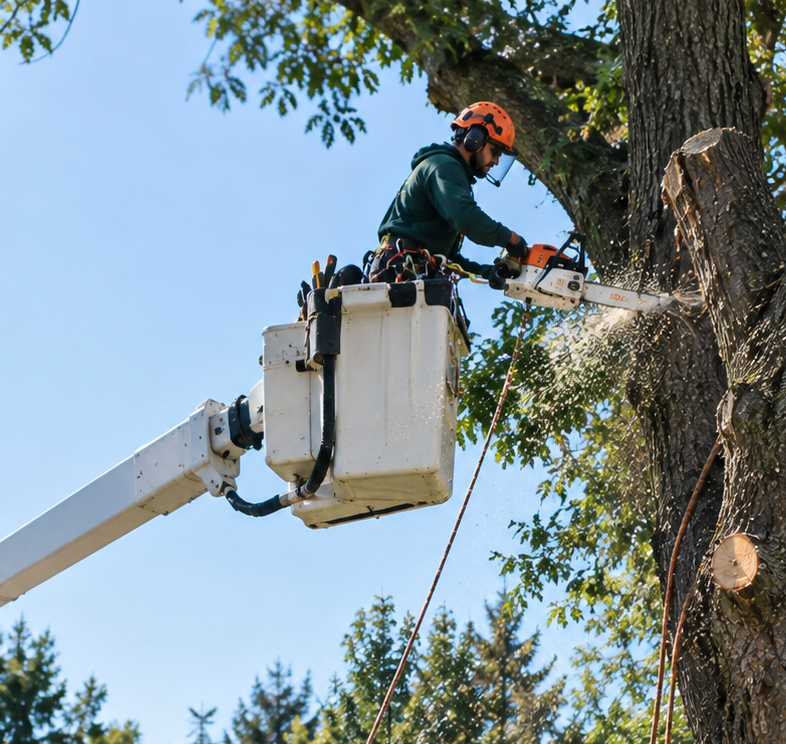
How a professional dead-tree removal assessment works
A good assessment begins with the site, not a pre-set conclusion. The arborist asks what changed, when the problem was noticed and whether the tree has had storm, construction, drainage or disease issues. They inspect the canopy, trunk, major unions and visible root zone, consider the tree species and size, and identify nearby targets. Where the view is restricted, a ground-level assessment may not answer every question; the professional should explain what could and could not be observed and whether additional inspection is appropriate.
Next, the arborist explains options in plain language. Those options may include removing a dead limb, pruning to reduce a specific hazard, monitoring a tree, producing an arborist report, or removing the whole tree. A report can document an assessment and recommendations for a property owner or project, but it does not guarantee a permit or a particular decision. If removal is recommended, ask what risk it addresses and whether there is a reason the work should be treated as urgent. You can compare that explanation with other relevant details in Bosco Tree’s arborist report service information.
Planning the work area and access
Before removal, the crew needs to understand where the tree stands and how branches and trunk sections can be handled safely. A tree in an open yard may allow a different approach from one close to a roof, fence, shed, road or neighbouring tree. Limited access, slopes, overhead obstacles, landscaping and the tree’s lean can affect the work plan. The arborist or crew should explain how they intend to control the work area, protect nearby property and manage debris. If access crosses a neighbour’s land, discuss permissions directly before work is scheduled.
Tell the service provider about wires, buried services, irrigation, septic components, retaining walls, underground structures, locked gates, pets and any constraints on the property. Do not assume an obstacle is obvious from a photo. Keep people and pets away from the work zone and follow the crew’s instructions. If a utility must disconnect or make equipment safe, that coordination has to happen before tree work begins. The work plan should not rely on cutting near an energized line.
Removal, cleanup and communication
In a controlled removal, arborists may dismantle a tree in sections rather than fell it in one piece, depending on the site and safe work plan. Equipment and rigging should be chosen for the situation; no homeowner should try to copy the process using a rope or vehicle. Ask how the crew will lower or move limbs, where material will be placed, whether nearby plantings or hardscape need protection, and what cleanup is included. The precise method depends on the tree and property, so a responsible provider confirms details rather than promising one approach for every job.
Once work is underway, keep clear of the site. Do not walk under suspended loads or enter an area marked off by the crew. If the plan changes because the tree is more unstable than expected or a new hazard appears, the crew should pause and explain the changed scope. If you have questions, raise them with the lead before work proceeds further. Clear communication avoids misunderstandings about whether the stump, brush, logs and chips are included in the agreed work.
How to assess a dead tree and plan removal
- Keep your distance. Stay outside the possible fall area and do not climb, cut or approach hanging limbs.
- Describe what changed. Note the season, when symptoms began and any recent storm, excavation or drainage change.
- Document visible signs. Take photos from a safe location; avoid scraping trunks or breaking branches.
- Request an assessment. Ask an arborist to review the canopy, trunk, visible root area, targets and site constraints.
- Confirm City requirements. For a Toronto tree, check current permit or exception rules with the City before non-emergency work.
- Agree on a written scope. Clarify removal, access, debris, stump work and protection for nearby property.
Stump follow-up: decide what should happen next
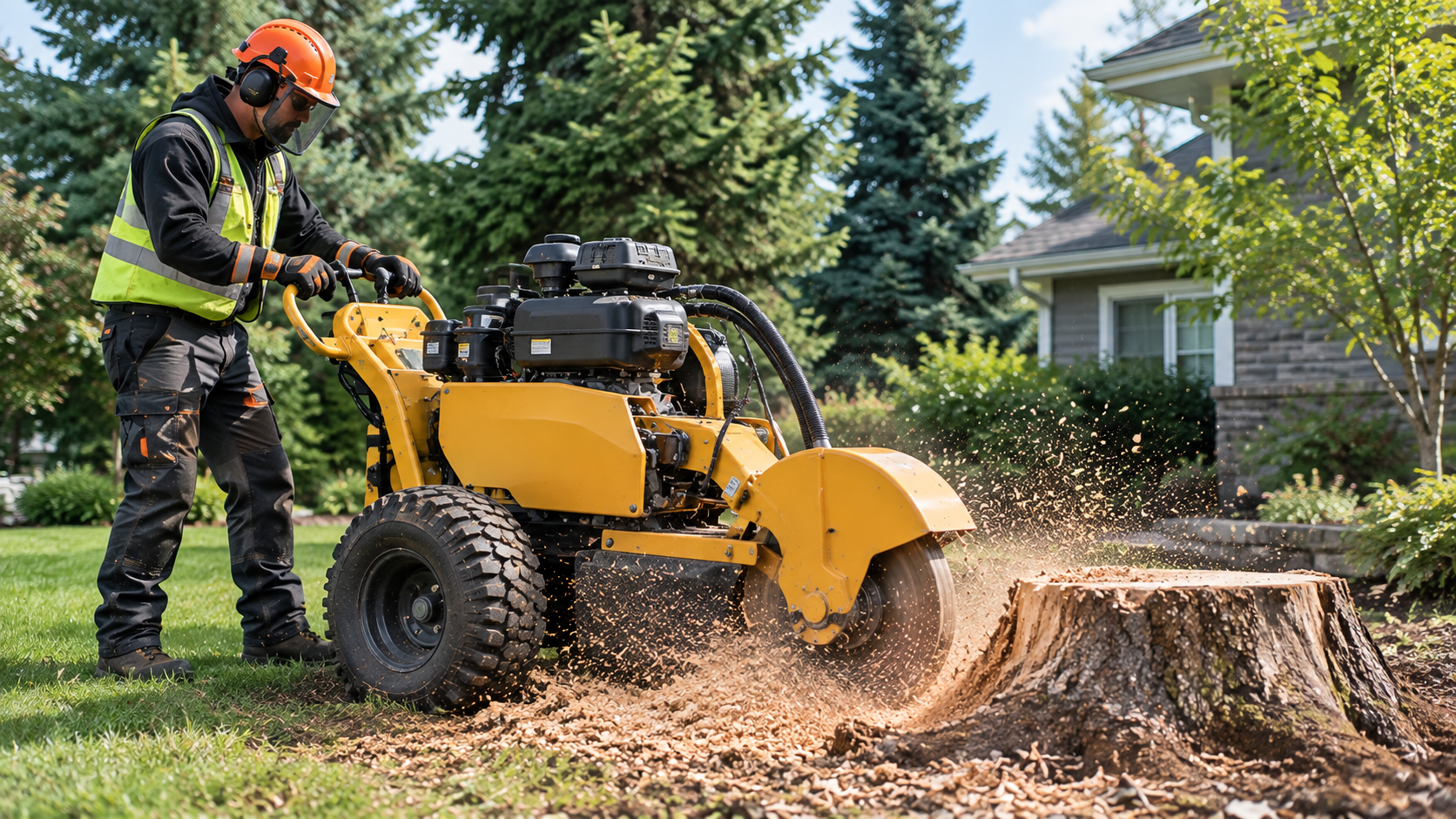
Tree removal and stump work are related, but they are not the same service. After the trunk and branches are removed, the stump may remain at or near ground level unless stump grinding or removal is part of the agreed scope. A remaining stump can affect mowing, a planned garden bed, access or the appearance of the yard. It may also be a reminder of the tree’s former position when planning new planting or construction.
Ask the contractor what will be left after the tree is removed. Confirm whether the stump will be cut close to grade, ground below the surrounding surface, removed with major roots, or left in place. Grinding generally processes the stump below grade but does not remove every root; the exact outcome depends on equipment, access and site conditions. Full stump removal can disturb more soil and may be unsuitable near utilities, paving, retaining walls or other structures. The provider should describe what is included and whether the resulting chips or soil will be removed or left for the owner.
Before stump work, disclose underground services and irrigation lines, and confirm the location of any cables or pipes. A stump near a fence, foundation, walkway or property line can require a site-specific plan. Do not dig around or burn a stump without checking for hazards and local requirements. Bosco Tree provides stump grinding in Toronto; the guide to stump grinding versus stump removal explains the difference between those follow-up options.
Plan replacement planting and the site
If you hope to plant another tree, ask the arborist where planting may work and what factors should guide species and placement. The old stump and roots, underground services, overhead wires, available soil volume, drainage and distance from buildings can all matter. A replacement tree should be appropriate for the space rather than simply placed in the same hole. If removal is connected to construction or a landscape change, discuss tree preservation and root protection before new work begins. Bosco Tree’s guide to tree health assessments in Toronto can help frame questions about the condition of nearby trees.
Questions to ask before authorizing removal
Before agreeing to work, ask the arborist to explain the diagnosis, the risks that matter at this site, and why the recommended action is appropriate. Ask whether the entire tree must be removed or whether a particular limb can be managed separately. Confirm the proposed work area, access, debris handling, protection for structures and landscaping, and what happens to the stump. Request a written scope so you can see what is included and what is not.
Ask who will be on site, what insurance applies, and whether any City confirmation or permit is needed before work begins. Be cautious of promises that the City will approve an exception or permit; no tree company can guarantee a City decision. For trees on a shared boundary or near a neighbour’s property, discuss the boundary and consent before scheduling work. If the tree may be in a ravine, on City land or subject to a development condition, verify the rules with the relevant City department. Keep a copy of the assessment and any City confirmation for your records.
For potential storm or emergency cases, explain whether the tree has changed recently, whether anyone has already left the area, and whether a wire or structure is involved. The crew needs accurate details to consider safe access. For help with a tree that has become dangerous, learn about Bosco Tree’s emergency tree service in Toronto. If the tree is close to a building, read guidance on tree removal near a Toronto house. If it is close to electrical lines, see the specific safety guidance for trees near power lines and contact the utility where necessary.
When to call a professional about a dead tree
Call promptly for a new lean, fresh trunk split, lifted soil, a large hanging branch or rapid change near a home, path or neighbour’s property. A stable concern may allow a scheduled assessment, but do not decide on removal from a single symptom. Bosco Tree offers tree removal in Toronto, stump grinding and arborist assessments. For a property-specific conversation, call 416-206-1460 or request a free quote.
Frequently asked questions about dead tree removal in Toronto
1. How can I tell if a tree is dead or dormant?
Leaflessness in winter is not enough to diagnose a tree as dead, because many deciduous trees are dormant. Look for several signs, such as bud condition, brittle twigs, bark changes and the pattern of crown dieback, but do not treat any one sign as conclusive. An arborist can assess the species, season and whole-tree condition.
2. Is a scratch test a reliable way to tell if a tree is dead?
A small scratch on a low, safe twig may reveal green tissue beneath the bark, which suggests that the sampled part is alive. A single test cannot tell you whether the whole tree is healthy or structurally safe. Avoid cutting or scraping a large branch or trunk, and ask an arborist to interpret uncertain results.
3. Do mushrooms at the base mean a tree must be removed?
No. Fungal fruiting bodies can be associated with decay, but they do not show how much strength remains or prove that removal is the only option. Their location and the tree’s structure, roots, condition and targets all matter, so have a concerning tree assessed professionally.
4. How quickly should a dead tree be removed?
Urgency depends on stability, size, recent changes and proximity to people or property. A new lean, fresh crack, root movement or hanging limb calls for prompt assessment; an immediate threat or downed wire needs emergency or utility response. A stable tree away from targets may allow planning, but should not be ignored.
5. Does Toronto require a permit to remove a dead tree?
Toronto guidance says a 100 per cent dead tree may qualify for a permit exception. Owners should request and receive the City’s confirmation before removal unless immediate work is needed to eliminate danger. A declining or partly dead tree may not qualify. Check current rules for the property before scheduling.
6. Should I remove a dead tree myself?
Do not attempt to fell a large tree, climb it or cut high branches yourself. Dead wood can be brittle, and the tree can shift or fail in an unexpected direction as cuts are made. Hire a qualified tree-care professional and keep people out of the work area.
7. What happens during professional tree removal?
The arborist evaluates the tree, access, nearby targets and hazards, then explains the proposed work and site protections. Depending on the space, the crew may dismantle the tree in sections and manage branches and trunk material in a controlled way. Confirm cleanup and stump work in the written scope before work begins.
8. Does tree removal include stump grinding?
Not automatically; stump work is a separate service unless the agreed scope includes it. Ask whether grinding, root removal, chip handling and site restoration are included. The right choice depends on access, future use of the space, underground services and nearby structures.
9. Can a dead tree be dangerous even if it has not fallen?
Yes, a standing dead tree can still have branches or sections that fail, but deadness alone does not reveal when or how it may fail. The risk depends on structural condition and what lies within reach. Keep people away from a concerning tree and arrange a professional assessment.
10. What should I do if a dead tree is near a power line?
Stay away from the tree and do not touch it, a branch or anything in contact with a wire. Contact the utility or emergency services as appropriate, especially if a wire is down or someone is in immediate danger. Do not arrange tree work until the utility has made the electrical hazard safe.
Take the next safe step
Do not decide on removal from a single symptom. Observe the tree from a safe location, note whether it has changed, and get an assessment when the condition or location raises concern. If the City’s tree rules may apply, confirm the current requirements and obtain any required exception confirmation before non-emergency work. Keep clear of a tree with a new lean, a hanging branch, fresh cracks, root movement or power-line contact.
Bosco Tree provides tree removal, pruning, stump grinding, arborist reports and 24/7 emergency tree service across Toronto and the GTA. Its arborists are ISA-certified, the company has 18 years of experience, is fully insured with $2 million liability coverage, and offers free quotes. Read about Bosco Tree, browse its tree removal and arborist services, or explore the tree care guides. For a property-specific conversation, call 416-206-1460 or request a free quote.

Neighbour Tree Disputes Toronto | Bosco Tree
A practical guide to Toronto neighbour tree disputes, boundary trees, overhanging branches, roots, arborist reports and safe next steps.

Tree Removal Insurance Ontario | Bosco Tree
Tree removal insurance Ontario: what to ask your insurer, document after a loss and know before hiring an insured tree contractor. Call Bosco Tree.

Tree Removal Near House Toronto | Bosco Tree
Learn how arborists plan tree removal close to a Toronto home, protect nearby property, assess access, and check permits before work begins.

Tree Service Toronto: A 12-Point Checklist for Choosing Well
Use this practical checklist to compare Toronto tree services, ask about insurance and safety, and request a clear free quote from Bosco Tree: 416-206-1460.
Tree Removal Cost Toronto: What Affects Your Quote?
A practical guide to tree removal quotes in Toronto: understand the work scope, compare providers fairly and request a free Bosco Tree assessment.