Arborist vs Tree Service in Toronto: Which One Do You Need?
If you are comparing an arborist vs tree service Toronto provider, the useful question is not simply which label sounds more professional. It is what your tree and property need: an informed assessment, careful pruning, a written report, physical tree work, or a combination. Knowing the difference helps you ask better questions and hire a company equipped to carry out the work safely and thoughtfully.
Key takeaways
- An arborist focuses on tree condition, structure, health, risk assessment and appropriate care.
- A tree service describes the crew, equipment and practical work used to prune, remove or otherwise manage trees.
- Some projects need an arborist's assessment, a qualified crew to complete the work, or both.
- Ask who will assess the tree, who will perform the work, what is included and how the work area will be protected.
- Bosco Tree is a Toronto and GTA tree removal and arborist company with ISA-certified arborists, 18 years of experience, full insurance with $2 million liability coverage, free quotes and 24/7 emergency service.
Arborist vs tree service: what is the difference?
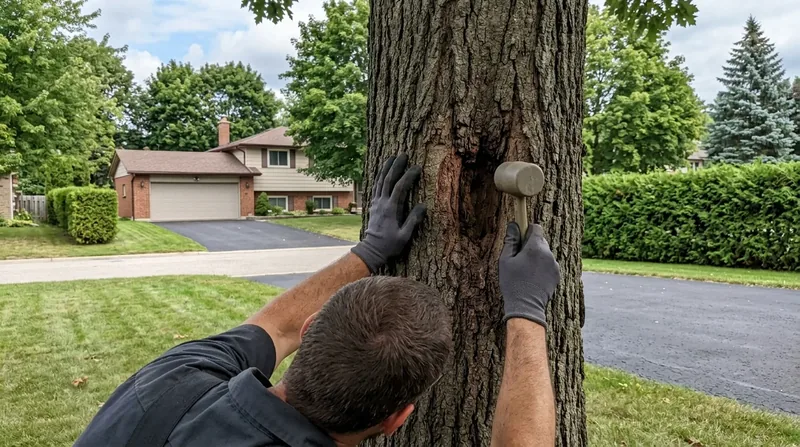
An arborist assesses tree health, structure, risk and appropriate care; a tree service is the company or crew that performs work such as pruning, removal or stump grinding. One provider may offer both, but homeowners should confirm who gives the advice, who does the work and what each part includes.
The distinction matters because a recommendation and its execution are separate responsibilities. A tree may require a reasoned assessment before anyone cuts it. The approved plan may then require trained workers, equipment and a controlled work area. Depending on the company, one provider may offer both functions, or a homeowner may need to coordinate more than one specialist.
For a simple request, such as arranging a quote for a tree that clearly needs removal, the first conversation may be with a tree service. For a tree with uncertain decline, conflicting advice, a concern about a target nearby, or a need for a written arborist report, professional assessment becomes more central. If the assessment concludes that pruning or removal is appropriate, the work still needs to be planned and completed by a capable crew. A practical way to approach the arborist vs tree service choice is to name the question you need answered first.
To understand the range of work available, review Bosco Tree’s tree-care services and the dedicated information on tree removal in Toronto and tree trimming and pruning. These pages describe different service needs; the right fit depends on the specific tree, site, access and desired outcome.
What an arborist contributes
An arborist looks at the tree as a living, changing structure rather than only as a job to be completed. An assessment may consider the species if known, visible condition, branching pattern, trunk and root area, changes over time, nearby buildings or other targets, and what the property owner wants to achieve. A visit does not automatically mean a tree should be removed. It is an opportunity to understand the concern, discuss options and identify what further work, if any, may be appropriate.
Tree health and structural questions often require context. A sparse crown, dead branch, cavity, lean or damaged area can be concerning, but a brief visual impression from a distance may not answer why it is present or what should happen next. An arborist can explain observations and distinguish a request for routine maintenance from a question that calls for a more specific assessment or report. The limits of any assessment should be clear: what was observed, what was not accessible, and whether further inspection is recommended.
Pruning is another area where an arborist’s knowledge can help. The objective should be stated before cutting begins: for example, addressing a particular branch concern, managing clearance, or maintaining the tree’s form. “Cut it back” is not a complete specification. Ask what branches are proposed for removal, why, and how the work is intended to affect the tree. Learn more about tree pruning in North York or about choosing an appropriate season in this guide to the best time to trim trees in Toronto.
When a municipality, project team or property decision requires documented professional observations, ask whether an arborist report is the right service. A report is not interchangeable with a basic quote: the purpose, scope and recipient should be discussed. Bosco Tree offers arborist reports in Toronto; explain what question the document needs to answer before the visit is arranged.
What a tree service contributes
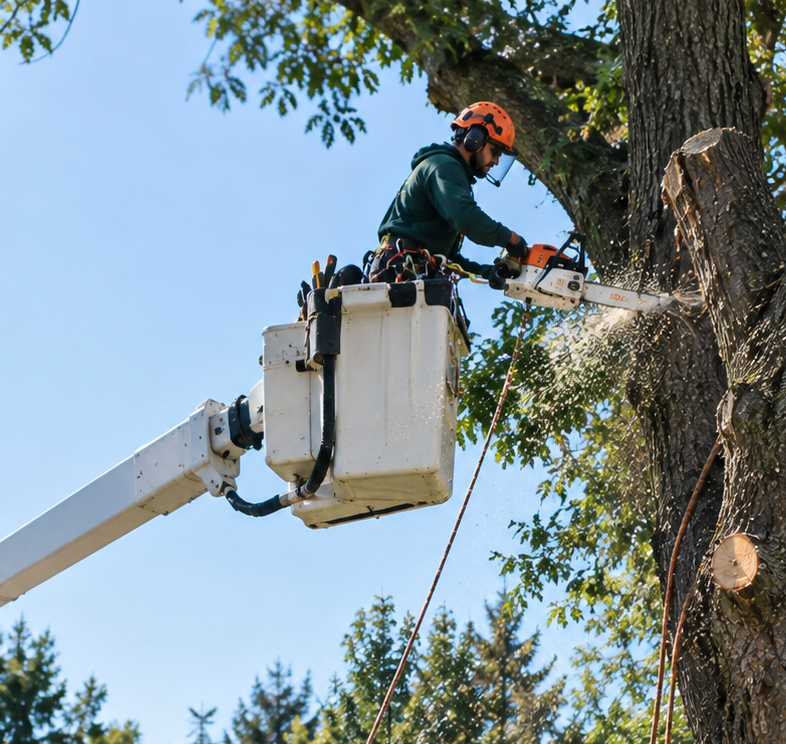
A tree service organizes and performs practical work at the property. Depending on the project and provider, that can include climbing or using equipment to reach branches, managing pieces as they are removed, protecting nearby areas, processing brush and wood, and cleaning up the agreed work area. Tree removal, pruning, stump grinding and lot clearing all involve different tasks and site conditions. A crew’s experience, equipment and work plan should suit the particular job rather than a generic description.
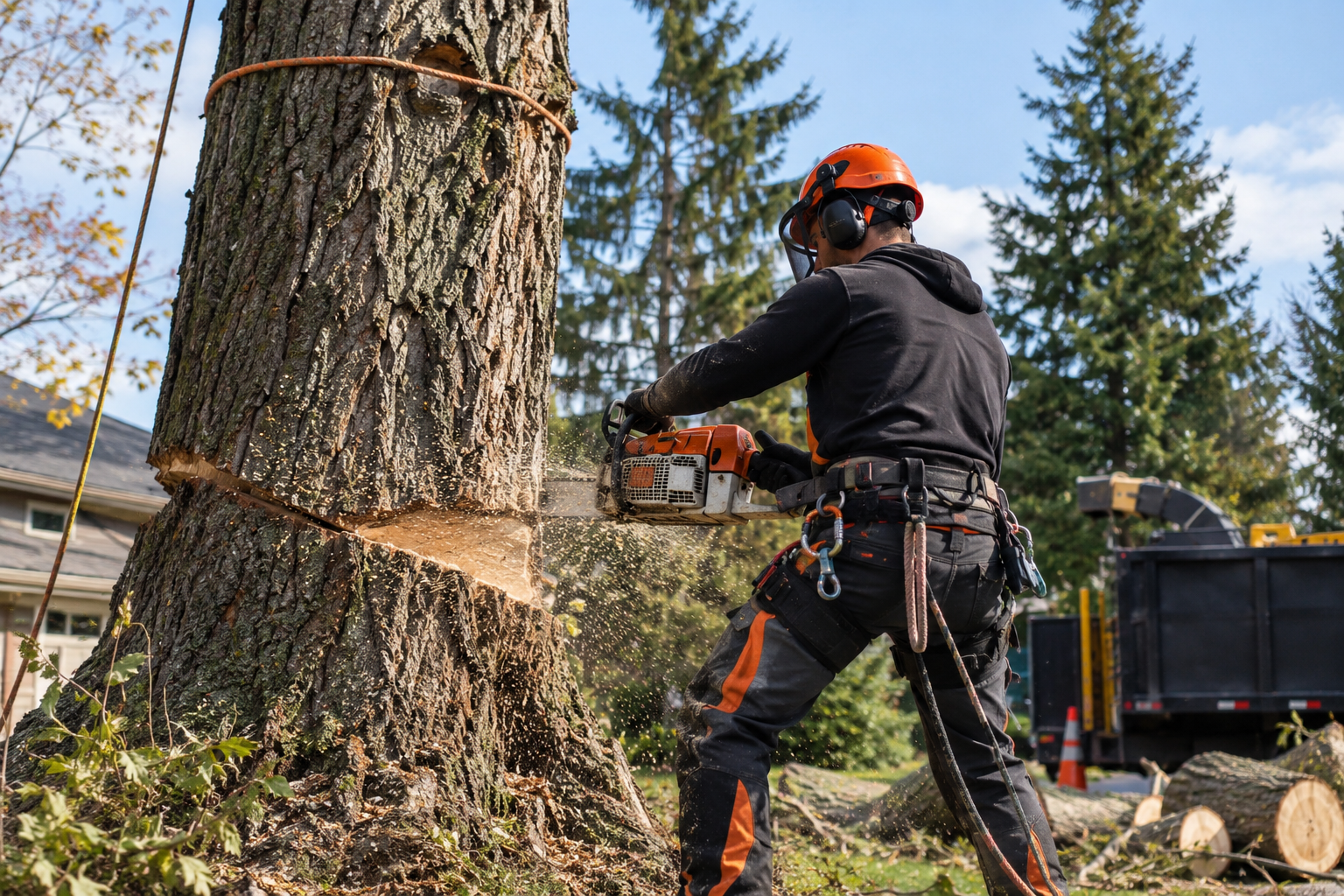
Removal is not merely cutting a trunk. The crew must consider where sections can be lowered, what is close to the tree, how people will be kept out of the work zone, where debris will go, and what the quote includes after the tree is down. For a removal request, compare the stated scope and ask whether cleanup, wood handling and stump work are included or separate. Bosco Tree’s guide to choosing a Toronto tree service offers a useful set of questions for evaluating a provider.
Pruning and trimming also need a clear scope. A crew may be asked to address a specific limb or clearance issue, but the property owner should understand the intended result before work starts. Confirm what tree or trees are included, what will be removed, whether debris will be cleared and whether access limitations change the plan. Read about factors that affect tree-removal quotes for context on why projects differ; this article does not provide or estimate prices.
Some jobs need work beyond a single yard tree. Clearing a lot, coordinating work around protected trees, or responding to a storm-related hazard brings additional planning questions. Explore Bosco Tree’s GTA lot-clearing service, tree protection zone guidance, and TPZ installation information to understand related service areas. A tree protection zone (TPZ) can be relevant when construction or site work takes place near retained trees; discuss site requirements with the appropriate project professionals.
Arborist or tree service: which fits your situation?
| Situation | First point of contact | What to clarify |
|---|---|---|
| Unclear decline or structural concern | Arborist | Observations, limits and care options |
| Written project documentation needed | Arborist | Purpose, scope and intended recipient |
| Defined pruning or removal scope | Tree service | Crew, method, site protection and cleanup |
| Assessment followed by physical work | Provider offering both, or coordinated specialists | Who advises, who executes and how scope is transferred |
| Fresh storm damage or immediate hazard | Emergency tree service; emergency responders if needed | Safe access, urgency and utility involvement |
When you need an arborist, a crew, or both
Start with the decision you need to make. If you want to know whether a declining tree can be retained, why its condition has changed, whether a branch concern needs attention, or what a report should document, ask about an arborist assessment. If you already have a clearly defined scope and need the work completed, ask a tree service about its crew, equipment, work sequence and cleanup. If assessment and action are both needed, choose a provider able to explain how those parts connect. The arborist vs tree service distinction is most useful when it clarifies who will advise you and who will carry out the agreed work.
For instance, a homeowner may notice a large limb over a frequently used area and want to know whether it should be removed. The concern is initially about the tree’s condition and the consequences of different options. An assessment can help clarify the issue; the resulting recommendation might be pruning, monitoring, removal, or a further inspection. If pruning is selected, the crew then needs a practical plan for accessing and handling the limb without creating unnecessary disturbance.
Another homeowner may already have decided to remove a tree because of a planned project or a known site requirement. The question then becomes what approvals or documents may apply, what the removal scope includes and how the crew will manage the site. Do not assume that every tree can be removed without checking local requirements. Bosco Tree’s Toronto tree-removal permit guide is a starting point for identifying questions to confirm with the relevant authority.
Storm damage can combine urgent operations with careful judgment. A broken limb, split union or partially fallen tree may be unstable, and people should keep away from the area rather than attempting to inspect or cut it themselves. Bosco Tree provides 24/7 emergency tree service. For guidance on recognizing possible warning signs before an emergency, read about hazard-tree warning signs and storm-damaged tree removal in Toronto.
Geography can affect scheduling and the work plan. Bosco Tree serves the GTA, with service information for Mississauga, Brampton, Vaughan, Markham and Richmond Hill. Share the property location and the nature of the concern when requesting a quote so the team can clarify whether the requested service is available for the site.
How ISA certification relates to hiring
ISA certification is a professional credential, not a substitute for understanding the exact scope of your project. Bosco Tree’s stated business facts include ISA-certified arborists. When a company mentions certification, ask who on the project holds it, what role that person will have, and whether the person assessing the tree will be involved in the work plan. This helps distinguish a credential in the organization from the named responsibility for your particular job.
It is equally important to ask what the certification does and does not mean in the context of your decision. It does not by itself tell you that a specific recommendation is necessary, that a particular method will suit your yard, or what the quote includes. Request an explanation in plain language: what the professional observed, what they recommend, why, and what alternatives are available. A good hiring conversation leaves you able to describe the proposed work to someone else.
For work requiring a written opinion, find out whether the credentialed arborist will prepare or review the document and whether its scope matches the request. For a physical job, ask who supervises the operation and how the crew will address access, adjacent property and cleanup. When one company provides both assessment and work, ask how recommendations are explained and documented so you can make an informed decision without feeling rushed.
Why a company combining assessment and tree work can help
When a tree-care company can discuss both a tree’s condition and the practicalities of doing the work, the property owner may be able to keep one conversation connected from the first concern to the agreed scope. The benefit is not a promise that every job needs every service; it is the ability to ask questions about both the reasoning and the execution. A provider should be willing to explain when a specialist assessment is useful and when a straightforward quote is sufficient.
Bosco Tree is a tree removal and arborist company based in Toronto and serving the GTA. The supplied business information states that Bosco Tree has ISA-certified arborists, 18 years of experience, full insurance with $2 million liability coverage, free quotes and 24/7 emergency service. Its services include tree removal, tree pruning and trimming, stump grinding and removal, emergency tree service, arborist reports, TPZ installation and lot clearing. Those facts allow a customer to ask about assessment and operations within the same provider, while still confirming which service and professional apply to the specific job.
Review the company’s information about Bosco Tree and its Toronto tree-care services. If the job concerns a stump after the tree is removed, compare stump grinding and removal services with this separate guide to stump grinding versus stump removal. Those are distinct decisions from whether the tree itself needs an arborist assessment.
What a first visit should clarify
A useful first visit begins with your concern, not a sales pitch. Describe what changed, what you have noticed and what you hope to accomplish. Point out the tree and any areas that matter to you, such as a roof, walkway, garden, play area or planned project. If the concern relates to storm damage, stay at a safe distance and explain what you can see rather than approaching a damaged limb or unstable tree.
The professional should listen, inspect what is safely accessible and ask questions that help define the decision. They may ask whether the tree has changed recently, whether work has been done before, whether you have photographs from an earlier season, and whether you need a report or simply a work quote. These questions are meant to understand the job, not to make you diagnose the tree yourself.
Before concluding, ask for a plain-language summary. What did the visitor observe? What action, if any, is recommended? Is the recommendation urgent, routine or dependent on further information? What alternatives exist, and what would each option accomplish? If a report is proposed, ask what it will cover and who needs to receive it. If physical work is proposed, ask who will perform it and what preparation is needed on the property.
A first visit may not resolve every question. Some observations may be limited by access, foliage, weather or the area being inspected. A responsible explanation distinguishes what was seen from what cannot be confirmed during the visit. If additional documentation or another specialist is needed, ask why and what question that next step is intended to answer.
Once the scope is clear, request the written quote and review it before scheduling. Confirm the tree or trees covered, the work described, the cleanup and disposal arrangements, any stump-related work, the expected access route and any exclusions. Ask how the crew will protect the site and what you should move or secure. If the provider uses different people for assessment and execution, ask who is your contact for questions and how the approved work plan will reach the crew.
Checklist: questions to ask before you book
These questions are useful whether you are speaking with an arborist, a tree service or a company offering both. You do not need specialist vocabulary. You need clear answers about the decision and the work.
- Responsibility: Who assesses the tree, and who performs the work?
- Reasoning: What did you observe, and why does it support the recommendation?
- Objective: Is the goal care, risk management, clearance, removal or documentation?
- Scope: Which trees, tasks, cleanup and exclusions are in the written quote?
- Site protection: How will nearby structures, gardens and access routes be managed?
- Credentials and coverage: Who holds relevant credentials, and what insurance applies?
Ask the company to put the agreed scope in writing. Clear documentation helps prevent misunderstandings about which trees are included, what “cleanup” means, whether wood is to be left or removed, and what work falls outside the quote. If the job relates to a new build, a landscape redesign or a protected tree, mention that at the start; the relevant planning and documentation may differ from routine yard maintenance.
Matching the service to common Toronto situations
A tree looks unhealthy, but you do not know why
Begin with assessment rather than assuming removal is inevitable. Describe visible changes, when you first noticed them and whether they affect one branch or the whole canopy. Ask what an arborist can determine during a visit and whether the observations suggest care, monitoring, a report or additional inspection. If a particular tree species is involved, a focused resource such as the guide to ash tree removal in Toronto may help frame questions, but a web page cannot assess the tree on your property.
A branch interferes with access or a structure
Explain the specific clearance problem and what must remain accessible. Ask whether targeted pruning can meet the objective, and how the proposed cuts relate to the tree’s structure. If the tree itself appears unstable or storm-damaged, do not treat a routine trimming request as a substitute for a safety assessment. A qualified professional can explain the scope and whether removal or another response should be considered.
You have already decided to remove a tree
Tell the provider why removal is being considered and whether any permit, construction plan or written report is involved. Ask for the physical scope: how the tree will be dismantled, how the work area is managed, what debris handling is included and whether the stump is part of the job. If you are considering a tree elsewhere in the region, Bosco Tree’s information about tree removal in Vaughan and tree removal in Markham helps identify its local service pages; availability for a particular site should be confirmed directly.
You need documentation for a project
Clarify who is asking for the document and what decision it supports. Give the arborist the relevant project context and ask whether a report, a site review, TPZ installation or another service is appropriate. Do not assume a quote or verbal recommendation will meet a formal requirement. Bosco Tree lists tree protection zone installation as a service; confirm the project-specific scope and any requirements with the relevant project professional or authority.
A storm has left a dangerous-looking tree or limb
Keep people clear of the area and do not climb, pull or cut a damaged limb. Contact an emergency tree service for guidance and share the location and visible condition from a safe place. Bosco Tree offers 24/7 emergency service; for non-urgent planning, learn about its Richmond Hill tree-removal service or the related resources on signs a tree may need professional attention. The priority is safe assessment and a clear response, not trying to make a diagnosis from a distance.
How to choose between an arborist and a tree service
- State the concern. Describe the tree, what changed and the decision you need to make.
- Decide whether advice or work comes first. Uncertain condition or documentation points to assessment; a defined work scope points to an operating crew.
- Ask who is responsible. Identify the assessor, work lead and how the recommendation reaches the crew.
- Check project requirements. Ask whether permits, reports, utility coordination or tree protection need confirmation.
- Compare the written scope. Confirm the tree, tasks, debris handling, stump work, access and exclusions.
- Agree on safe next steps. Keep clear of hazards and arrange the appropriate assessment or work before scheduling.
How to compare recommendations without being a tree expert
When you receive more than one opinion, compare the reasoning, not only the recommended action. Ask each provider to identify the concern they observed and connect that concern to the proposed work. One professional may recommend pruning while another discusses removal; ask what each believes the work will accomplish and whether the two opinions are based on the same scope of observation. If you remain uncertain, consider whether a written arborist assessment would help you make a more informed decision. When comparing arborist vs tree service providers, look for a clear explanation of both the advice and its practical execution.
Look for a scope that can be understood without interpretation. “Take care of the tree” is less useful than a description of which tree, what work is proposed, how debris will be handled and what is excluded. If a quote includes removal but you also want the stump addressed, ensure that this difference is explicit. The same applies to wood retention, access constraints and any protection needed for surrounding areas.
Be cautious about treating a credential, a polished website or a confident opinion as the whole answer. Ask who is accountable for the advice, what facts support it, and whether the proposed work fits your goal. Bosco Tree’s stated experience, insurance and service offerings are useful starting points for a conversation, but your written scope should still be specific to your property and the tree being discussed.
Frequently asked questions about arborist vs tree service
What is the main difference between an arborist and a tree service?
An arborist focuses on a tree’s condition, structure, health and appropriate care; a tree service describes the company or crew performing practical work such as pruning, removal or stump grinding. A provider may offer both, so confirm who advises you and who completes the work.
Do I need an arborist before removing a tree?
Not every removal request requires a separate assessment first. If the tree’s condition, the appropriate option or required documentation is uncertain, ask whether an arborist should assess it. Check applicable City requirements and confirm any necessary permission before arranging non-emergency work.
Does ISA certification mean a company is insured?
No. ISA certification and insurance are separate matters. Ask which professional holds the credential and what role they will have on your project, then independently confirm the insurance details and coverage applicable to the specific work.
Can an arborist also perform tree work?
Some tree-care companies provide both assessment and field work, while others focus on one. Ask who will assess the tree, who will carry out the agreed work, and how recommendations and any changes will be communicated to the crew.
When should I ask for an arborist report?
Ask about a report when a project, authority or decision-maker needs documented observations or recommendations. Explain who will use the document and what question it must answer, then confirm the proposed report scope before arranging the service.
What should a tree removal quote explain?
A quote should identify the tree and work included, cleanup and debris arrangements, whether stump work is included, and exclusions or access requirements. Ask for the scope in writing and resolve uncertainties before you schedule the crew.
What should I do if a tree is damaged in a storm?
Keep people and pets away from damaged trees or limbs, and do not climb, pull or cut them. Contact an emergency tree service and describe what you can see from a safe place; if wires or immediate danger are involved, contact the utility or emergency services.
Does Bosco Tree offer both arborist and tree-service work?
Yes. Bosco Tree is a Toronto-based tree removal and arborist company serving the GTA. Its stated services include arborist reports, pruning, removal and emergency tree service, and it has ISA-certified arborists. Confirm which professional and service fit your property.
How do I request a quote from Bosco Tree?
Call 416-206-1460 or use the contact form to describe the property, tree-care concern and any report or timing requirements. Bosco Tree offers free quotes; share visible concerns from a safe distance rather than approaching damaged limbs.

Lot Clearing for Builders GTA | Bosco Tree
A practical GTA lot-clearing guide for builders and homeowners covering arborist review, permits, retained trees, TPZs and site coordination.

Tree removal for home addition Toronto | Bosco Tree
Plan tree assessment, Toronto permits, protection for retained trees, authorized removal and site preparation alongside your home addition.
Tree Protection Zone Toronto | Bosco Tree
Plan tree protection for Toronto construction with guidance on arborist reports, TPZ barriers, project steps, and City approvals.

Tree Removal Permit Toronto: Do You Need One?
Learn when Toronto tree rules may apply, what an arborist report can do and how to confirm current permit requirements before work starts.