Tree Topping vs Crown Reduction in Toronto: Why Proper Pruning Protects Your Tree
When a tree grows too large for a roof, driveway, garden or planned project, a contractor may suggest cutting back its crown. Before agreeing, it is worth understanding tree topping vs crown reduction: the names can sound similar, but the work and its likely effect on the tree are very different. Topping cuts major limbs back to stubs or arbitrary points. Proper crown reduction shortens selected branches to suitable laterals while retaining a more natural framework. A careful assessment by an ISA-certified arborist in Toronto helps you decide whether pruning can address the concern, what kind of pruning is appropriate, or whether another option deserves consideration.
- Topping removes large portions of a crown through heading cuts and leaves stubs; it is not the same as selective crown reduction.
- Large wounds, vigorous shoots and a changed branch structure can create lasting health and safety concerns.
- Reduction, thinning, raising and deadwooding are distinct objectives, chosen for a tree-specific reason.
- Ask a contractor to explain the pruning objective, planned cuts and how the natural form will be preserved.
- A qualified arborist can inspect the tree, explain alternatives and provide a written work scope.
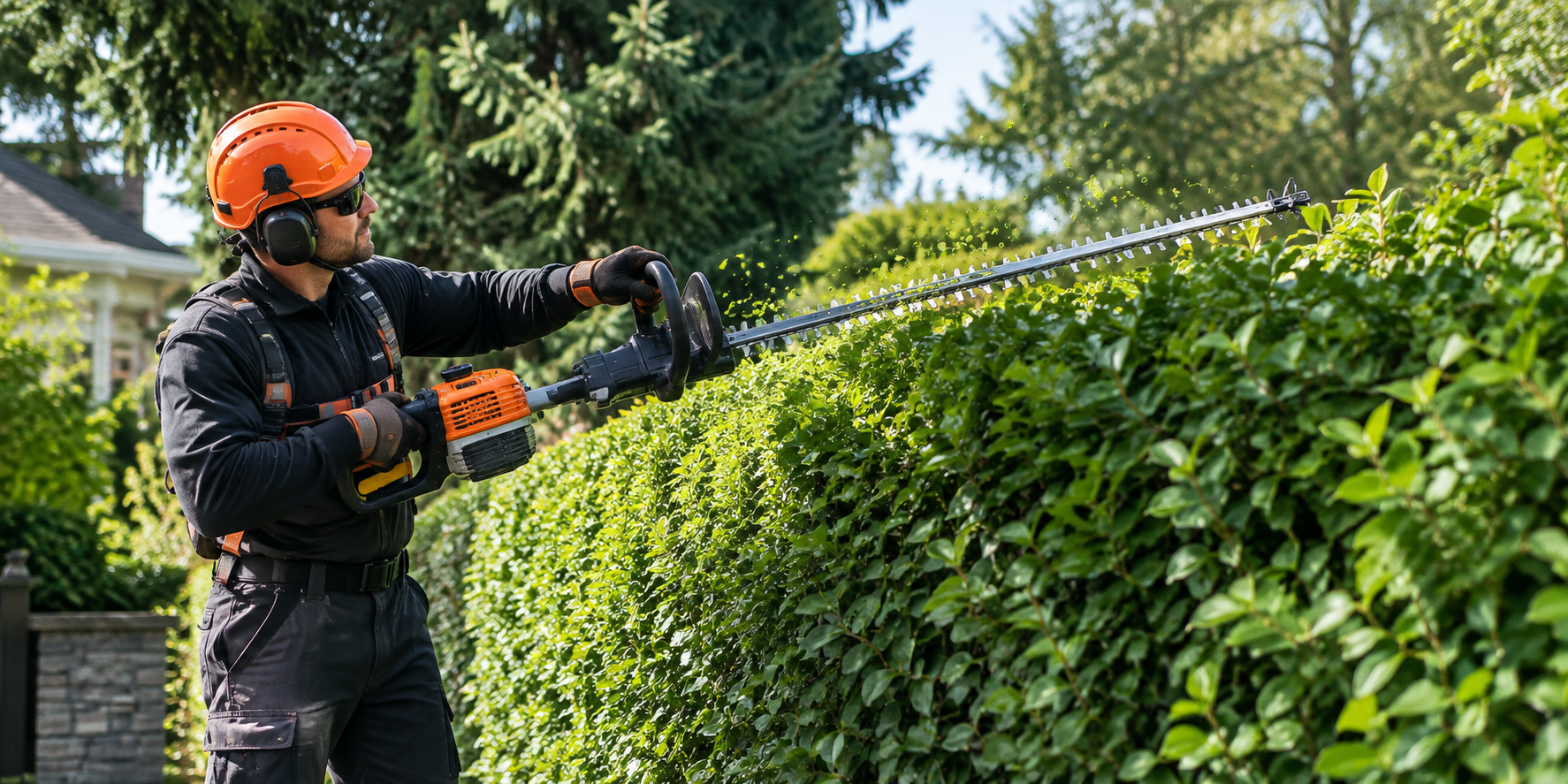
What is the difference between tree topping and crown reduction?
Tree topping cuts major limbs or leaders back to stubs or arbitrary points, while crown reduction selectively shortens chosen branches to suitable lateral branches. Reduction aims to preserve a functional crown and natural structure; topping removes large areas indiscriminately. The terms describe different cut placement, purpose, and likely effects on a tree.
That distinction is the practical heart of a tree topping vs crown reduction proposal. A written plan should identify the concern, objective and suitable cut locations instead of promising an arbitrary new height. For Toronto homeowners comparing tree topping vs crown reduction, the useful question is not simply how much foliage will be removed, but whether the work can meet the goal while respecting the tree’s structure.
The Tree Care Industry Association’s overview of ANSI A300 Part 1 pruning standards says the part addresses pruning objectives, systems, specifications and cuts. Its separate standards page identifies topping as a pruning practice that can injure trees. Standards are a framework for developing appropriate specifications, not a substitute for examining the individual tree or checking the current edition and project requirements.
| Question | Topping | Purposeful crown reduction |
|---|---|---|
| Where are cuts placed? | Often at stubs or arbitrary points on limbs | At selected branches and suitable laterals |
| What is the objective? | Rapid, blunt reduction in height or spread | A defined reduction while retaining a sound crown framework |
| What should be explained? | Unclear limits, no rationale for cut locations | Which branches, what objective, and how the form will be retained |
| Is either appropriate for every tree? | No; topping is not accepted as routine pruning | No; reduction is considered only when the tree and goal suit it |
Why topping can harm a tree
A mature tree has a branching pattern shaped by species, age, growing conditions and prior care. Removing large leaders or limbs in one operation changes the crown abruptly. The tree does not simply resume its former growth pattern. It responds to the loss of foliage and branches, and the resulting shoots and wounds may leave a less predictable structure. How much risk or decline follows depends on the species, condition, cut size, location and surrounding conditions; no single outcome can be promised for every tree.
Fast regrowth is not a repair
After a severe cut, many trees produce numerous shoots near the cut ends or along remaining limbs. These shoots can grow quickly, making it appear that the tree is “back.” But rapid shoot growth is not the same as rebuilding the original branch structure. Shoots attached near large cut surfaces may not have the same form or attachment as a branch that developed as part of the tree’s crown. The dense cluster can also create new maintenance needs and obscure the original problem.
This is one reason a topping job can lead to repeated cutting rather than a lasting solution. If the original goal was to keep branches away from a building, reduce a specific obstruction or manage a defect, a short-term flush of shoots may not address the actual concern. A better plan starts with the objective and then identifies the smallest appropriate set of cuts, if pruning is suitable at all.
Large wounds can become sites of decay
Every pruning cut is an injury the tree must respond to. Large cuts expose more wood than small, well-placed cuts, and a tree may not be able to compartmentalize damage as effectively as it can around smaller pruning wounds. Decay organisms can enter damaged wood under suitable conditions. Decay does not automatically follow every large cut, and a tree’s response varies, but removing large limbs without a sound reason can leave more substantial wounds and a compromised structure.
Do not assume that wound paint or sealant makes topping safe. Ask the arborist to explain the cut size and placement, what parts of the canopy will remain, and how the proposed work addresses the tree’s condition and your concern. An explanation should be specific to the tree, not simply that “it will grow back.”
What proper pruning can do instead
“Pruning” is not one cut pattern. The arborist first considers the tree’s condition and the reason for the work, then selects an objective and specifies which branches should be removed or shortened. A tree may need one objective, a combination of objectives, or no pruning at all. The work should not be selected merely because a machine or crew is already on site. For a more complete overview of tree trimming and pruning in Toronto, consider the intended result as well as the technique.
Crown reduction: selective reduction to laterals
A crown reduction is intended to reduce a tree’s height, spread or both while retaining a functional crown. The arborist selects branches to shorten, then makes reduction cuts back to lateral branches that can assume the role of the removed portion. Proper cuts preserve branch structure better than leaving stubs and avoid arbitrary topping points. The work should respect the tree’s form and condition, and it should not remove more live crown than the arborist considers appropriate for that specific tree.
Reduction is not a way to make every mature tree small enough for a tight space, nor should it be described as a guarantee that a tree will never need attention again. A reduction may be part of a plan for a specific clearance or a branch with a relevant structural issue. If a tree’s location and size are fundamentally incompatible with a building or use, an arborist can explain the limits of pruning and discuss whether another course should be evaluated.
Crown thinning: selective removal, not “lion-tailing”
Crown thinning removes selected smaller branches to manage density, improve spacing or address a specified objective. The aim is not to hollow the tree out, strip interior foliage or leave a few long branches with foliage only at their ends. Removing too much from the inside can create an unnatural outline and may place excessive emphasis on the remaining limbs. Ask the contractor to describe how the thinning will preserve a balanced crown and which branches are being targeted.
“More light” or “more air” is not a complete work specification. Ask where the light is needed, what portions of the canopy will be retained, and how the proposed cuts relate to the tree’s structure. A tree’s normal silhouette and seasonal canopy are not, by themselves, evidence that it needs thinning.
Crown raising: clearance from selected lower branches
Crown raising removes or shortens selected lower branches to provide a defined clearance, for example above a walkway or driveway. The arborist considers the tree’s form and the amount of live crown that will remain. Raising the canopy should not mean removing all low limbs at once or creating a top-heavy appearance. The final clearance and permitted work should be clear in the written scope, especially when the tree is near a public space or a neighbouring property.
Deadwooding: removal of dead branches
Deadwooding removes dead branches identified during inspection. It can be appropriate when deadwood is the concern, but it is not a reason to reduce healthy portions of the crown automatically. The scope should explain which dead branches will be removed and how the crew will distinguish deadwood from living branches in the tree. If a branch’s condition is uncertain, the arborist can explain how it was assessed and whether further investigation is appropriate.
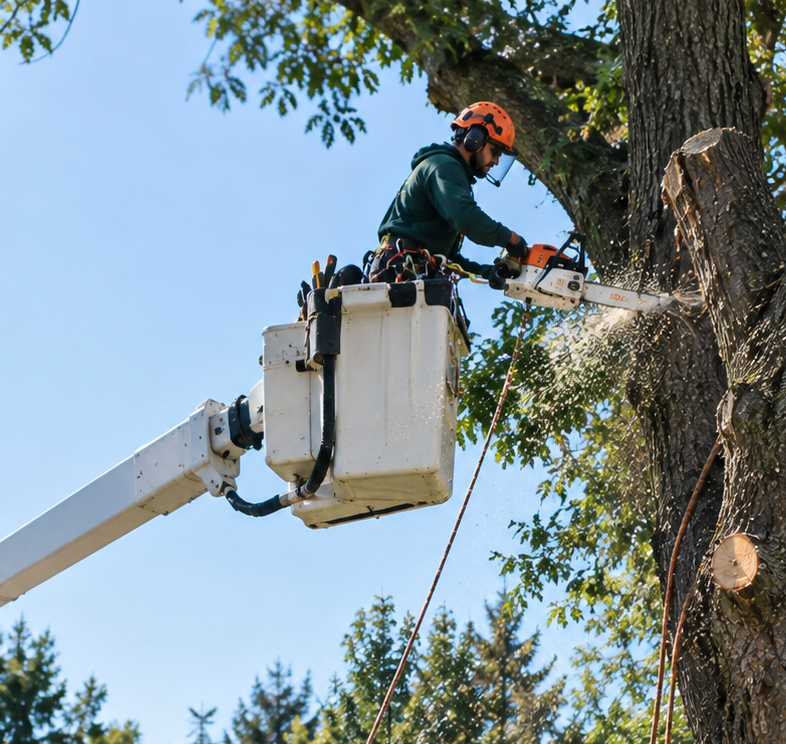
Signs a tree-pruning proposal may involve topping: checklist
A homeowner does not need to diagnose every branch to ask clear questions. When considering tree topping vs crown reduction, look for a mismatch between the stated goal and the proposed cuts. If a contractor promises to “cut it down to a set height,” marks straight across the top, or proposes to leave a row of bare stubs, ask whether the scope is topping and why that work is being recommended. Requests like “make it half as tall” deserve a tree-specific explanation rather than an automatic yes.
- Ask to see the proposed cut locations. The provider should be able to explain which branches will be shortened, the intended laterals, and the desired crown shape.
- Ask what pruning objective is being used. Reduction, thinning, raising and deadwooding are not interchangeable words; each should connect to a specific concern.
- Ask what will remain. Request a plain-language description of how much of the living crown is proposed for removal and why.
- Ask how the tree was assessed. A brief visual review may be a starting point, but a substantial or high-risk decision merits an appropriate evaluation by a qualified arborist.
- Ask for a written scope. It should identify the tree, objective, work limits, cleanup expectations and any conditions that change the scope.
- Be cautious of “it will grow back” as the whole answer. Regrowth does not restore the old branch structure or make the original cuts harmless.
For more hiring questions, see Bosco Tree’s guide to choosing a tree service in Toronto and its explanation of an arborist versus a tree service contractor. A contractor should welcome reasonable questions and explain the scope without pressuring you to approve work you do not understand.
How to evaluate a tree-pruning proposal
- State the concern. Describe the branch, clearance or site issue without prescribing an arbitrary height.
- Request an assessment. Ask the arborist to consider the tree, its condition and the surrounding targets.
- Compare objectives. Clarify whether reduction, thinning, raising, deadwooding or another response is proposed.
- Review cut locations. Ask which limbs will be shortened and which laterals will remain.
- Confirm the work limits. Get the included trees, cleanup and exclusions in writing.
- Discuss uncertainty. Ask what the work can address and what risks or future monitoring remain.
What a certified arborist considers
An ISA-certified arborist can assess the tree and explain options in the context of its species, condition, location and the reason you called. Certification alone does not mean every tree needs pruning or guarantee a particular result; ask who will assess the tree and who will perform the work. An arborist may consider the crown’s natural architecture, branch attachments, signs of decay or damage, previous cuts, proximity to structures and whether the requested clearance is achievable without excessive removal.
The recommendation should distinguish a safety concern from a preference. A tree leaning toward a roof, rubbing a building or shading a garden may call for different choices; none can be resolved by assuming all trees should be cut back hard. If a possible hazard is the reason for your call, describe what you observed and how the tree is used around the home. Bosco Tree offers tree health assessments and guidance on warning signs in trees so owners can understand when an on-site assessment may be useful.
A thoughtful recommendation may be to prune selected limbs, monitor a condition, obtain a more detailed assessment, protect the tree during construction, or consider removal where other options do not address the concern. The arborist should explain the basis and limits of the recommendation. If removal is considered, review Bosco Tree’s Toronto tree removal service and Toronto tree removal permit guide; applicable permissions must be confirmed before regulated work proceeds.
Why a standards-based scope matters
For owners asking about tree topping vs crown reduction because a tree is close to a roof, a standards-based specification helps turn a general concern into an explainable scope. The Tree Care Industry Association page for ANSI A300 Part 1 states that the part applies to pruning and trimming operations and addresses objectives, systems, specifications and cuts. That is a useful starting point when you ask a company how its work will be defined. Do not interpret a brief reference to a standard as proof that a particular proposal is appropriate; ask for the actual tree-specific scope and confirm the relevant edition or project requirements.
A clear scope can say what the crew will do and what it will not do. It should identify the tree or trees, the objective, the branches or parts of the crown involved, and any clearance or site condition that defines the work. Where a particular result cannot be assured, the arborist should explain what the operation is intended to accomplish and what limitations remain. If the purpose is to reduce contact with a building, for example, the specification should make that concern plain rather than promise that the tree will never reach the structure again.
When a contractor uses the words tree topping vs crown reduction, ask them to connect the recommended option to the tree and your goal. For more on hiring and scopes, see choosing a tree service in Toronto and learn about Bosco Tree.
For a homeowner, the practical value is straightforward: a written scope gives you something concrete to compare and discuss. Ask each provider to describe the same concern and proposed approach. If one quote simply says “top tree” and another describes selective reduction to suitable laterals, ask questions before choosing. If you need a broader service overview, see Bosco Tree’s tree care services, learn about Bosco Tree, or browse the tree care guides.
What if the tree is close to a house, wires or property line?
Proximity changes the work plan; it does not make topping a safe shortcut. A tree near a roof, overhead utility, fence or neighbouring property may require careful rigging, access planning or a specialist review. Do not hire a crew to cut near electrical conductors without confirming who is qualified and authorized to work in that setting. If overhead lines are involved, arrange guidance from the appropriate utility or qualified professional before work proceeds.
Where the requested clearance cannot be achieved responsibly through pruning, the arborist can explain that limitation and discuss other possibilities. For guidance on trees near structures, read tree removal near a house in Toronto and tree work near power lines. A tree near a boundary may also call for communication with the neighbour and a careful understanding of property responsibilities before the work is authorized.
Pruning advice can differ between a young tree and a mature one, and between a healthy crown and one with significant defects. Do not use a generic internet diagram to choose cut locations for a particular tree. A site visit gives the arborist an opportunity to assess the branches, the target, access and the practical options together.
When to call a professional about crown reduction
Call an arborist before approving topping or a substantial crown reduction, and whenever a tree near a structure has defects or uncertain condition. Bosco Tree offers Toronto pruning and trimming; describe the tree and request a free quote before work is scheduled.
Pruning has limits. If the tree is in poor condition, conflicts substantially with a planned use, or cannot be managed to meet a clearance request without removing too much of its live crown, an arborist should explain the trade-offs. Monitoring, targeted work, redesigning a project, or considering removal may be more suitable depending on the situation. No option should be presented as automatically necessary without explaining the observations and the purpose.
For an urgent concern such as a hanging limb or a tree damaged by a storm, keep people away from the affected area and request qualified help rather than attempting to make a high cut yourself. Bosco Tree offers 24/7 emergency tree service for urgent tree-care needs. For non-urgent concerns, an arborist can help you determine whether an assessment or written report is useful before work is planned.
Frequently asked questions
Is tree topping the same as crown reduction?
No. Topping cuts large branches or leaders back to stubs or arbitrary points; crown reduction selectively shortens chosen branches to suitable laterals. The different cut locations affect the tree’s structure and form, so ask the arborist to identify the intended cuts and retained branches for your particular tree.
Why is topping harmful to trees?
Topping can leave large wounds, stimulate clusters of fast-growing shoots and alter branch structure. The degree of impact varies with species, condition, cut size and site; an arborist should inspect the tree rather than promise that topping will either kill it or be harmless.
Can a topped tree grow back?
Many trees produce new shoots after severe cutting, but shoot growth is not restoration of the former crown. The new growth may have different attachment and maintenance needs; a qualified arborist can assess the tree’s condition and explain realistic care options.
Does crown reduction make a tree safe?
No pruning method can guarantee a tree will never fail or need future attention. A crown reduction may address a defined clearance or branch issue if the tree suits that objective, but the assessment should explain remaining defects, limitations and what to monitor after work.
What are crown thinning, crown raising and deadwooding?
Crown thinning selectively removes branches for a stated density objective; crown raising adjusts selected lower branches for clearance; deadwooding removes dead branches. These are separate pruning objectives, and the arborist should explain which, if any, fits the tree and site.
How can I tell if a contractor plans to top my tree?
Ask the provider to show the planned cut locations and explain whether major limbs will be cut back to stubs or a fixed height. Request a written scope describing the objective, suitable laterals, what remains and why the proposed work matches your tree.
Should I ask for an arborist before pruning?
An arborist assessment is especially useful before a substantial reduction, when the tree is near a building, or when you suspect defects. The arborist can review the condition, access and goal, then describe the limits of any recommendation in writing.
What standard should I ask a tree service about?
ANSI A300 Part 1 addresses pruning objectives, systems, specifications and cuts, according to the standards publisher. Ask how the current applicable guidance informs the written scope, but remember that a standard does not decide whether a particular tree should be pruned or what it needs.
Can pruning prevent branches from reaching my roof again?
Pruning can shorten selected branches and establish an agreed clearance, but it cannot guarantee that future growth will never reach a roof. Ask what clearance is intended, how the cuts will preserve structure, and whether future monitoring or maintenance may be appropriate.
Who should I call about tree topping in Toronto?
Contact a qualified tree-care professional when a contractor proposes topping, when a tree needs substantial reduction, or when a hazard concern is unclear. An arborist can inspect the tree and explain options; Bosco Tree offers pruning services and free quotes in Toronto and the GTA. Call or use its contact page.
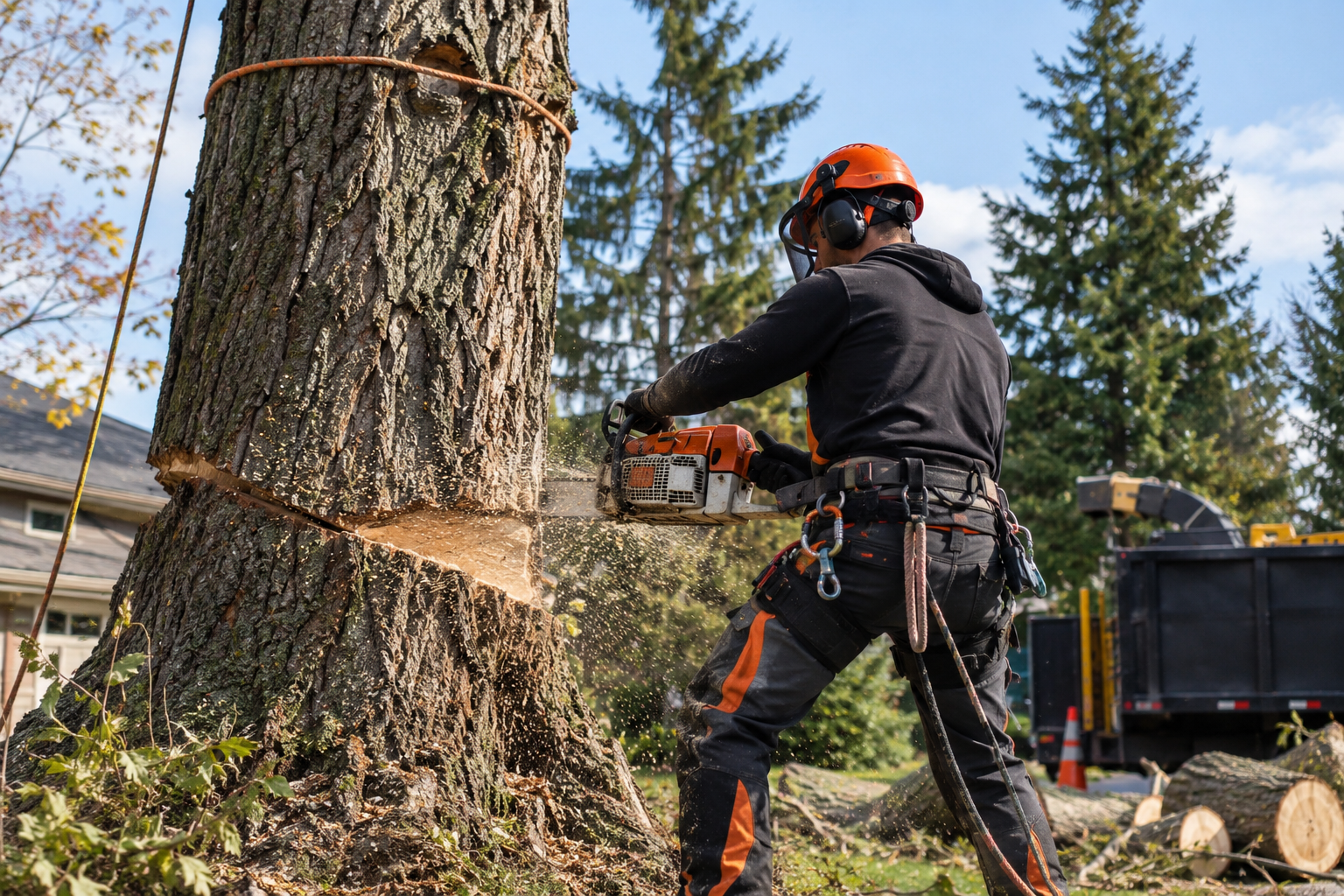
Winter Tree Care Toronto | Bosco Tree
Prepare Toronto trees for snow, ice and wind with safe inspections, pruning decisions, root-zone care and storm planning.
Best Time to Trim Trees Toronto: A Season-by-Season Guide
Plan tree pruning in Toronto with a season-by-season guide to dormant-season work, flowering trees, oak timing, hazards and professional quotes.