
Winter Tree Care Toronto: Preparing Your Trees for Snow, Ice and Wind
Winter tree care Toronto homeowners arrange before the first serious storm can make hazards easier to spot and help protect the people, buildings and trees on a property. Snow, freezing rain, strong wind and freeze-thaw weather put existing weaknesses under stress. A careful inspection is not a guarantee that a tree will remain safe, but it helps identify deadwood, cracks, poor attachments, root-area changes and other warning signs while there is time to plan.
Start with a safe ground-level look at each tree, especially those beside a home, driveway, walkway, parked vehicle or overhead service. Do not climb, use a ladder, cut overhead branches or approach a tree touching a power line. For a concerning tree, ask a qualified arborist to assess its condition and explain practical next steps. Bosco Tree’s ISA-certified arborists have 18 years of experience, and the company provides tree pruning, arborist reports and 24/7 emergency tree service in Toronto and the GTA.
Key takeaways
- Inspect trees from the ground before winter weather and note defects that could affect a target such as a home, path or parked car.
- Snow and ice can add load to weak, damaged or poorly attached limbs; do not try to remove heavy overhead limbs yourself.
- Dormant-season pruning can be appropriate, but timing and the tree’s species, condition and weather matter.
- Keep de-icing salt and salt-laden snow away from root zones where practical, and avoid piling snow against trunks.
- Call promptly for fresh cracks, a newly leaning tree, hanging limbs, root-plate movement or storm damage; do not wait when there is immediate danger.
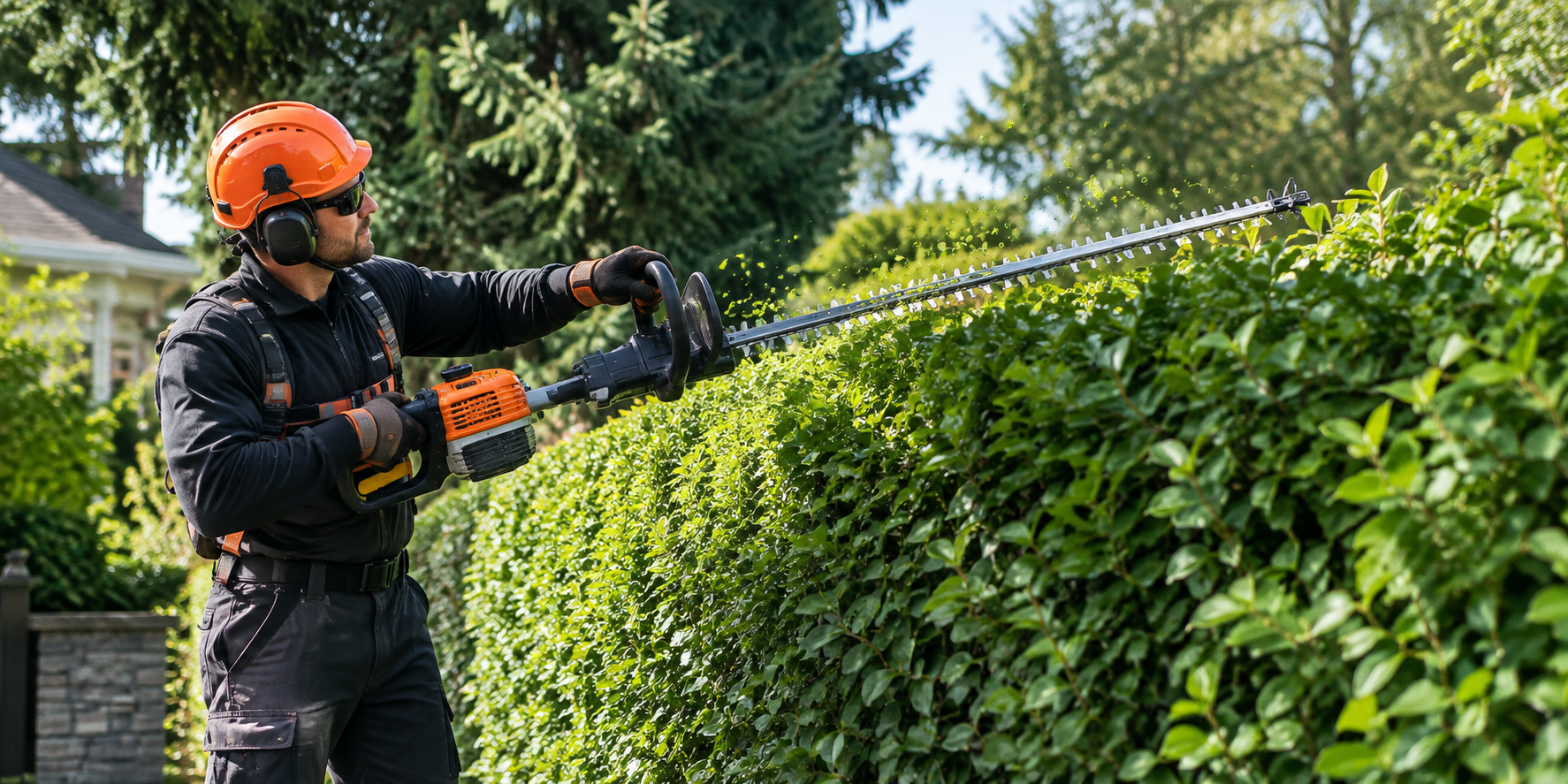
When should Toronto homeowners prepare trees for winter?
Prepare trees before winter by checking their structure, root area and nearby targets from the ground, then arrange appropriate pruning or assessment before snow and ice arrive. Winter timing is not universal: species, condition, proposed cuts and weather matter. Keep clear of hanging limbs and power lines, and ask an arborist about concerns.
A tree can look quiet in November and still have structural issues that matter when weather changes. Leaves hide the branch framework during the growing season; after leaf fall, the crown can be easier to inspect from a safe distance. That seasonal view may reveal crossing limbs, old breakage, dead branches, a split union or a branch extending over a place people use. It is not a substitute for a professional assessment, but it gives a property owner useful information to share with an arborist.
Toronto winter conditions are variable. A wet snowfall, freezing rain, gusty wind and thawing followed by a freeze can arrive in different combinations. Snow that clings to a crown can weigh on branches, while ice can make twigs and limbs heavier and less flexible. A healthy branch may tolerate ordinary winter conditions, but an existing defect can change how it responds. A narrow attachment, decay, a crack, prior storm damage or deadwood can increase concern. The risk also depends on the size and position of the limb and what lies below it.
For that reason, winter preparation is not about predicting exactly which limb will fail. It is about understanding the tree’s condition, considering the consequences if a limb or whole tree fails, and dealing with concerns at the right level of urgency. Read Bosco Tree’s guide to hazard tree warning signs in Toronto for a broader overview, and learn what to do after severe weather in the guide to storm-damaged tree removal.
What to check during a pre-winter tree inspection
Walk the property in daylight and look up without standing directly beneath a suspect limb. Include front, side and rear yards, and remember trees can overhang neighbouring land, public space or a lane. If possible, note the tree’s location, the part that concerns you, visible changes since the last season and nearby targets. Photographs from a safe distance can help you explain what you saw, but they do not diagnose the tree. Never enter a hazardous area or stand under a hanging branch to get a better image.
Look for changes in the trunk and main unions
At ground level, look for a fresh crack, a split that continues into a large limb, a cavity with visible structural change, a missing strip of bark, or a trunk that appears to have shifted. A crack may be old or superficial; its significance depends on its depth, direction, position and the load the tree carries. Do not assume every cavity means a tree must be removed, and do not assume a tree is safe because it still has leaves or buds. An arborist considers several signs together, including species, form, defects and the site.
Notice where major limbs meet the trunk. A tight V-shaped union, included bark, rubbing branches or a fresh separation deserves attention, especially where a large limb could reach a building or walkway. Look for old pruning cuts with decay, broken stubs, or a large limb that has begun to sag. If a branch has already fallen, inspect the remaining tree only from a safe distance. A fresh break can change the load on nearby branches, and the fallen limb may be concealing damage at its attachment point.
Look for deadwood, weak limbs and storm history
Dead branches may remain attached for a long time before dropping. In a leafless crown, deadwood can be more visible as bare twigs, missing bark, or branches with no buds where similar living branches have buds. A few small dead twigs can be part of normal tree development; large dead limbs over a target call for a closer assessment. Do not test a branch by pulling it, shaking it or striking it. A limb that is partly detached can move suddenly.
Consider whether the tree has recently experienced construction, trenching, soil excavation, grade changes, vehicle impacts or heavy equipment near the root zone. Root disturbance may be out of sight, yet it can affect stability or long-term health. Also note whether a tree leans differently than before, whether soil has lifted or cracked near the base, or whether roots appear newly exposed. A long-standing lean is not automatically an emergency, but a new lean or movement of the root plate after wind or saturated soil should be treated as urgent.
For work near roots or planned construction, consult a professional early. Bosco Tree provides arborist reports in Toronto and tree protection zone guidance for projects where preserving trees and planning work around them matters. If the concern is a tree close to a house, the guide to tree removal near a Toronto home explains the questions worth raising before any work begins.
Winter tree care checklist: signs that need attention
- Fresh cracks: Note new splits in the trunk or major unions and keep clear of the potential fall area.
- Hanging wood: A suspended or partly detached branch needs a safe assessment, not a pull from the ground.
- Root movement: Newly lifted soil or a sudden change in lean after wind can indicate a time-sensitive concern.
- Large dead limbs: Record branches over roofs, walkways, parking areas or other regular-use places.
- Recent site disturbance: Mention excavation, compaction, grade changes or equipment near the roots.
- Salt exposure: Track where de-icer and salt-laden snow collect near tree roots.
Snow, ice and wind: what loads can reveal
Winter weather does not create every defect; it can expose a weakness that was already present. Snow can accumulate on branches, and freezing rain can add weight to twigs, limbs and the canopy. Wind then moves the crown, adding force to branch attachments and the trunk. A tree with decay, a split union, previous limb loss or poor anchorage may respond differently from a structurally sound tree. The direction in which a limb could fall and the presence of a target help determine the level of concern.
Do not try to knock snow or ice from high branches, shake a tree, or use a pole saw while standing below the crown. A branch under load can spring, break or shift as the load changes. Avoid parking or walking under visibly sagging or hanging limbs. If a limb is caught in another branch, or a tree is touching a wire, keep away and call the appropriate utility or emergency service. A tree company should not be asked to work on energized lines unless the utility has made the area safe.
When a weak limb needs attention
Warning signs include a recent crack, a limb that is partly detached, bark tearing at an attachment, a new sag, a large dead branch over a regular-use area, or a limb that has shifted after wind or ice. A branch suspended in the crown is especially difficult to judge from the ground. Keep people and pets away from the potential drop zone and arrange a prompt assessment. Do not stand under the limb to estimate its length or pull it down with a rope.
Some concerns can be planned for rather than treated as an emergency. An established dead branch away from a target, a low-risk pruning need, or a tree with a stable long-term lean may be suitable for a scheduled assessment. This distinction is not a diagnosis: new movement, fresh cracking, large hanging wood, root-plate lift or contact with electrical wires changes the urgency. A professional can explain whether pruning, additional monitoring, a report or removal is the appropriate option.
Winter and dormant-season pruning: timing matters
Winter pruning is often considered because a deciduous tree’s structure is visible and the tree is dormant. That visibility can help a trained arborist identify dead, damaged, crossing or poorly attached branches. Pruning can also be scheduled when the work can be carried out safely and the tree’s species and condition make the timing appropriate. The phrase “winter is a good time to prune” is not a blanket rule for every species, every branch or every day.
Ontario guidance on fruit trees notes that recently pruned trees may be more susceptible to midwinter deep-freeze damage and cautions against pruning sensitive fruit trees in winter or immediately before temperatures drop. That guidance is specific to fruit trees, so it should not be presented as a universal rule for every urban tree. The practical point is to avoid an automatic calendar approach: tree species, health, intended work and near-term weather matter. A local arborist can advise whether dormant-season work is suitable or whether the work should wait.
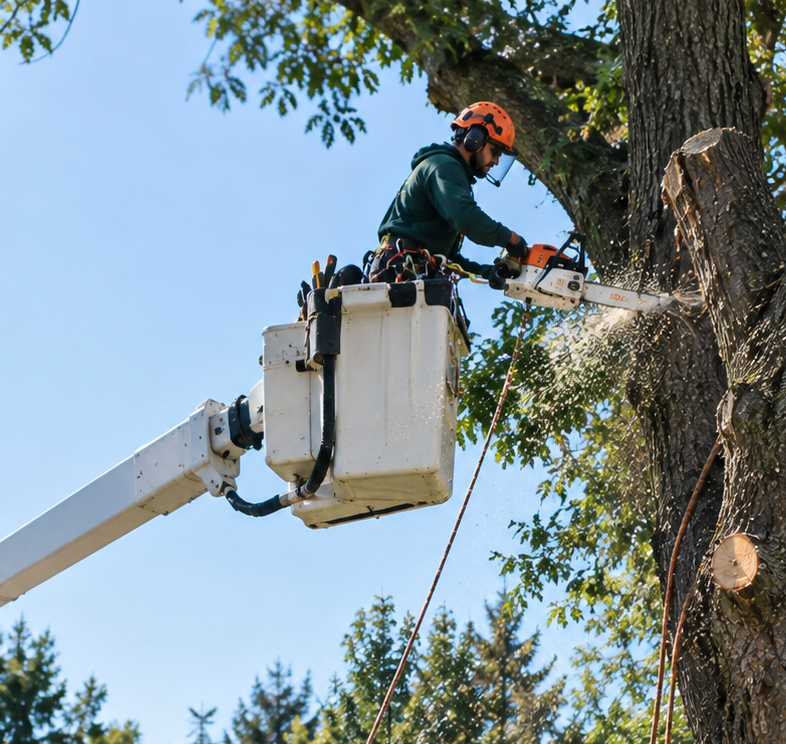
Safety is equally important. Icy ground, poor visibility, frozen limbs, wind and cold can make climbing or rigging more hazardous. Large limbs above a roof, a road or a neighbour’s property need proper equipment and a controlled work plan. Homeowners should not attempt high pruning, use a chainsaw from a ladder or cut a limb that is under tension. For professional tree trimming and pruning in Toronto, ask what the proposed cuts will accomplish and how the work fits the tree’s structure. Bosco Tree also has a guide to the best time to trim trees in Toronto.
Pruning should solve a specific problem
Before work begins, ask the arborist to identify which limbs are dead, damaged, crossing, or otherwise appropriate for removal and why. Good pruning is not simply removing as much wood as possible. Excessive or poorly placed cuts can stress a tree, create large wounds or alter its structure. Avoid topping, the practice of cutting back major limbs to stubs or reducing a crown indiscriminately. If the objective is to reduce risk, the plan should connect each proposed cut to a specific defect or clearance need and preserve the tree’s natural form where feasible.
Pruning is not always the answer to a hazardous condition. If the trunk or root system is seriously compromised, removing a few branches may not resolve the underlying issue. Conversely, a dead limb does not automatically mean the whole tree must be removed. A sound assessment separates the problem area from the rest of the tree and considers whether targeted pruning, monitoring or removal is appropriate. Ask for a clear explanation of the options and what cannot be confirmed from a visual inspection.
Salt, snow piles and winter root stress
Tree roots do not stop mattering when the canopy is dormant. In an urban yard, de-icing salt can reach a tree as airborne spray or move through soil with runoff. The City of Toronto explains that salt can harm trees directly through spray on leaves, needles or branches and indirectly when roots absorb salt from soil water. Roots extend beyond the visible trunk area, so a narrow strip of turf or soil near a driveway may still be connected to a larger root zone.
Where you control the application, use the least salt necessary for safe footing, follow the product label, and consider whether shovelling or an abrasive can reduce reliance on de-icer in a particular spot. Do not stockpile salt-laden snow beside a trunk or over the same root area each winter. Where practical, direct runoff away from ornamental planting beds and keep snow storage separate from the tree’s base. Salt injury can be hard to distinguish from drought, root problems or other stress without context; do not assume that browning alone identifies the cause.
Some symptoms become apparent in spring rather than during a snowstorm. Road-facing foliage may be more exposed to spray; root-zone damage may appear as reduced growth or decline. Keep notes on where snow is piled and where salt is applied. If you suspect salt exposure, a professional can consider the full site, soil and canopy picture and recommend an appropriate assessment. See the City’s information on de-icing salt and other threats to trees and Ontario’s guide to common disorders of broad-leaved trees.
Protect the root area while clearing snow
When clearing a path or driveway, try not to pile snow against the trunk or compact the same area repeatedly with heavy equipment. Avoid scraping bark with shovels or snow blowers. Do not dig, trench, grade or place heavy materials close to a tree without understanding the root impacts. Fine roots that absorb water and nutrients are not limited to the outline of the crown; a tree’s root zone can extend well beyond the dripline. A change that appears minor at the surface can be consequential where it cuts roots, changes drainage or compacts soil.
For a newly planted tree, follow species-appropriate care and any directions from the nursery or arborist. Do not wrap or tie material tightly around the trunk, and do not use winter as a reason to prune more than needed. If a tree has a damaged trunk guard or a stake that is rubbing the bark, arrange a safe adjustment rather than leaving friction in place. Tree health care is most effective when it addresses the cause of stress instead of adding a routine treatment that the tree does not need.
Storm readiness for Toronto properties
A simple winter readiness plan can reduce confusion when a storm arrives. Identify the trees nearest to structures and high-use areas. Know how people will avoid those locations if a limb comes down. Keep a record of a suspected crack, a prior break or a new lean, and share it with the arborist before the weather becomes severe. Arrange planned pruning in advance if an inspection identifies a manageable issue. Keep contact details for the utility and local emergency services accessible for a downed wire, fire, injury or other immediate hazard.
Do not schedule a risky do-it-yourself cut just before a storm. If inspection reveals a significant defect, ask the arborist about timing and whether temporary precautions are appropriate. A tree-protection plan for a construction project should be discussed before equipment enters the site; winter work does not make roots immune to damage. Bosco Tree’s Toronto tree protection zone information and arborist versus tree service guide can help you prepare questions about the right expertise for your situation.
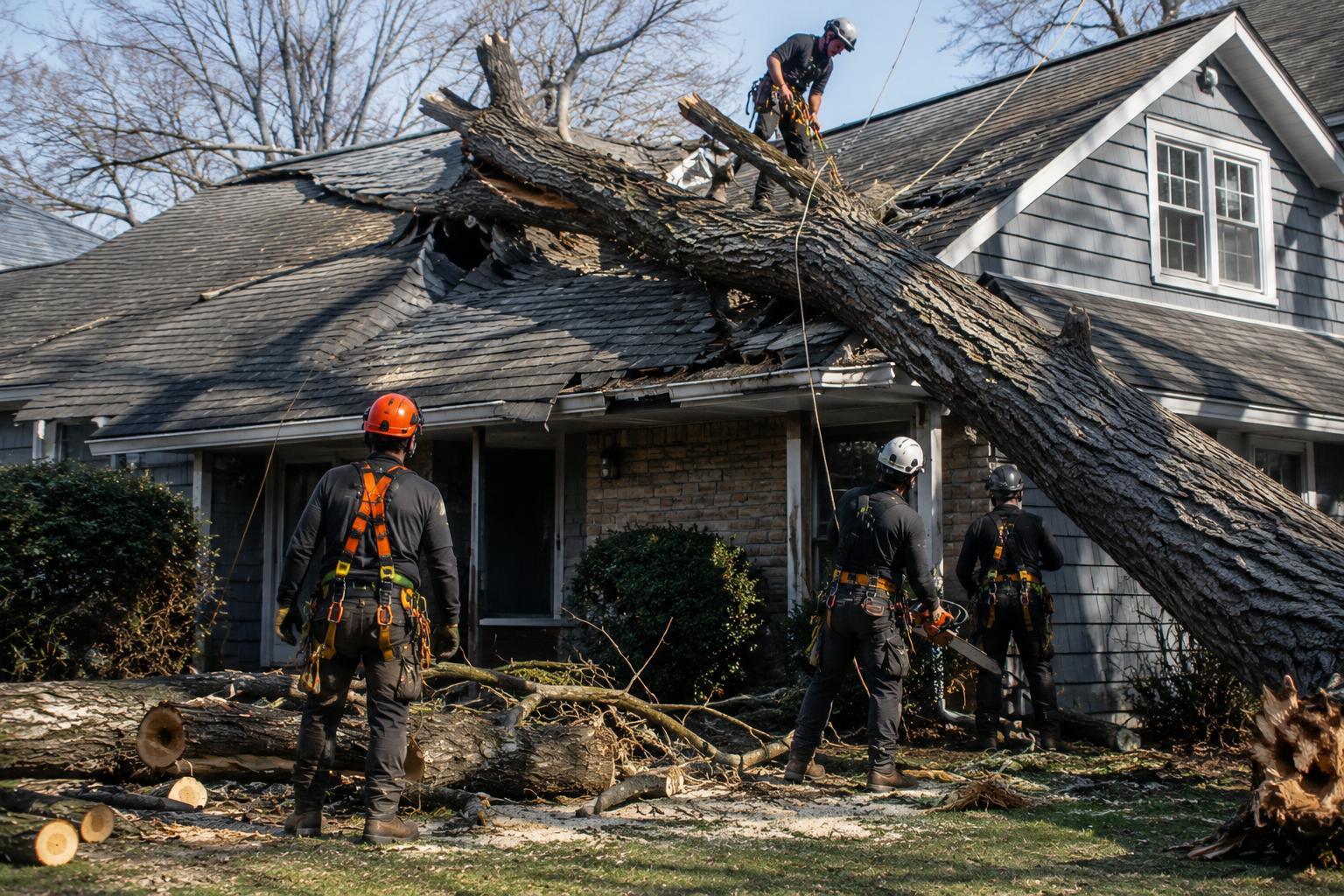
When strong winds, snow or ice cause damage, keep people away from the affected area. Do not walk beneath hanging branches or try to clear a tree off a roof yourself. If the damaged tree is near power lines, do not touch the tree, branches or anything they are contacting. Contact the electric utility or emergency services as appropriate, then arrange a qualified assessment once the scene is safe. For trees that have fallen or become dangerous, Bosco Tree’s 24/7 emergency tree service in Toronto is available to discuss emergency service and next steps.
How to prepare trees for a Toronto winter
- Choose a safe viewpoint. Walk the property in daylight and observe trees from the ground without standing under suspect branches.
- Identify important targets. Note nearby homes, paths, driveways, play areas and neighbouring spaces that could be reached by a failing limb.
- Record visible changes. Photograph a concern from a safe distance and note when you first noticed it.
- Arrange an assessment. Ask an arborist to explain defects, urgency and whether pruning, monitoring or another response fits the tree.
- Plan appropriate work. Discuss species, proposed cuts, site access and weather; do not assume every tree should be pruned in winter.
- Reduce avoidable root stress. Where practical, keep salt-laden snow away from the trunk and avoid compacting or disturbing the root area.
When to call an arborist now—and when to wait
Call an arborist promptly if you notice a fresh trunk crack, a branch that has split or is hanging, a new lean, soil lifting around the roots, a tree that has shifted after a storm, a large dead limb over a target, or significant damage that could affect a home or walkway. Treat power-line contact as a serious electrical hazard: stay back and contact the utility or emergency services as appropriate. If someone is injured or the tree threatens immediate harm, contact emergency services. Do not attempt to stabilize, cut or pull down a hazardous tree yourself.
A planned appointment can be suitable for routine pruning, a stable concern without fresh change, seasonal maintenance, or an inspection that can safely wait until conditions allow. A professional may recommend monitoring if the tree’s condition and site support that approach, but should explain what to watch for and when to reassess. A wait-and-see plan should never require walking beneath a hazardous limb or leaving a known immediate danger unaddressed.
Use this quick comparison to organize what you have seen. It is not a substitute for professional judgment.
| What you notice | Next step |
|---|---|
| New crack, hanging limb or fresh split | Keep clear and arrange prompt assessment |
| Tree touching or near a power line | Stay away and contact the utility or emergency service |
| Old, stable pruning need away from targets | Schedule an arborist assessment and discuss timing |
| Snow or ice on high branches | Do not shake or strike the tree; avoid the drop zone |
| Uncertain diagnosis or symptoms in spring | Document from a safe distance and ask for an assessment |
Choosing a tree service for winter work
When considering a tree company, ask who will assess the tree, what qualifications they hold, what work is included, how the crew will protect the site, and whether cleanup and stump treatment are part of the scope. Request a written description of the recommended work and its reason. Confirm that the provider is insured and ask what coverage applies to the proposed work; do not rely on verbal assumptions. Avoid a contractor who pressures you to make a quick decision, promises a permit outcome, or recommends drastic cutting without explaining the tree’s condition.
Bosco Tree states that its arborists are ISA-certified, that the company has 18 years of experience, and that it is fully insured with $2 million liability coverage. The company offers free quotes, tree pruning, removal, stump grinding, arborist reports, lot clearing and 24/7 emergency service. For broader context, read about Bosco Tree, explore its tree care services, and use the guide to arborists versus tree services when deciding what expertise your situation needs.
If the assessment points to removal, consider the tree’s proximity to the house, access constraints and how the stump will be handled. For a tree near a structure, review the guide to tree removal near a house in Toronto. If the tree stands close to overhead wires, read the safety guidance on tree removal near power lines and keep a safe distance. Do not hire a contractor to work in a live electrical hazard.
Tree removal is not always the first answer
It is understandable to want certainty before winter weather arrives, but removing a tree is not the only responsible response to every concern. An arborist may be able to remove a hazardous limb, recommend corrective pruning, document the tree’s condition, or set a monitoring plan. If the tree is healthy and the concern is simply that it is tall or close to a building, ask for a site-specific explanation rather than assuming removal is necessary. If there is significant decay, a compromised trunk or root instability, the assessment may support removal. The goal is a sound decision based on the actual tree and the place around it.
Likewise, a permit or by-law question should not be resolved by an arborist’s opinion alone. The City of Toronto decides how its tree-protection rules apply. Check current requirements and obtain any necessary permission or exception confirmation before scheduling non-emergency work. Bosco Tree’s tree removal permit information is a useful starting point, but City guidance governs the permit process. If the tree may be in a ravine or near a natural feature, confirm whether separate protections apply.
When to call a professional about winter tree care
Contact an arborist when you notice a fresh crack, a large hanging limb, root movement, a new lean or storm damage near people or property. Keep away from a tree touching a wire and contact the utility or emergency services as appropriate. Bosco Tree provides professional Toronto tree pruning and trimming and 24/7 emergency tree service. For a site-specific discussion, call 416-206-1460 or request a free quote.
Frequently asked questions about winter tree care in Toronto
1. Is winter a good time to prune trees in Toronto?
It can suit some trees and work because a leafless crown is easier to inspect. Timing depends on species, health, proposed cuts and weather; Ontario guidance cautions against winter pruning of sensitive fruit trees before a temperature drop. Ask an arborist rather than treating winter as a universal pruning window.
2. Can snow or ice make a healthy tree unsafe?
Snow and ice add load, and wind can move loaded branches. A healthy tree is not automatically unsafe in winter, but existing cracks, decay, poor attachments or previous damage can increase concern. Keep away from a limb that is hanging or newly split and arrange an assessment.
3. Should I knock snow off my tree’s branches?
Do not climb, strike or shake a tree to remove snow or ice, especially when branches are high, loaded or brittle. A limb can break or shift unexpectedly. Stay clear of the drop zone and seek professional help if a branch is damaged or creating a hazard.
4. How can I tell whether a tree limb is dead?
From the ground, look for missing buds, bare twigs, bark loss and a branch that appears dry, but do not use one sign as a diagnosis. Some branches are dormant, and species differ. Large dead limbs over people or property should be assessed by an arborist.
5. Does winter pruning always help a tree heal faster?
No single timing rule applies to all trees. Species, health, pruning objectives and weather affect the decision, and an ill-timed cut can expose some trees to additional stress. Ask the arborist why the proposed timing suits that particular tree.
6. Can road salt damage trees in Toronto?
Yes. The City says de-icing salt can damage leaves, needles or branches through airborne spray and can also affect roots when absorbed from soil water. Keep salt and salt-laden snow away from tree root areas where practical, and ask for an assessment if symptoms appear.
7. When should I call for emergency tree service?
Call promptly when a tree has a fresh crack, a new lean, a hanging large limb, root movement or significant storm damage that threatens people or property. If wires are involved, stay away and contact the utility or emergency services. For immediate danger or injury, contact emergency services first.
8. Can I prune a large branch myself before winter?
Do not use a ladder or chainsaw to cut a large, high or loaded branch. Branches can fall unpredictably, and a cut may change how the remaining limb carries weight. Have a qualified arborist plan work that could affect a person, structure, road or power line.
9. Should a tree with a long-standing lean be removed?
Not necessarily; the age of the lean, root condition, trunk and canopy defects, and nearby targets all matter. A new lean or soil movement is more concerning and should be assessed promptly. An arborist can explain whether monitoring, pruning or removal is appropriate.
10. What should I do after a winter storm damages a tree?
Keep people away from damaged limbs and do not touch a tree or branch near a power line. If someone is injured or there is an immediate threat, contact emergency services; otherwise arrange a qualified assessment and document visible changes from a safe distance. Do not try to pull down a hanging branch.
Prepare now, before the next storm
A safe winter plan begins with observation, not a saw. Identify trees near important targets, note visible changes, reduce avoidable salt and root-zone stress, and ask an arborist about concerning defects before winter weather makes access harder. If a storm creates a fresh hazard, keep clear and arrange qualified help. If there is immediate danger or a power-line issue, contact emergency services or the utility first.
Bosco Tree provides tree pruning, arborist reports, removal, stump grinding and 24/7 emergency tree service in Toronto and the GTA. The company’s ISA-certified arborists have 18 years of experience, and Bosco Tree offers free quotes. Learn more about the team on the Bosco Tree about page, browse the tree services available, or visit the Bosco Tree home page. For questions about a tree on your property, call 416-206-1460 or request a free quote.
Tree Topping vs Crown Reduction | Bosco Tree
Understand the risks of tree topping, the purpose of crown reduction and how an arborist can plan appropriate pruning for your Toronto tree.
Best Time to Trim Trees Toronto: A Season-by-Season Guide
Plan tree pruning in Toronto with a season-by-season guide to dormant-season work, flowering trees, oak timing, hazards and professional quotes.